Federal and State Crackdown on Commercial Trucking Expands Across North America with Over 1,000 Inspections in Maryland and D.C.

Federal and state trucking inspectors have significantly broadened the scope of Operation Highway Shield, carrying out more than 1,000 commercial vehicle inspections across Maryland and Washington, D.C., resulting in hundreds of safety violations and dozens of out-of-service orders. This high-visibility enforcement surge forms part of an aggressive, multi-jurisdictional campaign sweeping across the United States and Canada aimed at rooting out mechanical defects, unqualified operators, and regulatory noncompliance within the commercial freight industry.
The coordinated actions in the mid-Atlantic region mirror similar roadside blitzes witnessed recently in Arkansas, Virginia, Florida, the Midwest, Oregon, New York, Arizona, and British Columbia. As federal regulators and transportation authorities ramp up their oversight, the commercial trucking sector is facing unprecedented scrutiny regarding vehicle maintenance standards, driver licensing authenticity, and operational safety.
Coordinated Mid-Atlantic Sweep: Maryland and Washington, D.C. Operations
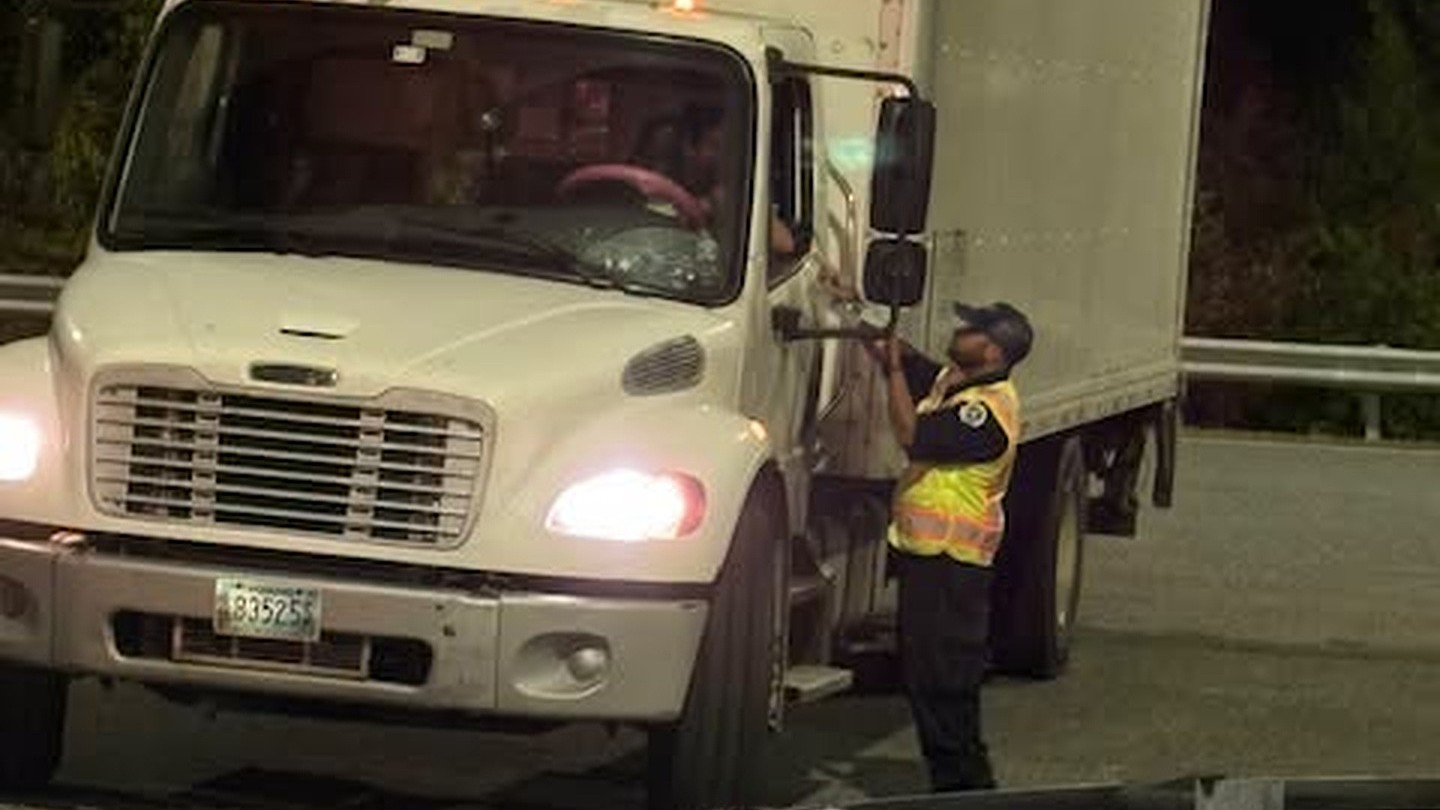
The latest phase of Operation Highway Shield brought together federal oversight and state-level enforcement to scrutinize heavy commercial vehicles traversing busy urban and interstate corridors. In Maryland, the Federal Motor Carrier Safety Administration (FMCSA) forged a strategic partnership with the Maryland State Police, the Maryland Transportation Authority Police, the Maryland Department of the Environment, and the Comptroller of Maryland.
During this targeted sweep, inspectors conducted 941 commercial motor vehicle inspections. The rigorous examination of equipment and driver credentials led to 191 commercial vehicles and 92 drivers being immediately placed out of service for severe violations of federal and state safety mandates. While authorities confirmed the high volume of infractions, a detailed breakdown of the specific violation categories was not immediately released by the agency, nor did officials specify the exact tally of drivers disqualified due to English-language proficiency deficiencies—a focal point of recent federal regulatory mandates.
Concurrently, in the nation’s capital, the FMCSA joined forces with the Metropolitan Police Department of Washington, D.C., to conduct 125 focused inspections on large commercial trucks and buses operating within the District. These inspections uncovered 193 distinct safety violations, culminating in 50 out-of-service violations. Although comprehensive figures detailing the exact number of individual vehicles and drivers sidelined in the District were withheld, the density of infractions per inspection highlighted persistent compliance issues among carriers operating in dense metropolitan environments.
Broadening Enforcement Across Freight Corridors
The mid-Atlantic deployments build directly upon a rapidly escalating national enforcement strategy. Regulatory agencies are maintaining relentless pressure on unsafe trucking operations, focusing heavily on commercial driver qualifications and equipment integrity.
Prior to the Maryland and D.C. operations, a late-October highway blitz in Arkansas yielded staggering results. Over a 48-hour period from Oct. 27–29, coordinated checks resulted in 393 drivers and commercial vehicles being sidelined, alongside 183 violations related to English-language proficiency and 44 criminal arrests. Similarly, an operation in Stephens City, Virginia, caught 100 violations during 86 inspections, forcing 11 vehicles and two drivers out of service.
Further regional crackdowns illustrated the pervasive nature of commercial noncompliance. In Culpeper County, Virginia, a collaborative effort involving the sheriff’s office and seven regional public safety agencies executed 22 commercial vehicle inspections. The sweep generated 148 documented violations, 34 out-of-service orders, four traffic summonses, 144 safety warnings, and two citations for operating without valid commercial driver’s licenses (CDLs). Four dangerously compromised vehicles were towed directly from the roadway.
In Salem, Oregon, traffic officers concentrated their efforts along Mission Street SE, inspecting 12 commercial trucks. The localized sweep revealed 48 equipment failures, nine driver-related infractions, and 24 out-of-service violations, ultimately sidelining nine vehicles and five drivers. Meanwhile, in New York, the Town of Wallkill Police Department partnered with the New York State Police Commercial Vehicle Enforcement Unit, the state Department of Transportation, and the Orange County Sheriff’s Office to saturate the State Route 302 and Route 17M corridors. This multijurisdictional initiative uncovered 248 violations, forcing 19 trucks, six trailers, and six drivers out of service.
Extreme Safety Violations: Impaired Driving and Mechanical Failures
While regulatory paperwork and licensing checks form a core component of Operation Highway Shield, roadside inspections continue to intercept dangerously compromised equipment and severely impaired operators, averting potential highway tragedies.
In Arizona, state troopers encountered two alarming commercial vehicle incidents within days of each other. On Nov. 5, Arizona Department of Public Safety (AZDPS) Highway Patrol troopers responded to emergency calls regarding a semi-truck erratic on Interstate 40 near Flagstaff. According to reports, the commercial vehicle had blocked an interstate off-ramp, and the driver appeared profoundly intoxicated. Alert bystanders intervened prior to law enforcement’s arrival by pulling the driver from the cab and confiscating the vehicle keys.
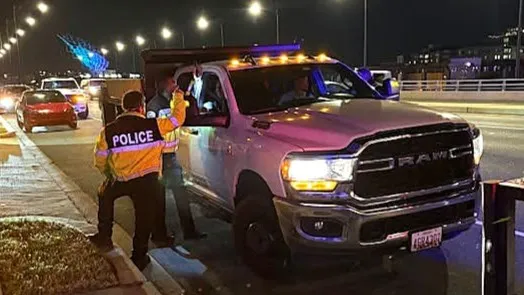
Upon arriving, AZDPS troopers administered field sobriety tests and obtained a preliminary breath sample. The results revealed an astonishing blood alcohol concentration (BAC) of 0.301—nearly eight times the strict 0.04 federal legal threshold mandated for commercial vehicle operators. Troopers also discovered open containers of alcohol inside the cab. The driver was immediately taken into custody on driving under the influence charges, while the tractor-trailer was towed and subjected to a mandatory 20-day impoundment.
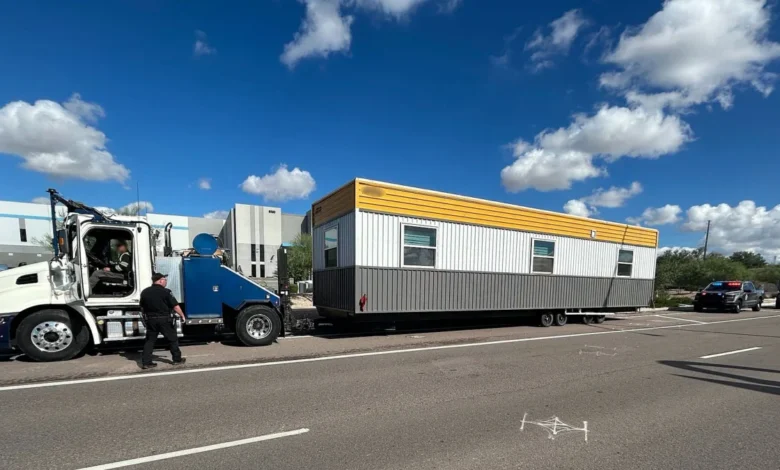
Just days earlier, on Nov. 2 in Mesa, Arizona, state troopers intercepted a commercial truck hauling a massive, 25,000-pound mobile office unit along State Route 202. A subsequent inspection revealed that the trailer possessed zero functioning brakes and an entirely inoperative emergency breakaway device—a mechanical deficiency that could have caused catastrophic loss of control. The entire combination vehicle was placed out of service pending extensive mechanical repairs.
International transport routes also highlighted severe mechanical risks. In British Columbia, the Burnaby Royal Canadian Mounted Police announced the interception of an overweight commercial vehicle traveling on a prohibited roadway along Royal Oak Avenue in early October. Officers discovered critical air leaks, critically low air pressure, and partially engaged spring brakes that caused all six brakes to overheat, emitting a distinct burning odor.
During the course of the inspection, the truck’s primary air line abruptly ruptured, rendering the air brake system completely inert. Canadian enforcement officials noted that had this failure occurred while the vehicle was descending a nearby incline toward a busy intersection, the result likely would have been a catastrophic multi-vehicle collision. In addition to the compromised braking system, inspectors noted an overweight front axle, unsecured cargo, and a seat belt infraction. Authorities issued seven violation tickets totaling $1,095.60 and sidelined the vehicle.
National Policy Context and Regulatory Milestones
The current wave of enforcement operations occurs against a backdrop of sweeping federal policy changes within the U.S. transportation sector. Federal regulators have systematically intensified their scrutiny of commercial driver qualifications, motor carrier safety compliance, and licensing issuance procedures.
According to a U.S. Department of Transportation (DOT) enforcement update, federal authorities have successfully placed 33,000 commercial drivers out of service nationwide for failing mandatory English-language proficiency requirements following an executive order issued in April 2025. Furthermore, the DOT reported the administrative revocation of 31,000 improperly issued CDLs and the subsequent shuttering of nearly 10,000 commercial driving schools flagged for fraudulent or substandard operating practices.
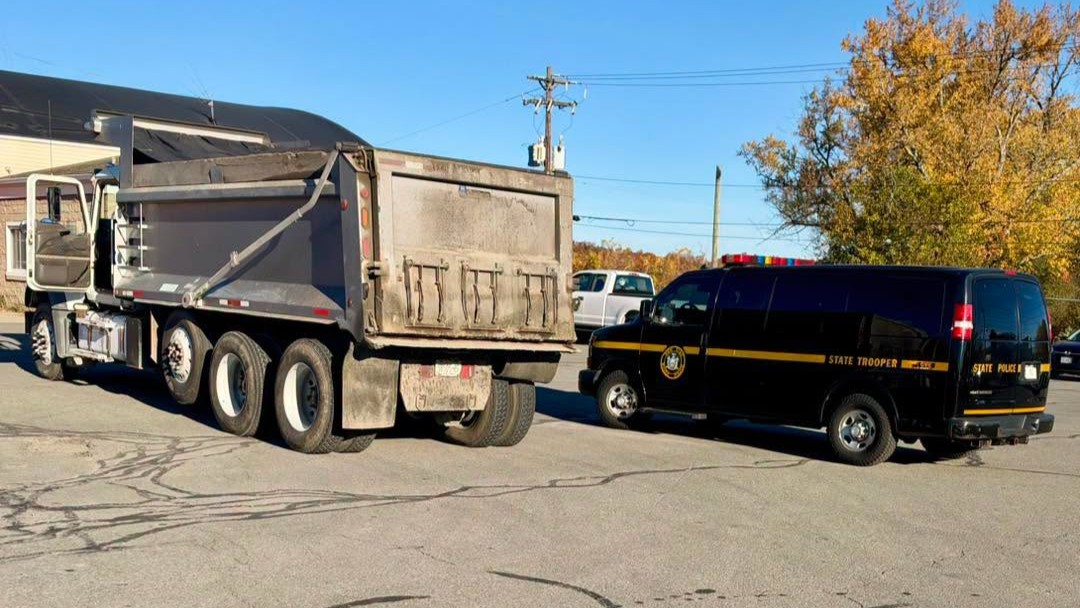
While high-profile campaigns like Operation Highway Shield are orchestrated at the federal level to target specific systemic vulnerabilities, the concurrent wave of state, local, and international operations underscores a unified, cross-border commitment to highway safety.
Enforcement Results at a Glance
| Jurisdiction | Inspections Conducted | Key Findings and Actions |
|---|---|---|
| Maryland | 941 | 191 vehicles and 92 drivers placed out of service |
| Washington, D.C. | 125 | 193 violations, including 50 out-of-service orders |
| Culpeper County, VA | 22 | 148 violations, 14 vehicles placed out of service |
| Salem, OR | 12 | 9 vehicles and 5 drivers placed out of service |
| Wallkill, NY | Not reported | 248 violations; 31 truck, trailer, and driver out-of-service actions |
| Mesa, AZ | 1 reported stop | Trailer brake system and breakaway device failures |
| Flagstaff, AZ | 1 reported incident | DUI arrest; driver recorded a 0.301 BAC |
| Burnaby, BC | 1 reported stop | Catastrophic air brake failure, overweight axle, unsecured cargo |
Note: Out-of-service (OOS) counts refer to separate, localized, and federal enforcement operations conducted between Nov. 2 and Nov. 9, and are not exclusively part of Operation Highway Shield. Source: Compiled agency reports.
Industry Implications and Future Outlook
The continuous expansion of roadside inspection blitzes signals a permanent shift toward rigorous enforcement within the freight transportation ecosystem. Motor carriers and independent operators face mounting compliance pressures as federal and state agencies deploy advanced analytics, multi-agency task forces, and zero-tolerance policies regarding equipment maintenance, operator sobriety, and statutory licensing standards.
Industry analysts observe that while these intense crackdowns impose short-term operational friction and delays for compliant fleets, they serve a critical function in removing unsafe actors from public roadways. As regulatory bodies continue to close regulatory loopholes and target noncompliant training facilities, transportation stakeholders must prioritize strict adherence to safety protocols to mitigate the rising risk of out-of-service orders, heavy financial penalties, and catastrophic liabilities.
Related posts: