Amazon Aurora PostgreSQL Now Enables Direct Querying of Data Lakes and Apache Iceberg Tables

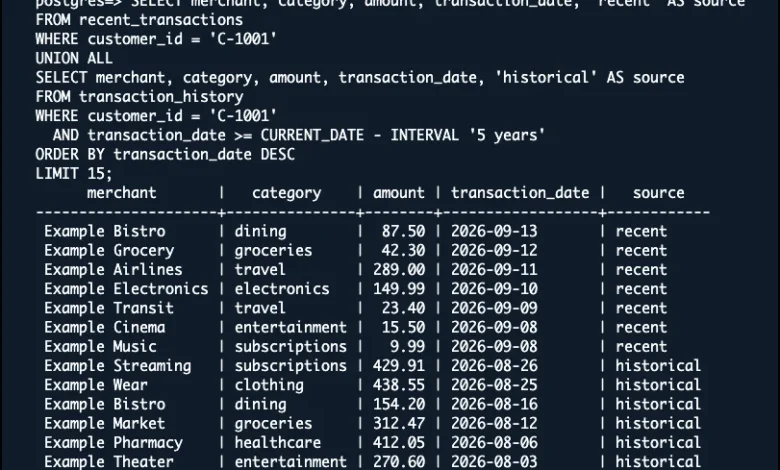
Amazon Web Services (AWS) has officially announced a significant architectural evolution for its flagship relational database service, Amazon Aurora PostgreSQL. By integrating DuckDB technology directly into the Aurora engine, AWS is enabling users to execute SQL queries that span both live, operational transactional data and massive, archived datasets stored in data lakes—specifically those formatted in Apache Iceberg and Apache Parquet. This development effectively removes the traditional barrier between high-performance operational databases and scalable object storage, allowing organizations to bridge the gap between real-time transaction processing and long-term analytical workloads without the friction of Extract, Transform, and Load (ETL) pipelines.
The Technical Shift: Bringing the Data Lake to the Database
For years, the standard paradigm in enterprise data management has been the bifurcated architecture: operational databases, such as Amazon Aurora, were reserved for sub-millisecond transactional performance, while data lakes, typically built on Amazon S3, served as the repository for cold, historical, or massive-scale data. When businesses needed to correlate these two data sources—for instance, to provide a customer service agent with a five-year transaction history alongside their current pending orders—they were forced to build complex, brittle, and expensive reverse-ETL processes. These pipelines not only introduced latency but also created data redundancy, increased infrastructure costs, and required constant maintenance to ensure synchronization.
The integration of DuckDB into Aurora PostgreSQL changes this landscape. DuckDB, a high-performance, open-source analytical database engine renowned for its vector-optimized query execution, is now embedded within the Aurora PostgreSQL runtime. This allows the database to process analytical scans of Parquet files or Iceberg tables natively. When a user runs a query, the system intelligently delegates the heavy analytical lifting to the embedded DuckDB engine, while the Aurora engine continues to manage the high-concurrency transactional data. Because the processing occurs within the existing Aurora compute infrastructure, there are no additional network hops or external processing layers, resulting in a seamless, unified SQL experience.
Chronology and Evolution of the Integration
The path to this integration reflects a broader strategy at AWS to acquire and internalize cutting-edge open-source technologies. The team behind DuckDB—DuckLabs—joined Amazon earlier this year, marking a decisive step in the company’s roadmap to optimize query performance across its database ecosystem.
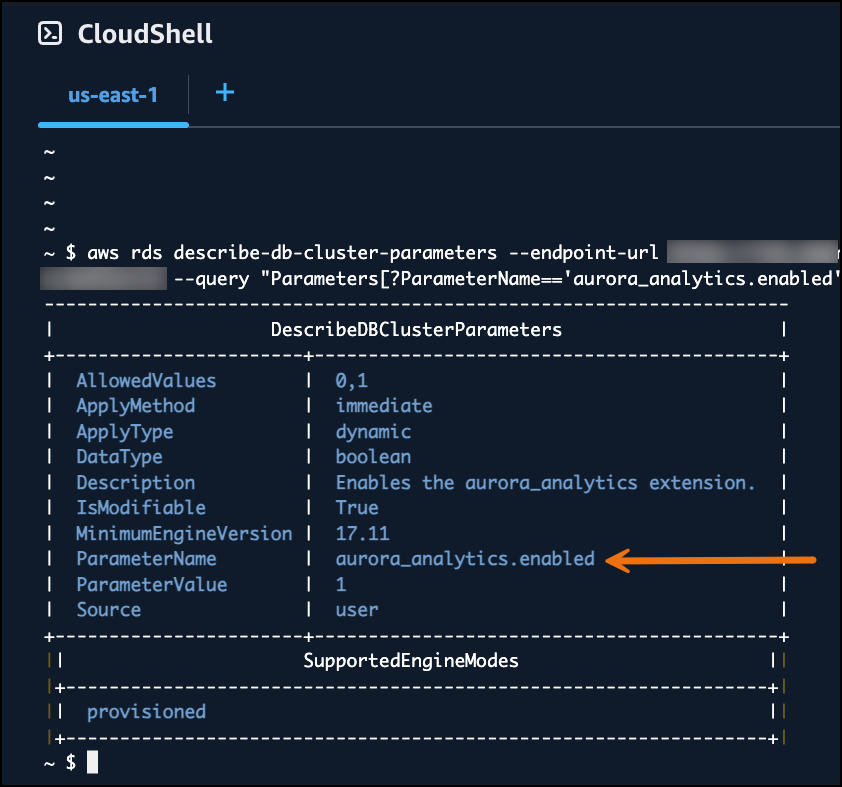
Historically, AWS has navigated the "database versus data lake" dilemma through various AWS Glue and Amazon Athena features. However, these tools generally functioned as separate, federated layers. The move to embed this capability directly into the Aurora engine signifies a shift toward a "database-first" analytics strategy. This capability is now available on Aurora PostgreSQL versions 17 (starting with 17.11) and 18 (starting with 18.6), signaling that AWS is prioritizing this feature for its most current, high-performance database releases.
Operational Mechanics and Performance Optimization
The implementation of this feature is designed to be developer-friendly, leveraging standard PostgreSQL syntax. Once an administrator enables the aurora_analytics extension and configures the necessary AWS Identity and Access Management (IAM) roles, users can interact with external data as if it were a local table.
One of the most notable aspects of this architecture is its intelligence regarding data access. The system employs two primary optimization techniques: predicate pushdown and column pruning. Predicate pushdown ensures that filters applied in the SQL query—such as specific customer IDs or date ranges—are processed at the storage layer, minimizing the amount of data transferred from S3 to the database. Column pruning ensures that only the columns explicitly requested in the query are read, preventing the wasteful I/O associated with reading entire datasets.

Furthermore, the system includes a caching mechanism. Frequently accessed data from the data lake is cached within the Aurora instance memory, accelerating subsequent queries. AWS has also provided a diagnostic tool, aurora_analytics_stat_statements(), which allows database administrators to inspect metrics such as row scans, total bytes read from S3, and cache hit ratios, providing the transparency necessary to tune performance in production environments.
Implications for AI and Modern Application Development
The rise of Generative AI and Large Language Models (LLMs) has placed a premium on the ability of AI agents to access both live operational state and historical context. Until now, providing an AI agent with comprehensive data was a logistical nightmare. If an agent needed to analyze a user’s behavior over five years to predict a churn risk, the developer had to either ingest that historical data into the operational database—a costly and slow process—or build a retrieval-augmented generation (RAG) pipeline that might struggle with complex SQL joins.
By allowing the AI agent to query live and archived data simultaneously through a single interface, AWS is reducing the latency and complexity inherent in AI-driven applications. This enables real-time decision-making systems that can account for both the immediate transaction occurring at the current second and the deep historical trends stored in the data lake, all without requiring an army of data engineers to manage the synchronization of these distinct data silos.
Fact-Based Analysis of the Market Impact
From an industry perspective, this move puts pressure on third-party data integration vendors and specialized ETL tools. By offering a "zero-ETL" approach to data lake querying, AWS is effectively commoditizing the pipeline management layer. Organizations that previously spent thousands of dollars per month on third-party data synchronization software may find that the built-in capability of Aurora PostgreSQL meets their needs, potentially shifting the competitive landscape.
The financial model is also noteworthy. AWS has stated that this feature is available at no additional charge beyond the standard costs of the Aurora compute resources and the S3 request fees. This transparent pricing structure is likely to appeal to budget-conscious enterprises and startups alike, as it replaces a capital-intensive integration project with a consumption-based operational model.
Strategic Outlook: The Future of Unified Data
As data volumes continue to grow exponentially, the ability to store vast amounts of information in low-cost object storage (S3) while maintaining the ability to query that data with the rigor of a relational engine will become a prerequisite for enterprise digital transformation. The integration of DuckDB is not just a feature update; it represents a fundamental rethinking of how database engines should interact with the modern cloud-native storage stack.
Looking forward, the industry can expect further refinements in performance and broader compatibility with other open-source table formats. As the DuckDB engine continues to evolve, these performance gains will naturally flow into the Aurora ecosystem, potentially rendering traditional, high-maintenance data warehousing architectures obsolete for a wide range of use cases.
For developers and database administrators currently managing separate analytical and transactional environments, the path forward is clear: the integration of Iceberg, Parquet, and operational PostgreSQL data into a single, unified SQL interface reduces the cognitive load of data management. It allows engineering teams to focus on building features and optimizing business logic rather than wrestling with the infrastructure of data movement. As AWS continues to deploy this feature across its global regions, the expectation is that it will set a new standard for how cloud-based relational databases handle the ever-increasing demands of big data and real-time analytics.