Accelerating LLM Inference: Navigating the Complexities of Server Startup and State Persistence

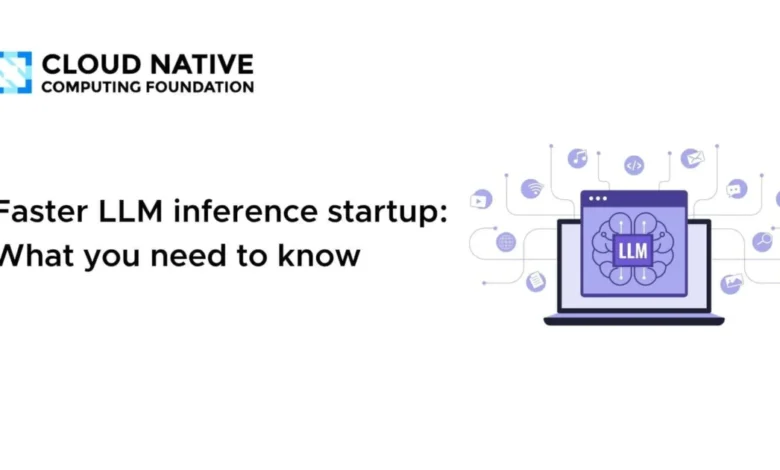
Adding an inference replica creates capacity only after the new instance can serve requests, a process that has become a significant bottleneck in the era of Large Language Models (LLMs). Between the moment a process is initiated and the first token is generated, an LLM server must navigate a series of computationally expensive tasks: loading massive weight files, initializing GPU resources, compiling kernels, capturing execution graphs, and warming up the engine. Because restarts, model switches, and horizontal scaling events repeat this work, the "cold start" problem has emerged as a primary obstacle for high-availability AI infrastructure.
As of November 2026, the community is addressing these latent costs at multiple layers of the technology stack. Projects like vLLM and SGLang are pioneering methods to reuse weights and initialized states, while serving platforms are building workflows around "warm" instances and checkpointing. Simultaneously, Kubernetes, container runtimes, and the Open Container Initiative (OCI) are refining the underlying interfaces and artifact standards necessary to support these optimizations.
The Anatomy of an LLM Cold Start
A typical server startup is not a single operation but a complex sequence of tasks. The server must first launch processes and import deep-learning libraries, which can consume several seconds. It then reads model files from storage, constructs tensors, and performs mandatory weight transformations. Crucially, the system must initialize the execution runtime and communication protocols between workers, allocate substantial memory, and prepare the engine to handle incoming traffic.
Beyond simple initialization, performance-oriented startups include "warm-up" phases. Compilation produces executable kernels optimized for specific hardware; autotuning algorithms select the most efficient implementations for a given configuration. Furthermore, CUDA Graph capture—a technique that records GPU operations to be replayed later—reduces launch overhead during steady-state execution. While these optimizations significantly improve throughput, they exacerbate the startup delay. The tradeoff is clear: the more a system optimizes for steady-state performance, the more work it must perform before it is ready to serve the first request.
A Taxonomy of Reusable State
To mitigate these delays, developers are focusing on preserving specific segments of the startup sequence. The industry has broadly categorized these optimizations based on what is being reused:
- Model Files: Utilizing pre-staging and high-performance loaders like fastsafetensors to minimize disk I/O.
- Compiled Artifacts: Leveraging persistent caches for autotune results and JIT-compiled kernels, ensuring that repetitive math optimizations are not recalculated.
- Processed Weights: Using daemons (such as those in vLLM or SGLang) to keep weights in GPU memory, allowing multiple engines to map the same memory space without redundant loading.
- Live Engine State: Implementing "sleep/wake" cycles, where an engine remains resident in memory but releases non-essential resources, allowing for rapid reactivation.
- Initialized Snapshots: Using checkpointing tools (CRIU) to save the entire process state, including memory maps and CUDA context, allowing a server to resume from a "ready" state.
Framework Innovations: vLLM and SGLang
The two most prominent frameworks in the space, vLLM and SGLang, have taken distinct but complementary approaches to the cold-start challenge.
vLLM’s "Fast Start" architecture centers on a persistent weight daemon. By loading weights into GPU memory and exposing them through CUDA inter-process communication (IPC), vLLM allows new engines to bypass the loading phase entirely. This zero-copy approach is a massive efficiency gain for nodes running multiple replicas. Furthermore, vLLM has introduced experimental initialized-engine snapshots. By using CRIU (Checkpoint/Restore in Userspace) and integrating CUDA checkpoint support, the framework can freeze a fully initialized instance and resume it later. However, this is currently limited to single-GPU configurations with specific parallelism constraints, highlighting the nascent state of the technology.
SGLang, meanwhile, has prioritized its "Fast Engine Recovery" roadmap. Its weight-cache daemon operates on similar principles to vLLM, sharing processed weights across instances. SGLang also provides hooks that allow external systems to manage memory release and resumption, effectively enabling a "pause/continue" workflow for generation. Like vLLM, SGLang is exploring deeper snapshot integrations, proposing a mechanism to capture the engine state after initialization but before the HTTP service begins accepting requests.
The Role of Infrastructure: Kubernetes and CRI
The push for faster startups is not limited to the application layer. The Kubernetes Checkpoint Restore Working Group is actively coordinating the development of APIs that enable more robust container lifecycle management.
A landmark development occurred on July 22, 2026, when the Container Runtime Interface (CRI) merged the CheckpointPod and RestorePod capabilities. This change provides a standardized way for the runtime to handle the freezing and thawing of containers, a prerequisite for the snapshotting workflows mentioned above. While the CRI update provides the "how," the "what" remains a challenge. Defining exactly what constitutes a valid container checkpoint—especially one containing GPU state—remains a subject of intense debate within the OCI and the broader Kubernetes community.
For instance, while KEP-5823 (Pod-level checkpoint and restore) is targeting an alpha release in Kubernetes v1.38, its current scope explicitly excludes device-specific states, such as GPU memory. KEP-6274, a provisional proposal for GPU support, remains the primary vehicle for addressing this, but it must reconcile the highly proprietary nature of GPU drivers and memory management with the open-source nature of Kubernetes orchestration.
Chronology of Recent Developments
- July 2026: CRI API introduces
CheckpointPodandRestorePod, establishing a baseline for container-level checkpointing. - August 2026: vLLM and SGLang merge initial weight-cache daemon implementations, moving from experimental scripts to core framework features.
- October 2026: The AI-Dynamo organization releases updated guidance on the Snapshot project, clarifying the integration path between Kubernetes Operators and GPU memory services.
- November 2026: The industry shifts focus toward "Application Lifecycle Hooks," aiming to standardize how an inference server notifies the orchestrator that it is safe to checkpoint.
Broader Implications and Future Outlook
The drive to eliminate cold starts has profound implications for cloud-native AI. If successful, these technologies will transform the economics of GPU clusters. By reducing the time-to-first-token from tens of seconds to milliseconds, service providers can implement more aggressive auto-scaling policies, allowing clusters to scale down to near-zero during off-peak hours without sacrificing user experience during sudden traffic spikes.
However, the current landscape is fragmented. As noted by the varying support for GKE Pod Snapshots versus custom CRIU-based implementations in the llm-d ecosystem, there is no "one-size-fits-all" solution. The reliance on host-specific environments and compatible hardware limits the portability of these snapshots. An image captured on one node with a specific NVIDIA driver version may not be compatible with another, creating a "version-lock" that complicates multi-region deployments.
Looking ahead, the next phase of development will likely center on standardization. As the OCI continues to refine its distribution and artifact specifications, we can expect to see more formal "Checkpoint Images" that include not just the application code and weights, but the serialized state of the execution engine itself. For enterprises, this means that the future of LLM serving will move away from static container images and toward dynamic, stateful snapshots that evolve with the model and the hardware they occupy.
Ultimately, while the current efforts are focused on engineering better startup workflows, the long-term goal is to make the distinction between a "starting" server and a "running" server invisible to the end user. As these projects mature, the underlying complexity of GPU initialization will be abstracted away, finally bringing the agility of traditional microservices to the computationally intensive world of generative AI.