Modernizing Data Infrastructure with Amazon S3 Tables Managed Migration from Apache Hive to Apache Iceberg

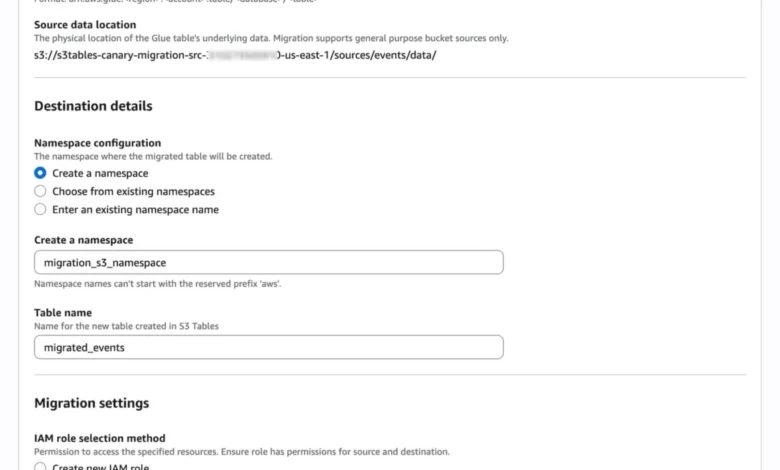
The landscape of big data management is undergoing a significant transformation as enterprises increasingly pivot toward open table formats to optimize their analytical capabilities. Amazon Web Services (AWS) has announced a new, streamlined path for data lake modernization, enabling the seamless migration of legacy Apache Hive tables to the Apache Iceberg format using Amazon S3 Tables. This development addresses a long-standing operational challenge for data engineers: the labor-intensive and error-prone nature of migrating petabyte-scale datasets without interrupting critical production workflows.
The Evolution of Open Table Formats
For over a decade, Apache Hive has served as the foundational structure for many data lakes. However, as data volumes have ballooned into the petabyte range, the limitations of Hive—specifically regarding schema evolution, ACID transaction support, and efficient file management—have become more pronounced. Apache Iceberg has emerged as the industry-standard alternative, offering advanced features such as hidden partitioning, time-travel queries, and high-performance read/write operations that are compatible with a wide array of engines including Trino, Spark, and Presto.
Until now, the transition from Hive to Iceberg required significant manual engineering. Organizations typically had to provision dedicated compute resources, write custom extraction and transformation pipelines, and manage the complex validation logic required to ensure data integrity during the move. For a large enterprise, this process could span weeks or even months of intensive effort, creating substantial technical debt and operational risk.

A New Paradigm in Managed Migration
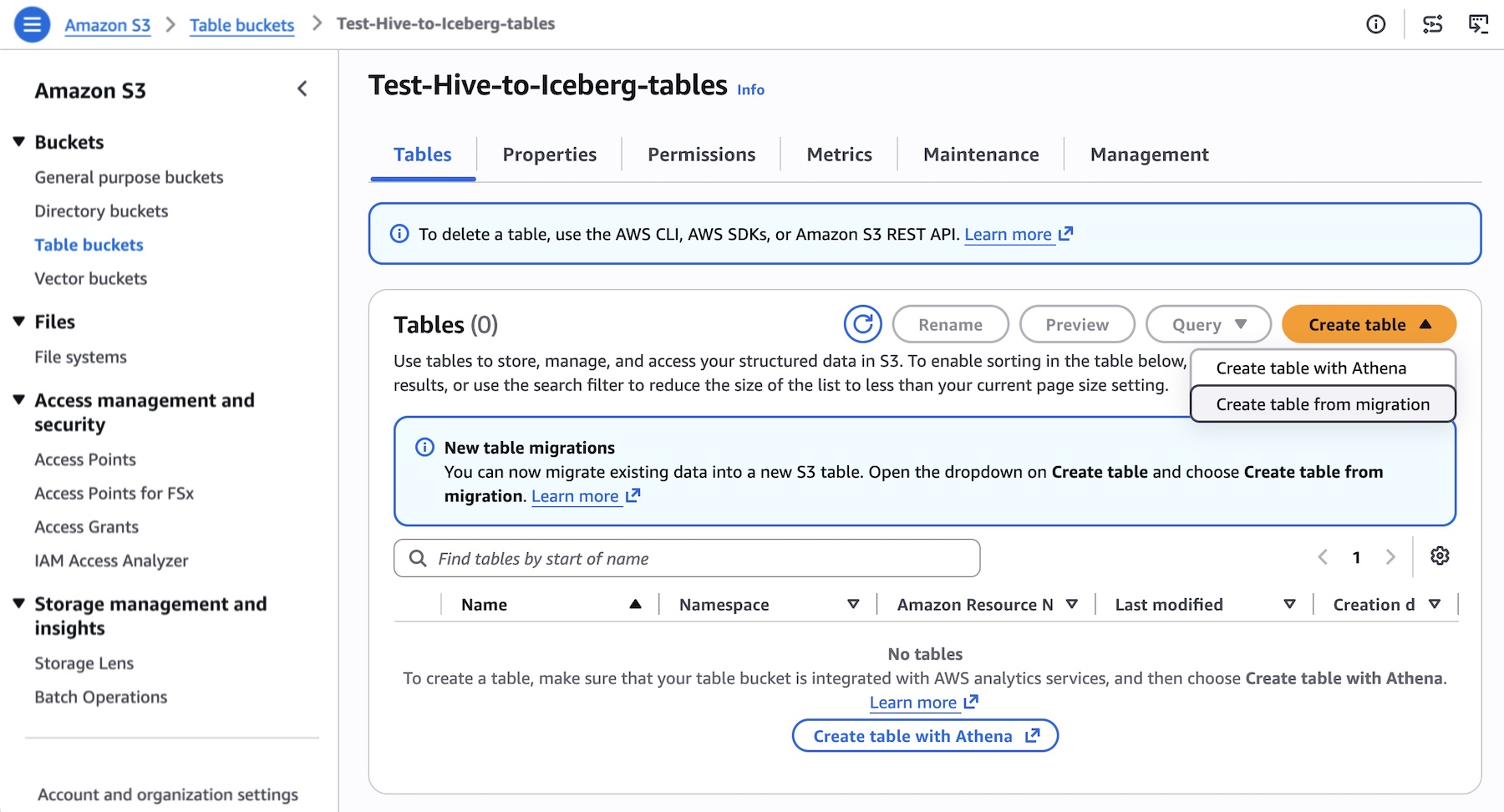
The introduction of managed migration for Amazon S3 Tables represents a shift toward API-driven, "set-and-forget" infrastructure management. By integrating the migration logic directly into the S3 Tables service, AWS has effectively abstracted the complexity of data conversion.
The managed workflow encompasses the entire lifecycle of a migration, including:
- Compatibility Assessment: Before data movement begins, the service performs an automated scan of the source objects, generating a comprehensive compatibility report to identify potential data type mismatches or structural inconsistencies.
- Automated Data Handling: The service executes the necessary file recompression, type conversion, and compaction, ensuring that the destination Iceberg table is optimized for performance from the moment it is created.
- Zero-Downtime Synchronization: One of the most critical aspects of this update is the ability to sync source Hive tables to Iceberg targets while production workloads remain active. Engineers can perform iterative synchronizations, copying only the delta changes between the source and target, which minimizes the eventual cutover time to a mere window of a few minutes.
Financial and Operational Implications
From a financial perspective, the managed migration model is designed to be highly cost-effective. AWS has confirmed that customers are only billed for the data volume copied during the process, with no additional service charges for the conversion logic itself. Furthermore, the migration process respects existing storage tiers, ensuring that data currently residing in S3 Intelligent-Tiering remains in its optimized storage class throughout the transition.
This represents a notable departure from traditional "lift and shift" methodologies, where the overhead of running temporary migration clusters often resulted in unexpected cost spikes. By leveraging native AWS infrastructure, organizations can now perform migrations at a fraction of the historical cost, allowing teams to redirect budget toward high-value analytics rather than infrastructure maintenance.

Strategic Context and Industry Impact
The push toward Iceberg is not merely a technical preference but a strategic necessity for organizations striving for data sovereignty and interoperability. By adopting an open standard, companies avoid the "vendor lock-in" associated with proprietary warehouse formats. This migration capability significantly lowers the barrier to entry for firms currently trapped in legacy Hive architectures, providing a clear, low-risk path to modernize their data foundations.
Data platform architects are viewing this development as a key enabler for "data mesh" architectures, where the ability to easily move, share, and query data across different departments and tools is paramount. With the native integration of Amazon Athena and Amazon SageMaker Unified Studio, the transition to S3 Tables ensures that data scientists and analysts can leverage their new Iceberg datasets immediately upon completion of the migration.
Implementation and Developer Workflow
For organizations that prefer automation through code, AWS has provided multiple avenues for execution. The AWS Command Line Interface (AWS CLI) and various AWS SDKs support the new start-table-migration and sync-table-migration commands. This allows infrastructure-as-code (IaC) teams to incorporate migration jobs into their CI/CD pipelines, ensuring that the transition to Iceberg can be managed with the same rigor as application deployments.
Furthermore, the introduction of the migrating-hive-tables-to-s3-tables skill in the Agent Toolkit for AWS offers a modern interface for developers using AI-assisted coding tools. By providing step-by-step guidance and built-in safety guardrails, this tool helps reduce the likelihood of human error during the configuration of complex migration parameters, such as defining specific compaction strategies or snapshot management policies.
A Chronology of Modernization
The release follows a steady progression of AWS investment in S3 as a platform for structured data.
- Phase 1: Foundations. Initial support for S3 as a reliable, highly available object store for raw data files.
- Phase 2: The Glue Era. The introduction of the AWS Glue Data Catalog, which allowed for centralized metadata management across distributed S3 files.
- Phase 3: The S3 Tables Milestone. The launch of S3 Tables, which brought native, managed support for high-performance table formats directly into the S3 service layer.
- Current State: The introduction of managed migration, effectively closing the gap between legacy Hive data and modern Iceberg capabilities.
Regional Availability and Future Outlook
As of the current announcement, the managed migration capability is available in a broad selection of AWS Regions, including US East (N. Virginia, Ohio), US West (Oregon), Asia Pacific (Mumbai, Singapore, Sydney, Tokyo), and Europe (Frankfurt, Ireland, Stockholm).
The industry expectation is that this feature will serve as a catalyst for widespread adoption of Iceberg across the AWS ecosystem. As more organizations complete their migrations, the secondary effects—such as improved query performance and reduced storage costs—will likely provide a measurable competitive advantage.
Looking ahead, analysts anticipate that AWS will continue to expand the scope of these managed migrations to include other source formats and perhaps more complex cross-account migration scenarios. For now, the focus remains on providing a stable, scalable, and efficient bridge for the millions of Hive tables currently supporting global business operations. By removing the friction from the migration process, AWS is not just providing a tool; it is accelerating the industry-wide transition to a more open, performant, and cost-effective data architecture.
Related posts: