OpenAI Executives Reveal ChatGPT Handles One-Fifth of Google Search Volume in Private Briefing

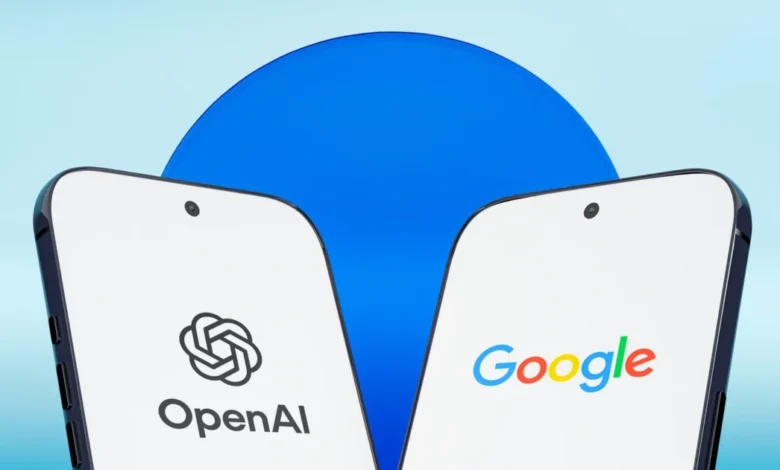
Artificial intelligence powerhouse OpenAI has quietly offered a striking benchmark regarding the scale of its flagship conversational product, revealing that ChatGPT currently processes approximately one-fifth the volume of search-like queries handled by industry titan Google. The disclosure, made by OpenAI Consumer Product Lead Adam Fry during a private industry dinner in New York City, sheds new light on the rapidly shifting landscape of information retrieval. While the statistic highlights ChatGPT’s staggering rise as an alternative search destination, it also lays bare the complex and often contentious metrics used to measure digital search volume in the era of generative artificial intelligence.
The remarks were captured during a Monday evening gathering hosted by OpenAI and later brought to light when tech publication Big Technology published the complete transcript. As consumers increasingly turn to conversational models rather than traditional search engines for answers, the boundary between generative AI interaction and traditional web queries has grown increasingly blurred. Fry’s revelation provides a rare quantitative glimpse into how OpenAI evaluates its internal metrics against the world’s most dominant search engine, even as analysts and third-party data providers grapple with how to accurately compare fundamentally different user experiences.
Background and Context of the Disclosures
For years following its late 2022 public debut, ChatGPT was utilized primarily as a productivity assistant, creative writing tool, and coding companion. Users logged on to draft emails, debug software, or brainstorm concepts—tasks that rarely necessitated real-time retrieval of external web pages. However, as OpenAI continuously upgraded the platform with live web-browsing capabilities, the nature of user engagement shifted dramatically. Over the past year, millions of consumers began treating ChatGPT as an all-purpose oracle, posing complex queries regarding current events, local businesses, financial trends, health concerns, and factual information that previously would have been directed straight to a traditional browser search bar.
During the New York discussion, Big Technology journalist Alex Kantrowitz pressed Fry on the precise mechanics of how OpenAI classifies and counts these interactions. Specifically, Kantrowitz questioned whether a multi-turn conversation containing a web lookup is counted as a single search or if every individual prompt requiring external data is tallied separately. Fry clarified the company’s internal methodology, stating directly that every instance in which a user asks a question prompting the system to access the live web constitutes an individual search event.
Despite providing this definition, Fry’s disclosure left several vital parameters unaddressed. He did not explicitly name the specific Google traffic baseline to which OpenAI was comparing its data, nor did he specify the geographical regions or the exact timeframe covered by the internal study. Furthermore, industry observers have noted that if ChatGPT truly processes 20% of Google’s search volume, its query volume would dwarf that of Microsoft Bing by a substantial multiple, highlighting a monumental shift in market dynamics. Concurrently, reports indicate that ChatGPT’s weekly active user base expanded significantly over a brief two-month window, climbing from 1 billion to 1.2 billion users.
Diverging Methodologies: Internal Metrics Versus External Analytics
The challenge of quantifying AI-driven search versus traditional keyword queries has created a noticeable divergence between internal corporate claims and independent third-party assessments. In February, search marketing platform Ahrefs published an independent estimate suggesting that ChatGPT’s search volume hovered around 12 percent of Google’s total. Ahrefs arrived at this figure by examining data from a joint Harvard University and OpenAI study published in July 2025, which estimated that ChatGPT handled approximately 2.5 billion daily prompts. The firm calculated that roughly 65 percent of those prompts fell into categories that users would have historically submitted to a traditional search engine.
Ahrefs then measured that output against Alphabet’s public disclosure that Google processes over 5 trillion searches annually. However, industry analysts point out a fundamental methodological clash: while Fry’s metric counts explicit web-retrieval executions triggered by the AI, Ahrefs categorized prompts based on the intent behind the user’s text. This structural difference explains why internal calculations and external analytical models yield varying ratios.
A starker contrast emerges when examining downstream referral traffic—the actual volume of human visitors directed from search engines and AI platforms to third-party publisher websites. While search engines have historically served as the primary digital gateway for the web, generative AI platforms often summarize information directly within the chat interface, potentially reducing outbound clicks.
According to Ahrefs’ web tracker, which analyzes data from over 118,000 participating websites utilizing its free analytics tool, the referral disparity remains massive. In metrics updated in November, Google accounted for a commanding 24.74 percent of tracked referral traffic across those domains. In sharp contrast, ChatGPT accounted for a mere 0.36 percent of referral traffic. This significant gap underscores a central tension of the generative AI era: while users increasingly rely on AI for information generation, traditional search engines remain the dominant drivers of physical clicks to external publishers, news organizations, and e-commerce platforms.
Alphabet’s Response and the Evolution of Traditional Search
While OpenAI charts its rapid ascent in query handling, traditional search leader Alphabet continues to report robust growth within its core ecosystem, driven heavily by its own proprietary artificial intelligence integrations. In its third-quarter financial release, Alphabet executives addressed the shifting market landscape by focusing on query growth rates rather than raw totals.
During the earnings report presentation, Alphabet CEO Sundar Pichai highlighted that the company’s ongoing integration of generative AI features—such as AI Overviews—has fundamentally transformed user habits. Pichai revealed that Google’s year-over-year search query growth rate had reached its highest level in five years, signaling that the integration of conversational AI interfaces into traditional search engines has stimulated, rather than cannibalized, overall user engagement. This dynamic complicates simplistic narratives of disruption, suggesting that consumers are not merely abandoning traditional search engines for standalone AI chat interfaces, but are instead expanding their overall volume of digital inquiries across multiple platforms.
Implications for Digital Marketers, SEO Professionals, and Advertisers
The revelation that ChatGPT handles a volume of search-like queries equal to one-fifth of Google’s colossal scale carries profound implications for the digital marketing, search engine optimization (AI), and online advertising industries. For over two decades, digital strategy has been predicated on optimizing content to rank within traditional search engine results pages. The emergence of a secondary search giant operating under entirely different UI paradigms and monetization structures forces brands to rethink how information is discovered.
If conversational AI platforms capture 20 percent of the query volume previously routed to traditional search engines, marketing channel planners and enterprise strategists can no longer afford to treat AI assistants as secondary novelties. However, because ChatGPT’s referral traffic footprint remains a fraction of Google’s, traditional return-on-investment (ROI) metrics based on click-through rates break down entirely. Brand visibility inside an AI-generated synthesis requires entirely different optimization approaches than ranking for keywords on a conventional results page.
Furthermore, industry analysts caution that comparing OpenAI’s query metrics directly with Google’s requires careful contextualization. Neither Fry’s stated one-fifth ratio nor Google’s surging year-over-year growth rate definitively answers whether users are substituting traditional search engines with AI, or simply executing parallel searches across both mediums throughout their daily routines. Consequently, media planners incorporating AI platforms into their outreach strategies must clearly distinguish between query volume metrics and actual downstream referral traffic when evaluating campaign performance.
Looking Ahead: Transparency and the Future of Information Retrieval
As the boundary between conversational intelligence and web search continues to dissolve, the demand for standardized measurement criteria grows increasingly urgent. At present, comparing OpenAI’s internal estimates with independent trackers remains an imprecise science, largely due to differing definitions of what constitutes a "search." Greater transparency from OpenAI regarding its geographical baselines, temporal parameters, and comparative datasets will be vital for market researchers attempting to map the future of digital discovery.
Meanwhile, independent analytics providers will continue to monitor month-by-month referral shares to gauge the tangible economic impact AI platforms have on web publishers. Whether ChatGPT’s 20 percent query share represents an early milestone on the path toward supplanting traditional search or merely establishes a complementary parallel ecosystem, the structural transformation of how humanity accesses information is already well underway. Industry stakeholders moving forward must navigate a dual reality: one defined by massive, conversational query volumes within AI chat windows, and another anchored by the enduring web traffic referrals driven by legacy search infrastructure.