Italy on the Brink: Nationwide Protests, Surging Inflation, and Agricultural Supply Chain Crises Paralysis the Nation

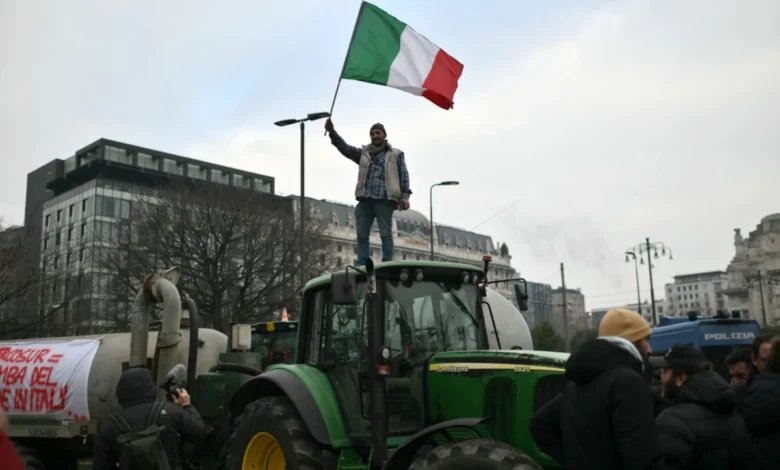
The economic and social landscape of Italy reached a critical tipping point as widespread public anger over soaring inflation, skyrocketing energy costs, and escalating military expenditures manifested in coordinated demonstrations across more than 50 cities. The day of national mobilization, spearheaded by the grassroots union USB, saw an unusual alliance of farmers, truck drivers, students, and taxi workers take to the streets to voice profound economic distress. This unrest coincides with alarming new financial data released by the Italian national statistics agency, Istat, which confirmed that the nation’s inflation rate surged to 5.4 percent in October—marking its highest level in over three years and significantly outpacing economic growth and price stabilization figures seen in other major global economies.
The focal point of Friday’s protests vividly illustrated the deep-seated friction between working-class citizens and institutional priorities. In Turin, the morning demonstrations turned confrontational when local farmers dumped two large bins of manure directly in front of the city hall. The symbolic act preceded a massive march of tens of thousands of demonstrators voicing fierce opposition to the current economic trajectory. Speakers at the rally explicitly targeted the administration’s fiscal allocation toward military defense, condemning authorities for allegedly prioritizing weapons manufacturing over public welfare and basic household affordability. Law enforcement responded with a heavy presence, eventually deploying water cannons to disperse crowds that pressed too close to the prefecture building. Similar scenes of defiance, albeit varying in intensity, played out from Milan to Bologna, underscoring a generalized fatigue with the status quo under Prime Minister Giorgia Meloni’s administration.
A Timeline of Escalating Tensions: From Regional Blockades to General Strike
The friction culminating in Friday’s general strike was not an isolated event, but rather the explosive climax of a month-long battle waged by agricultural producers and transport workers across the Italian peninsula. The chronology of the recent crisis traces back to mid-October, when supply chain operators in the country’s southern regions initiated a series of strategic blockades targeting vital roadways, commercial ports, and fuel depots.
Fuel prices, exacerbated by geopolitical instability and the aftermath of the conflict involving Iran, saw diesel costs soar to approximately one-third higher than pre-crisis baselines. Compounding the issue, a temporary diesel tax discount previously implemented by the government expired at the beginning of October, pushing operating margins past the breaking point for independent truckers and small-scale farmers. Despite peaceful intentions emphasized by organizing bodies—such as the Sicilian trucking coalition led by Vincenzo Aleccia in Trapani—the economic fallout of these localized strikes was immediate and severe.
For weeks, regional distribution networks were choked off, preventing raw materials from reaching processing plants. It was not until October 22, following intense negotiations and mounting threats of total commercial paralysis, that Prime Minister Meloni’s cabinet approved a targeted 175.2 million euro aid package designed to cushion the blow for truckers, fishermen, and agriculturalists. This injection of capital brought total state-backed tax credits and relief funds to roughly 540 million euros. While this intervention prompted the removal of southern pickets by October 23, industry leaders like Sicilian truckers’ association president Giuseppe Richichi argued that the financial relief merely represented the settlement of pre-existing state obligations rather than a genuine structural remedy.
Economic Pressures and the Staggering Toll on Iconic Italian Industries
The operational paralysis caused by transport blockades delivered a devastating blow to some of Italy’s most globally revered culinary exports, exposing profound vulnerabilities in the domestic agricultural supply chain. The dairy and pasta sectors bore the heaviest burden, as halted supply lines starved processing facilities of necessary ingredients.
Buffalo mozzarella production, bound by strict traditional protocols requiring milk to be processed within 60 hours of milking, ground to a sudden halt in the areas surrounding Naples. Pier Maria Saccani, director of the Consortium for the Protection of Mozzarella di Bufala Campana DOP, reported that approximately one million liters of fresh buffalo milk went entirely unused in a single 24-hour period. The resulting financial loss was estimated at 3 million euros for a single day, exacerbating a scenario where producers had already absorbed a staggering 30 percent increase in operating costs prior to the blockades.
Concurrently, major pasta manufacturers were forced to suspend operations as wheat and semolina deliveries failed to arrive. Prominent brands including Rummo in Campania and La Molisana in Campobasso halted their manufacturing plants entirely. Puglia, a region responsible for producing roughly a quarter of Italy’s durum wheat and acting as the primary milling hub for national semolina production, became a bottleneck of idle machinery and rotting harvests. Supermarkets from Naples down to Sicily were left with barren shelves, prompting retailers to post formal apologies to consumers who faced acute shortages of fresh pasta, regional cheeses, and meat products.
The North-South Divide and Structural Inflationary Pressures
The fallout from the transport strikes highlighted a stark economic and infrastructural divide within the country. Ironically, the southern regions responsible for cultivating the nation’s agricultural wealth suffered the most from the logistics collapse. Federdistribuzione, the national retail association, noted that vast quantities of fresh produce rotted prematurely in warehouses across Campania, Puglia, and Calabria simply because regional distribution channels could not navigate the localized blockades without national media attention. Organizers in the south frequently voiced feelings of profound neglect, arguing that metropolitan-focused media outlets and national policymakers routinely overlooked the acute struggles of rural southern economies.
This contemporary crisis sits atop decades of persistent inflationary pressure. Historical data compiled by Istat indicates that while general consumer prices climbed by approximately 63 percent between the years 2000 and 2025, the cost of basic food items skyrocketed by nearly 90 percent over the same timeframe.
When juxtaposed with international metrics, Italy’s current economic climate reveals intense domestic vulnerability. While U.S. price inflation moderated to 3.7 percent over the year leading into September, and China’s inflation hovered at a modest 0.9 percent, Italy’s consumer price index breached 5.4 percent in October. Energy costs within the country surged by a remarkable 31.4 percent compared to the previous year. The extremity of the situation manifested in striking visual testimony across the south, where soaring prices for diesel and gasoline prompted some frustrated citizens to resort to alternative transportation, including riding horses through the streets of Naples.
Government Posture and Institutional Response
Prime Minister Meloni’s administration has adopted a notably unyielding stance toward the wave of civil disobedience. Learning from the massive tractor-led protests that converged on Rome in February 2024—where agriculturalists demonstrated against burdensome European Union green directives, cheap foreign imports, and administrative overreach—the current government moved swiftly to contain potential disruptions ahead of Friday’s general strike.
The Interior Ministry authorized a series of preventive arrests targeting vocal organizers, while Transport Minister Matteo Salvini issued stern warnings of heavy legal sanctions against transport workers unions, effectively forcing certain sectors to scale back planned walkouts. Despite these deterrents, localized clashes and aggressive demonstrations occurred, highlighted by the deployment of water cannons by police in Turin.
Implications for the Future of Italian Economic Stability
The convergence of general strikes, agricultural boycotts, and surging inflationary metrics presents a multifaceted challenge for Rome. Economists suggest that while short-term fiscal packages like the 540 million euro relief fund provide temporary liquidity, they fail to address the root structural causes of Italy’s energy dependency and agricultural cost burdens.
As consumer purchasing power continues to erode under the weight of high utility bills and inflated grocery prices, public dissatisfaction remains a volatile political variable. The ability of the current administration to balance fiscal compliance, international military commitments, and domestic socioeconomic stability will determine whether these protests remain isolated expressions of seasonal outrage or signal the beginning of a broader, sustained challenge to national governance.