Radaris.com domain transfer highlights the escalating legal battle over Daniel’s Law and data broker accountability


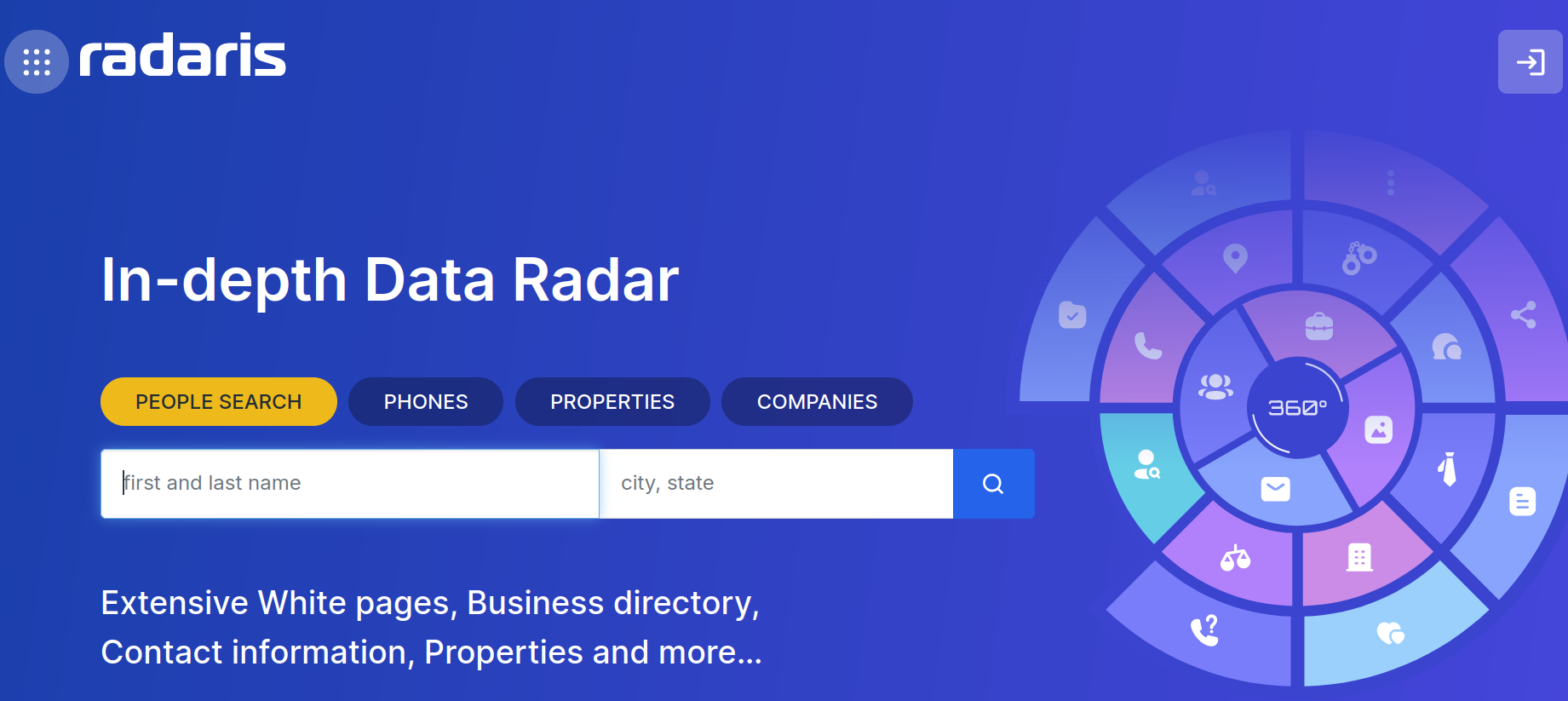
The recent judicial order transferring the Radaris.com domain—alongside more than a dozen associated web properties—to Atlas Data Privacy Corp marks a watershed moment in the enforcement of New Jersey’s Daniel’s Law. For years, the Radaris platform operated with a reputation for systemic non-compliance, ignoring thousands of requests to remove personal information from its extensive people-search databases. This forced seizure, executed following a series of contentious court appearances and allegations of legal obstructionism, serves as a stark reminder of the mounting pressure facing the consumer data brokerage industry as they clash with emerging state-level privacy mandates.
The Origins of the Conflict
The legal conflict stems from the implementation of Daniel’s Law, a New Jersey statute named in honor of Daniel Anderl, the son of U.S. District Judge Esther Salas. The law was enacted following a tragic 2020 incident in which an assailant targeted the judge’s home, having easily obtained the family’s home address through online data brokers. The statute grants state law enforcement officials, judicial officers, and their families the right to have their personal information scrubbed from commercial data broker sites. Critically, it includes a punitive provision that allows for fines of $1,000 per violation for every instance in which a broker ignores a valid removal request.
Atlas Data Privacy Corp, a firm dedicated to enforcing these privacy protections, initiated litigation against Radaris in February 2024. The lawsuit alleged that the site, which aggregates vast amounts of public and private data, had systematically failed to respect the protected status of individuals covered under the law.
A History of Evasion and Shell Games
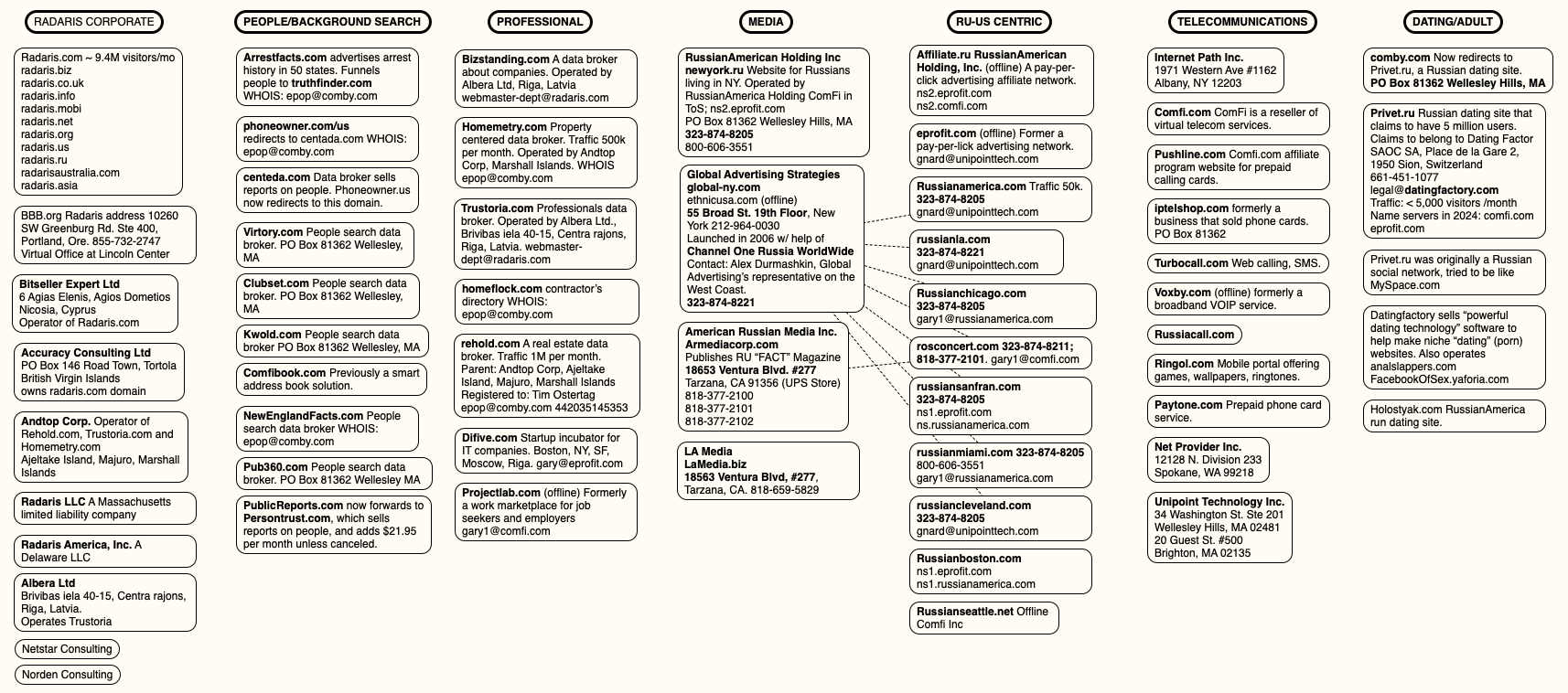
The operational history of Radaris has long been characterized by a complex, layered corporate structure. Investigations by KrebsOnSecurity and subsequent legal filings have revealed that the company is effectively run by Igor and Dmitry Lubarsky, brothers residing in Massachusetts. The siblings have maintained a sprawling network of people-search companies, dating services, and affiliate programs, often utilizing fictitious personas to shield their involvement.
Central to the case was the discovery of "Gary Norden," a pseudonym used by the brothers to represent the company in press releases and investor communications. When questioned about the firm’s ownership, Radaris’s legal counsel initially attempted to deflect, suggesting that the true operators were Ukrainian entities. However, documents obtained during the discovery process—totaling more than 10,000 emails—paint a different picture. They suggest that companies such as Bitseller Expert Limited, Andtop Company, and Digital Orbit Corp were merely administrative shells, all managed from the same virtual offices and controlled by the same small group of individuals in the Boston area.
Matt Adkisson, CEO of Atlas Data Privacy Corp, described this tactic as an "island-hopping" strategy. By constantly updating terms of service and shifting management to jurisdictions such as the Marshall Islands, the Seychelles, or the British Virgin Islands, the operators sought to complicate service of process and evade liability. In one notable instance, when the defense claimed a Marshall Islands entity was the true manager of the site, an investigator hired by the plaintiffs discovered that the entity in question did not legally exist at the time of the claim.
The Legal Seesaw: 2017 to Present
The recent transfer of the Radaris domain is not the first time the company has faced such scrutiny. In 2017, the firm lost a class-action lawsuit due to a failure to appear, resulting in a $7.5 million default judgment. At that time, the court ordered the domain registry Verisign to transfer the domain. Radaris’s counsel, Val Gurvits of the Boston Law Group, successfully appealed that order by arguing that the court had failed to name the correct owner, then identified as the Cyprus-based Bitseller Expert Limited.
The current legal strategy, however, has been more exhaustive. Raj Parikh, a partner at PEM Law and lead counsel for the current litigation, noted that the industry had relied on "attrition" to survive for over a decade. By dragging out procedural battles, brokers could exhaust the resources of plaintiffs’ attorneys. In this instance, Atlas committed to a long-term strategy, refusing to be deterred by the shell companies or the jurisdictional obfuscation that had shielded the Lubarsky brothers in previous years.
Official Responses and Current Status
Following the August 26, 2025, ruling, the Radaris.com domain was successfully transferred to Atlas. The site, which previously generated an estimated $42,000 in monthly revenue, now serves as a landing page detailing the court order.

Attorneys representing the defendants, including Victor Worms, have challenged the legality of the transfer. Worms has argued that because "Radaris.com" is a domain name rather than a legal entity, it lacks the capacity to be sued, characterizing the transfer as a violation of constitutional due process. The defense has filed a motion to vacate the judgment and intends to pursue appeals, potentially setting the stage for a protracted battle in higher courts.
Broader Industry Implications
The Radaris case is a microcosm of a much larger national debate. While Atlas continues its pursuit of over 150 data brokers, the industry is pushing back. At least 70 of these lawsuits have been moved to federal court, with brokers arguing that statutes like Daniel’s Law are overly broad and infringe upon First Amendment rights regarding the dissemination of public information.
The constitutional validity of these laws remains in flux. In August 2025, a federal district court ruled that West Virginia’s version of Daniel’s Law was facially unconstitutional. With the Third Circuit Court of Appeals currently reviewing the New Jersey statute, legal observers expect the issue to eventually reach the U.S. Supreme Court.
Privacy experts argue that the lack of a comprehensive federal privacy framework is the primary driver of this chaos. Justin Sherman, a noted privacy researcher, emphasizes that state-level laws—while well-intentioned—often contain exemptions for data considered "publicly available," such as motor vehicle records, property filings, and court documents. As long as these exemptions exist, people-search sites can continue to operate within the letter of the law while still profiting from the exposure of personal details.
Furthermore, the integration of people-search revenue models with broader advertising ecosystems—such as the partnership between the Radaris family of sites and the Lifetime Value Company—demonstrates how deeply ingrained these businesses are in the modern digital economy. Even entities like Onerep, which claim to provide privacy-focused removal services, have been found to be simultaneously operating the very data-broker sites that threaten user privacy, creating a "selling the cure to the disease" business model.
The Path Forward for Consumer Privacy
The exposure of the Lubarsky brothers’ operations and the subsequent domain seizure underscore a systemic vulnerability in American digital life. Without a unified, national policy that mandates strict data hygiene and limits the collection of personal information, individuals remain at the mercy of a fragmented landscape of state laws and aggressive, hard-to-reach commercial brokers.
The breach at IDScan.net, which resulted in the exposure of 153 million driver’s licenses, serves as a further warning of the risks inherent in the status quo. As digital identity becomes more commodified, the ability of private citizens to exercise control over their own personal information remains limited.
As the legal appeals in the Radaris case proceed, the outcome will likely shape the future of how data brokers operate in the United States. Whether the judiciary continues to favor the strict privacy protections afforded to government officials or tilts toward the expansive, data-driven interests of the brokerage industry will be a defining issue for 21st-century digital rights. For now, the Radaris case serves as a warning to the industry that the era of complete impunity may be coming to a close, provided that plaintiffs are willing to commit the significant time and resources required to peel back the layers of corporate deception.
Related posts: