Tesla begins early production of Optimus humanoid robots as global competition in industrial automation intensifies


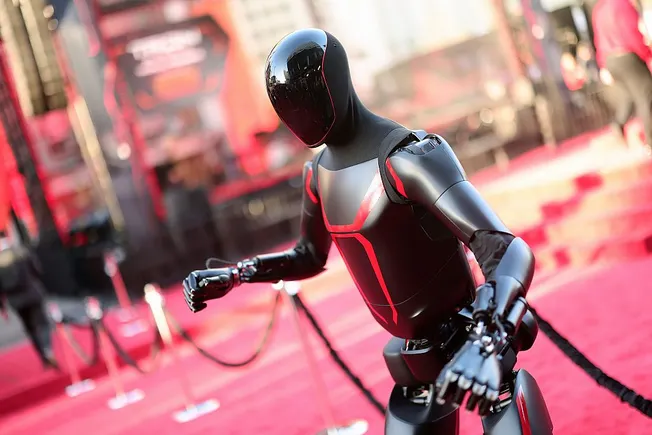
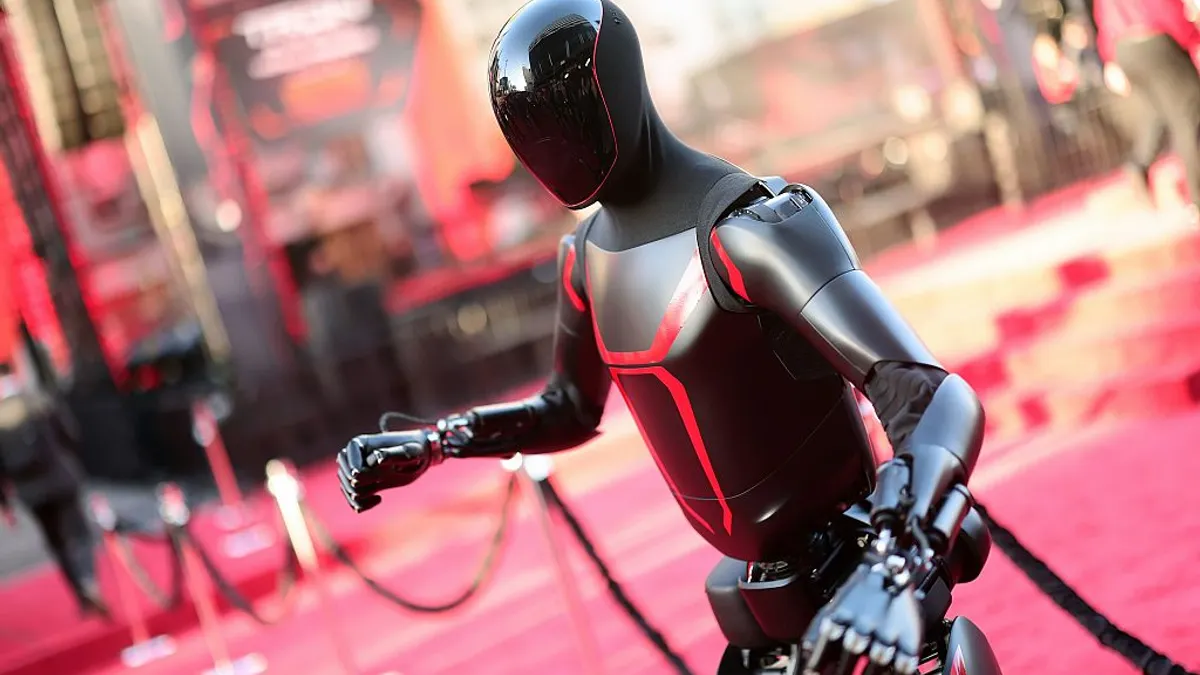
The race to redefine the factory floor has officially entered the era of the humanoid, as Tesla begins early production of its Optimus robot at a dedicated facility in Fremont, California. Following an earnings call on October 21, 2026, CEO Elon Musk confirmed that the company is transitioning from prototype development to initial manufacturing, setting the stage for a rollout of autonomous workers designed to handle dangerous, repetitive, and labor-intensive tasks. This milestone signals a pivotal shift in the automotive sector, where major players are increasingly pivoting toward becoming robotics-integrated mobility companies.
The emergence of the Optimus program arrives at a critical juncture for the manufacturing industry. As labor shortages persist globally and the demand for high-precision production increases, companies like Tesla, Toyota, and Hyundai are betting billions that the humanoid form factor—built to operate in environments designed for humans—will prove more versatile than traditional, fixed-base industrial arms.
A Chronology of the Humanoid Surge
The development of the Optimus program has been marked by rapid, albeit iterative, advancements. Since the initial unveiling of the "Tesla Bot" concept in 2021, the company has focused heavily on refining the robot’s actuators, sensory integration, and artificial intelligence foundation. By 2025, the platform began appearing in public demonstrations, showcasing improved stability and dexterity.
Concurrent with Tesla’s progress, industry rivals have been moving at an aggressive pace:
- 2023-2024: Major automotive manufacturers began formalizing their robotics roadmaps, identifying humanoid labor as a solution to stagnant productivity and rising wages.
- Late 2025: Boston Dynamics, under the ownership of Hyundai, inaugurated a specialized robotics testing facility in Savannah, Georgia. The center serves as a proving ground for the Atlas humanoid, which is being trained to navigate the complexities of automotive assembly lines.
- October 2026: Toyota announced a massive $6.4 billion annual investment plan, with a target to deploy 400,000 robots into its production network. The strategy relies on "ELEY" (Embodied Learning robot for Enhancing Yield), a system designed to mirror the movements of human factory workers.
- Late October 2026: Tesla confirms the commencement of early-stage production for Optimus in Fremont, with a goal of customer deliveries beginning by the end of 2027.
The Challenge of Data and Training: The Optimus Academy
A primary differentiator in the current robotics landscape is the method of "training" these machines. In the automotive world, Tesla has long relied on its massive fleet of vehicles to collect real-world driving data, which is then fed into neural networks to improve its Full Self-Driving (FSD) software. However, the humanoid robotics environment is significantly more chaotic and less structured than highway driving.
Musk acknowledged this reality during the October earnings call, noting that Tesla lacks a pre-existing "fleet" of humanoid robots to gather training data. To bridge this gap, Tesla is establishing the "Optimus Academy." This initiative involves the deployment of 10,000 to 20,000 robots tasked with practicing a vast array of industrial maneuvers. Through a process Musk described as "self-play," these robots will interact with their environment and each other, creating a data flywheel that accelerates the machine’s ability to perform complex, non-preprogrammed tasks.
Musk drew a comparison to human development, noting that like a toddler, the robot must progress from instability to competence. "Initially, they’re sort of wobbly and they don’t know how to do things, and eventually they learn to execute complex sequences, which is a major milestone for autonomy," Musk stated. This "learning by doing" approach is essential for a robot expected to operate in dynamic manufacturing environments rather than static, highly choreographed labs.

Technological Infrastructure: The AI5 Integration
The hardware supporting these software advancements is equally critical. Tesla is leveraging its Terafab facility in Texas to produce the next-generation AI5 chip. These in-house processors are designed to handle the massive compute load required for real-time decision-making in a humanoid form. According to the company, the integration of these chips into the Optimus platform is slated for April 2027, which is expected to drastically increase the robot’s processing power and responsiveness.
The goal is to move beyond the limitations of preprogrammed scripts. Tesla intends to release demonstration footage in the coming weeks that features the Optimus unit navigating tasks that have not been hard-coded into its operating system, highlighting its ability to interpret visual and physical inputs on the fly.
Market Context and Economic Implications
While the headlines are currently dominated by the novelty of humanoid robots, the statistics reveal a more nuanced reality. According to data from the International Federation of Robotics (IFR), the global robotics market remains dominated by traditional industrial arms and autonomous mobile robots (AMRs). Last year, the total number of robots added to global operations reached 603,000 units, yet humanoids accounted for only about 7,000 of that total.
However, the rapid growth in this segment suggests that the "humanoid" category is reaching an inflection point. Analysts note that as the cost of sensors, batteries, and compute hardware continues to fall, the barrier to entry for humanoid integration is lowering. For manufacturers, the primary incentive is the mitigation of labor gaps. By automating repetitive and physically taxing roles, companies hope to increase uptime and reduce injury rates among human workers, while simultaneously optimizing production flow.

The competitive landscape is fierce. Companies like Toyota are not merely buying robots; they are building the foundational models necessary for their own fleets to "observe and learn" from human employees. This represents a strategic pivot: companies are no longer just customers of robotics technology—they are becoming the developers of their own proprietary AI-driven workforce.
Broader Implications for the Future of Work
The introduction of humanoid robots into the industrial sector carries profound implications for the labor market and manufacturing methodology. If Tesla and its competitors succeed in deploying these units at scale, the nature of factory work could undergo a structural transformation.
On the one hand, the automation of "dull, dirty, and dangerous" tasks could improve occupational safety and allow human workers to transition into supervisory or high-level maintenance roles. On the other hand, the rapid integration of AI-driven machines raises questions about the pace of workforce displacement and the necessity for industrial retraining programs.
Tesla remains confident in its market positioning. Musk asserted that he would be "stunned" if any competitor could field a product that is "remotely competitive" with the version of Optimus expected for delivery by late 2027. While that statement reflects the company’s aggressive internal targets, the broader industry is clearly moving in lockstep. Whether the goal is to solve labor shortages or to achieve a new tier of production efficiency, the era of the humanoid worker has moved from the realm of speculative technology to the tangible, noisy, and high-stakes environment of the modern assembly line.
As the industry moves into 2027, the success of these programs will be measured by more than just the robot’s ability to walk or pick up an object; it will be measured by its integration into the complex, high-velocity workflows of global manufacturing. With Tesla, Hyundai, and Toyota each pursuing different, yet converging, paths to automation, the next few years promise a significant, data-driven evolution in how products are built.