Massive U.S. Department of Homeland Security Data Breach Exposes Personal Information of Over 40,000 Employees and Internal Surveillance Tools

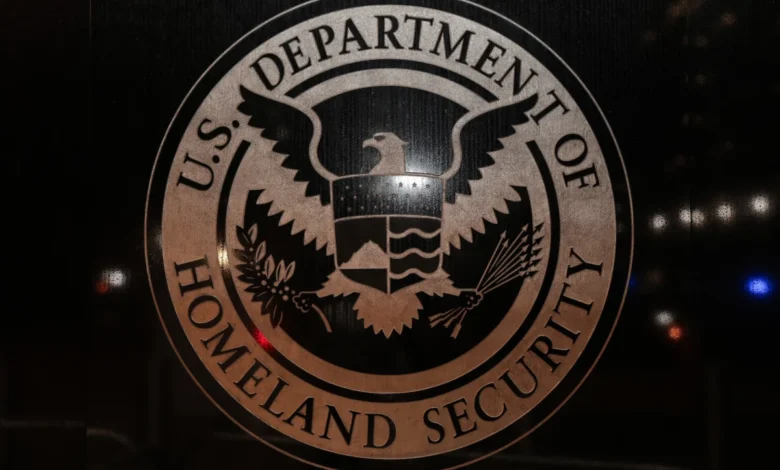
A severe and previously undisclosed data breach at the U.S. Department of Homeland Security (DHS) has resulted in the online publication of personally identifiable information belonging to more than 40,000 federal employees. The leaked dataset, which equates to roughly one-fifth of the agency’s entire 220,000-person workforce, includes names, official job titles, and direct work contact details such as corporate email addresses, office locations, and mobile phone numbers. The incident underscores a growing vulnerability within federal cybersecurity infrastructure, coming on the heels of high-profile data thefts targeting the Federal Bureau of Investigation (FBI) and the Pentagon.
The breach has raised urgent questions regarding federal network security, vendor accountability, and the operational transparency of some of the nation’s most sensitive security and immigration enforcement agencies. As investigators race to determine the full scope of the compromise, civil rights advocates and transparency groups argue that the leaked material provides an unprecedented, albeit alarming, window into the inner workings, software ecosystems, and surveillance capabilities of the Department of Homeland Security.
Origins of the Breach and the Actor Known as "Department of Peace"
The security incident came to light after an elusive hacker operating under the handle "Department of Peace" published the massive cache of data online. According to documentation accompanying the leak, the attacker allegedly harvested the information directly from an Okta single sign-on (SSO) architecture utilized by DHS. The Okta framework acts as a central digital gateway, allowing employees and external contractors across multiple sub-agencies to authenticate their identities and access primary government networks.
Beyond basic contact details, the compromised Okta logs contained critical IT and account management records. These entries detailed specific internal applications, databases, and network domains that individual employees were authorized to access.
In a brief statement left alongside the published files, the hacker justified the exfiltration by writing, "They have our information, so it’s only fair that we have theirs." The digital footprints embedded within individual file timestamps indicate that the data was systematically exfiltrated around mid-August. The hacker has so far declined to respond to media inquiries detailing the exact vector or exploit used to bypass authentication controls.
Breakdown of Affected Agencies
The leaked database spans a broad cross-section of the Department of Homeland Security, affecting personnel from foundational administrative divisions to high-threat tactical units. An analysis of the records reveals a heavy concentration of affected individuals within immigration enforcement and border security apparatuses:
- U.S. Customs and Border Protection (CBP): Accounting for more than half of the total dataset, approximately 21,000 records belong to CBP personnel. These individuals primarily operate at international airports, land borders, and maritime ports of entry across the United States.
- U.S. Immigration and Customs Enforcement (ICE) and Homeland Security Investigations (HSI): Roughly 10,000 records are linked to ICE and its primary investigative arm, HSI, which focuses on transnational criminal organizations, human trafficking, and illicit trade.
- Cybersecurity and Infrastructure Security Agency (CISA): Just under 1,000 records correspond to staffers at CISA, the federal government’s premier civilian cyber defense agency tasked with protecting critical national infrastructure.
- Other Departmental Entities: Thousands of additional records implicate personnel stationed at DHS headquarters, the Federal Protective Service (FPS), and U.S. Citizenship and Immigration Services (USCIS).
A Troubling Trend: A Chronology of Federal Cybersecurity Failures
The August DHS breach does not exist in a vacuum; rather, it represents the latest in an escalating series of catastrophic cyber incidents targeting the highest levels of the United States national security apparatus throughout the year.
- March 2026: The same hacker collective or individual operating as "Department of Peace" claimed responsibility for stealing thousands of sensitive private-sector contracts belonging to DHS. The leaked files detailed active business relationships between the federal department, major defense contractors, and private-sector surveillance vendors.
- Summer 2026: In rapid succession, federal cybersecurity agencies reported major intrusions into defense and law enforcement networks. Hackers successfully exfiltrated personnel and service records belonging to thousands of FBI agents, followed closely by a multi-month data breach within the Pentagon’s human resources wing that compromised the personal records of millions of active-duty and retired military personnel.
- Mid-August 2026: Timestamps within the newly surfaced DHS directory indicate the exfiltration of the 40,000 employee profiles from the department’s Okta authentication system.
- Fall 2026: The stolen dataset was routed to security researcher and journalist maia arson crimew, who subsequently transferred a verified copy to Distributed Denial of Secrets (DDoSecrets), a nonprofit transparency collective dedicated to hosting public-interest data leaks. TechCrunch and other independent researchers independently verified a subset of the records against offline government directories, confirming their authenticity.
Inside the Digital Ecosystem: Software Access and Surveillance Tools
Beyond personal contact information, the compromised Active Directory user groups offer a rare look at the sprawling technological architecture powering DHS operations. The logs categorize employees by their access privileges to commercial software, cloud services, and advanced data-mining platforms.
The vast majority of employees listed in the database held permissions for standard enterprise software suites, including Microsoft 365—which hosts agency email and document repositories—as well as Adobe Acrobat and Citrix virtual desktop environments. However, deeper analysis of specialized user groups reveals extensive integration with third-party tech vendors and surveillance tools:
- Facial Recognition and Mobile Verification: Over 200 CBP users were grouped under permissions for "Mobile Fortify," a specialized facial-recognition application utilized by border and immigration officers to verify individual identities and cross-reference immigration statuses in the field.
- Real-Time Cellular Surveillance: Dozens of active user groups reference Penlink, a web-based intelligence and surveillance firm. Penlink maintains long-standing contracts with ICE to supply technology capable of tracking the location data of hundreds of millions of mobile devices. Specific sub-groups, such as "Penlink PLX," are tied to thousands of HSI personnel nationwide for the real-time interception and analysis of text messages, phone calls, and digital communications.
- Mental Health and Operational Support Software: Approximately 4,500 users, primarily within ICE Enforcement and Removal Operations (ERO), were listed under "Headspace_users." This group relates to a historic federal contract held by online mental health provider Headspace, which concluded in 2023, designed to supply mental health resources to field agents. Representatives for Headspace emphasized that the company has maintained no commercial or operational relationship with DHS or ICE since the contract’s expiration.
- Emerging Technologies and Threat Intelligence: The directory also exposed isolated user groups granted access to advanced artificial intelligence tools, such as ChatGPT, among senior DHS officials. Other specialized groups were mapped to internal investigations tracking sophisticated, state-sponsored cyber espionage campaigns attributed to China-linked groups known as Salt Typhoon and Volt Typhoon.
Official Responses and Vendor Posture
As the implications of the leak reverberate across Washington, responses from institutional stakeholders have been measured or, in some cases, defensive.
A spokesperson for the Department of Homeland Security did not immediately respond to multiple requests for comment regarding the nature of the breach, whether the underlying system vulnerability has been patched, or if internal leadership was fully aware of the extent of the data theft prior to its publication.
Meanwhile, Okta issued a formal statement addressing the claims that its single sign-on architecture served as the initial point of entry for the attackers. "Okta is secure, and we have no evidence our data or systems were compromised," a company spokesperson maintained, suggesting that the breach may have stemmed from compromised administrative credentials or misconfigurations at the agency level rather than a systemic flaw within Okta’s core infrastructure.
Implications for Transparency, Privacy, and National Security
The public dissemination of high-level federal law enforcement personnel data carries profound implications for both national security and public accountability. From a security standpoint, the exposure of organizational charts, internal application access points, and direct contact channels for cybersecurity staffers and border agents presents operational risks, potentially leaving personnel vulnerable to targeted phishing, social engineering, or harassment.
Conversely, transparency advocates and legal researchers view the leaked dataset as a vital resource for holding immigration enforcement agencies accountable. Civil rights organizations have long criticized DHS and ICE for opaque operational practices, arbitrary detentions, and aggressive deportation policies—issues that have risen to the forefront of voter concerns ahead of upcoming midterm elections.
Ryan Shapiro, executive director of the transparency nonprofit Property of the People, noted that having direct institutional contact channels is crucial for navigating government stonewalling. "Email addresses and phone numbers are indispensable tools for FOIA researchers, often making the difference between a vague records request that gets stonewalled and one that gets results," Shapiro stated, criticizing what he termed the administration’s contempt for basic administrative transparency.
Emma Best, co-founder of DDoSecrets, echoed these sentiments, predicting that the leaked archive will serve as a catalyst for rigorous oversight. According to Best, the exposure of the database will empower investigative journalists, congressional committees, legal challenges, and community-led inquiries, transforming a massive security failure into an unprecedented tool for public accountability.
Related posts: