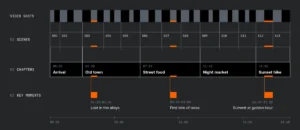
Mux Robots Reaches General Availability with Advanced AI Video Workflows and Interactive Dashboard Playground

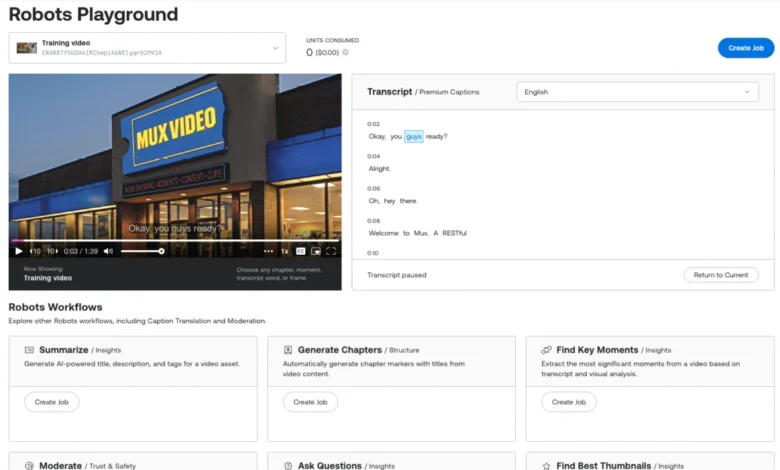
Video infrastructure and developer platform Mux has officially announced the general availability (GA) of Mux Robots, a comprehensive suite of artificial intelligence-driven video workflows accessible via a stable, production-ready API. Alongside this rollout, the company is launching the Mux Robots playground, an interactive dashboard environment designed to allow developers and content teams to test, tune, and visualize AI-powered video analysis before writing any production code. The release marks a significant milestone for video engineers seeking to automate complex video processing tasks—such as summarization, chapter generation, content moderation, and caption translation—without the friction of managing disparate machine learning pipelines.
The Evolution of Mux Robots: From Experimental Feature to Production-Ready GA
The journey toward General Availability reflects the growing demand for intelligent, automated video asset management in modern digital media ecosystems. Historically, developers looking to implement AI processing on video assets faced significant technical hurdles. Extracting actionable insights typically required stitching together multiple third-party transcription services, computer vision models, and custom natural language processing scripts. Even with specialized tooling, developers had to rely on cumbersome API testing loops, manually submitting jobs, downloading raw JSON outputs, and iteratively adjusting parameters to achieve acceptable accuracy.
Mux Robots was conceived to eliminate this friction by consolidating core video intelligence workflows into unified, single-API endpoints. Following an extensive testing and feedback period, the production-ready GA release introduces a hardened API architecture, enhanced workflow capabilities, and robust enterprise-grade reliability. Developers can now programmatically trigger complex tasks—ranging from identifying key emotional story beats to generating localized caption tracks—with a single request, drastically reducing development overhead and accelerating time-to-market for video-centric applications.

Inside the Mux Robots Playground: Visualizing AI-Driven Video Intelligence
To streamline the configuration and tuning process, Mux has introduced the Robots playground within its core dashboard. Accessible directly via the Mux Dashboard under the Robots navigation tab, the playground provides a graphical interface where users can select any video asset from their existing library—or input a specific asset ID—and execute real workflows instantly.
Crucially, the playground is not a simulated environment or a static mockup. Every job executed within the playground interfaces directly with the live Robots API. Outputs are stored in the user’s standard jobs list for 30 days, and standard unit usage applies, ensuring complete transparency between testing and production environments.
The interface addresses one of the primary pain points of video AI development: translating raw, unstructured JSON payloads into human-readable context. In the playground, complex workflow outputs are rendered as structured, interactive elements:
- Chapters and Summaries: Automatically generated video chapters are displayed as clickable, time-stamped lists that allow users to navigate directly to specific thematic segments of the video.
- Key Moments: Extracted highlights are presented as distinct cards accompanied by synchronized transcript snippets and thumbnail candidate strips, complete with relevance scoring.
- Interactive Transcripts: A side-by-side transcript panel tracks playback in real time. If the underlying speech-to-text engine—such as the Generate Premium Captions workflow—misidentifies a speaker or misspells a technical term, users can edit the label directly in the interface. The corrected track automatically replaces the legacy version on the asset, improving accuracy without requiring external file manipulation.
- Instant Clips: Once a valuable key moment is identified, users can leverage integrated Instant Clips tooling to trim the precise time range and generate a new clipped asset, complete with a dedicated playback ID, watch page URL, and manifest URL.
Parameter Tuning and Comparative Analysis
While default workflow parameters deliver strong out-of-the-box performance for generic content, specialized enterprise applications often require rigorous tuning. Different selection strategies can yield drastically different results depending on the nature of the source material. For instance, executing a Find Key Moments workflow utilizing a product-focused selection strategy yields entirely different outputs compared to an analysis optimized for narrative story beats.
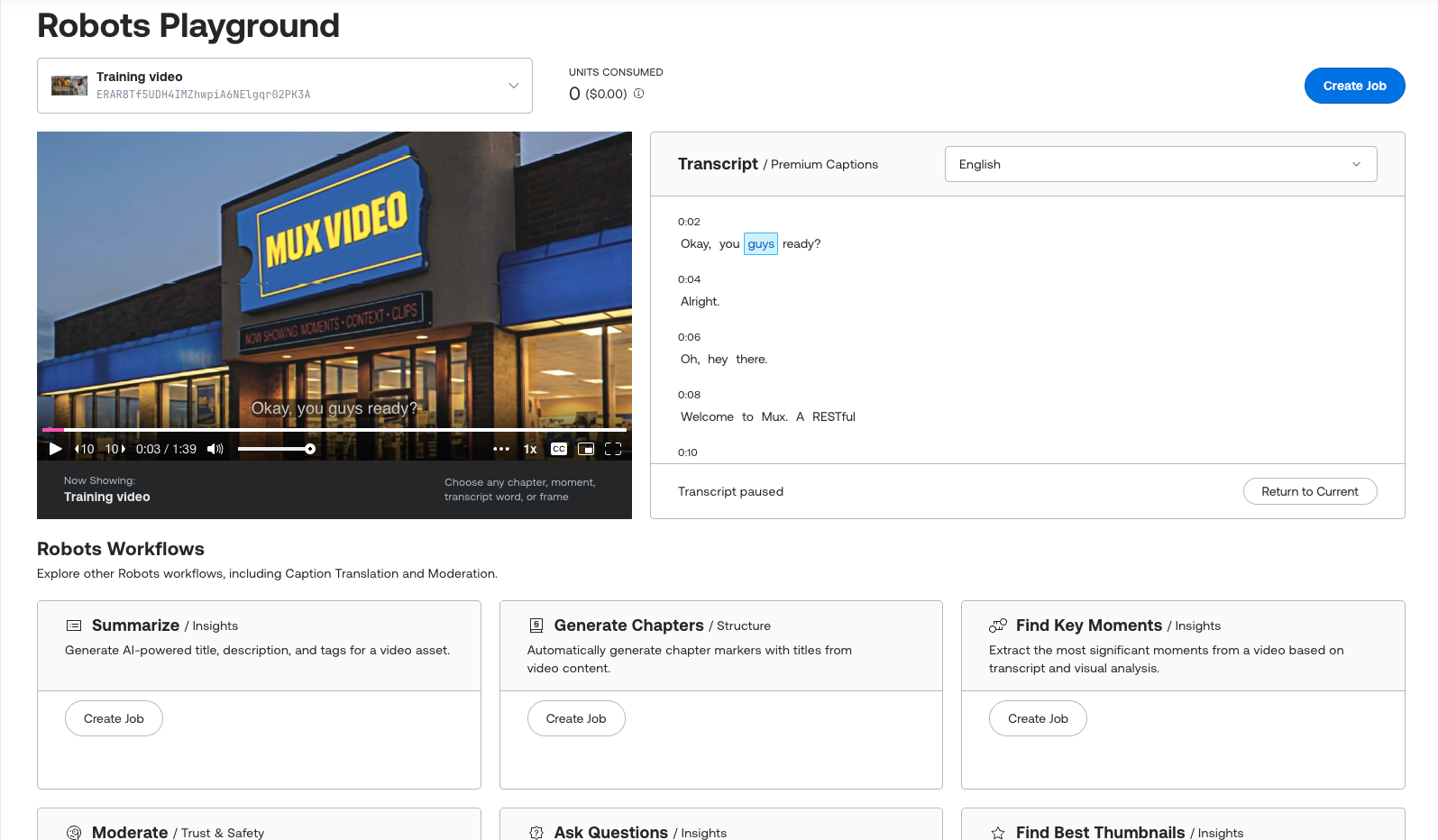
To simplify this experimentation, the playground introduces a dedicated comparison view. Users can execute a workflow multiple times under varying parameters—such as adjusting rubrics for novelty, setting specific brand terminology, or defining target audience profiles—and evaluate two jobs side by side. The interface highlights discrepancies in generated titles, timestamps, and contextual summaries, enabling engineers and content strategists to pinpoint the exact configuration required for their specific use case.
Bridging the Gap Between Experimentation and Production
A common bottleneck in AI development is the translation of successful dashboard configurations into production code. Mux has addressed this workflow gap by introducing an automated "Copy agent prompt" feature embedded within each workflow card.
Once a developer or content producer achieves the desired output in the playground, they can copy a structured instruction set designed for AI coding assistants. This payload encapsulates the required API endpoint, precise parameter configurations, output steering rules, webhook handling instructions, and integration guidelines. By pasting this prompt into a preferred coding agent, the exploratory tuning session immediately transforms into a functional software specification, cutting integration time from days to minutes.
Financial Transparency and Cost Management
Cost predictability remains a central concern for organizations scaling AI operations. Mux has structured the Robots pricing model around a transparent unit-based system, with per-workflow costs clearly outlined in official documentation.
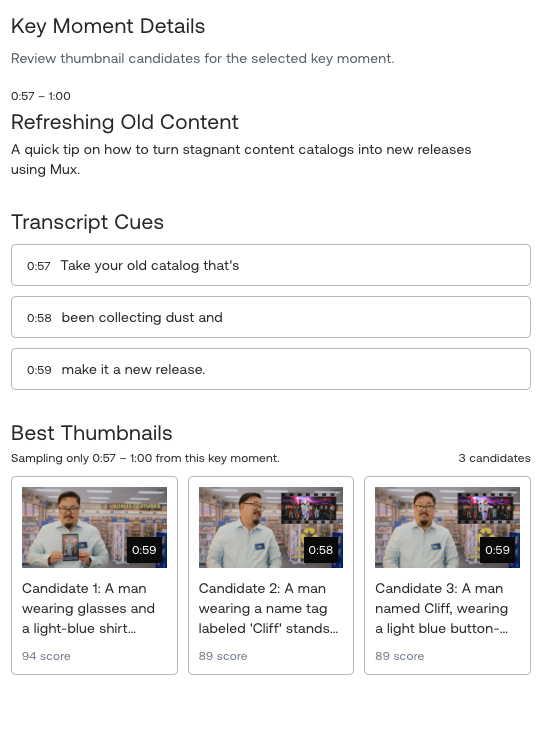
To prevent unexpected expenses during extensive experimentation, the Mux Dashboard playground features a real-time tracking meter at the top of the page. This meter displays total units consumed during the current session alongside a real-time dollar-value calculation, ensuring that development teams can iterate freely without risking budget overruns. The platform remains accessible to new and existing customers with no upfront credit card requirement for initial exploration.
Industry Implications and Future Outlook
The launch of Mux Robots and its accompanying playground arrives at a transformative moment for the digital video industry. As global video consumption continues to accelerate across streaming platforms, e-learning portals, enterprise communication suites, and social media networks, the volume of unstructured video data is outpacing human review capabilities.
By democratizing access to advanced video AI workflows—such as automated moderation, dynamic chaptering, and intelligent summarization—Mux is lowering the barrier to entry for organizations seeking to extract deeper value from their media archives. Platforms that previously lacked the engineering resources to build custom machine learning pipelines can now leverage robust, API-driven intelligence out of the box.
As Mux continues to expand its infrastructure offerings, the integration of generative AI tools into foundational video workflows points toward an increasingly automated future for digital media production. With the production-ready release of Mux Robots, developers now possess an end-to-end toolkit not only to stream video at scale, but to understand, organize, and transform that video programmatically.
Related posts: