NVIDIA Unveils Medical Physics Simulation Framework to Accelerate Healthcare Robotics Innovation

The intricate dance between a healthcare robot and the complex, unpredictable physical world presents one of the most significant hurdles in the development of truly impactful medical robotic systems. Before these sophisticated machines can be deployed effectively in real-world clinical settings, they must grapple with a myriad of variables: the inherent variability of human anatomy, the nuanced behaviors of surgical instruments that bend, press, slip, and interact dynamically with delicate tissues, and the often imperfect or incomplete nature of medical imaging. Compounding these challenges are the infrequent, yet critical, "edge" scenarios—those rare circumstances that developers most need to anticipate and train for—which stubbornly refuse to occur on a predictable schedule. This fundamental need for extensive and diverse data to train, test, and refine robot behavior has historically created a substantial bottleneck, hindering the rapid advancement and widespread adoption of healthcare robotics.
Addressing this critical gap, NVIDIA has announced the NVIDIA Medical Physics Simulation framework, an open-source, GPU-accelerated capability integrated within its NVIDIA Isaac for Healthcare platform. This groundbreaking development aims to revolutionize how medical robotics developers approach the challenges of simulation and training. The framework empowers developers to model the complex interactions between anatomical structures and medical devices, generate hard-to-capture scenarios in a controlled virtual environment, and conduct extensive testing in silico—all before committing to resource-intensive hardware-based experimentation. By seamlessly merging anatomy and medical device behavior with advanced sensor simulation and cutting-edge robot learning techniques, the Medical Physics Simulation framework enables teams to create reusable simulation environments. This represents a significant departure from the time-consuming practice of rebuilding custom simulation scenes for each new workflow, thereby accelerating the pace of innovation and facilitating the faster delivery of novel medical robotic solutions to market.
The open-source nature of the Medical Physics Simulation framework is a cornerstone of its design, fostering transparency and collaboration within the healthcare robotics community. This openness allows developers to meticulously inspect the framework’s underlying mechanisms, adapt it to the specific requirements of their unique devices and workflows, and build upon a robust, GPU-accelerated foundation that integrates seamlessly with the broader NVIDIA technology ecosystem. In the highly regulated and safety-critical field of healthcare, transparency into the data, models, and parameters that govern system behavior is paramount. The availability of open models and model weights is essential for enabling developers to reliably reproduce research findings, rigorously evaluate system performance across diverse anatomical variations and challenging scenarios, pinpoint inherent limitations, and, crucially, generate compelling evidence to support regulatory review processes.
A Virtual Training Ground for Medical Robots
At its core, the concept of "physical AI," particularly in the context of robotics, hinges on the acquisition and application of experience, which is essentially data in motion. Developers are tasked with training robots to perform with precision and reliability even when faced with variations in patient anatomy, unexpected deviations in device performance, fluctuating environmental conditions, or unforeseen policy failures. The NVIDIA Medical Physics Simulation framework directly addresses this by providing a sophisticated virtual environment where these complexities can be meticulously modeled and explored.
The framework facilitates the simulation of anatomical structures, the intricate physics of device contact, frictional forces, and a wide array of sensor inputs. This enables developers to rigorously test robotic interactions and environments, offering a clear evaluation of robot performance under a vast spectrum of changing conditions. Powered by NVIDIA’s high-performance CUDA technology and built upon the advanced simulation and generative AI capabilities of NVIDIA Warp, Newton, and Cosmos, the framework is a key component of Isaac for Healthcare. Its architecture is designed for immense scalability, capable of running hundreds of parallel simulation environments. This parallel processing power dramatically expands the scope of scenarios that development teams can explore, allowing them to identify potential failure modes much earlier in the development lifecycle.
For robotic system designers, this transformation elevates simulation from a bespoke, time-intensive engineering undertaking to a scalable, reusable infrastructure. The dramatic impact of this shift is underscored by recent benchmarks: leveraging GPU-native simulation, the framework has demonstrated the ability to run 8,192 robot-training environments in parallel, reducing training times from over five hours to less than two minutes—a reduction of over 99%.
Bridging Classical and Generative AI for Enhanced Simulation
The Medical Physics Simulation framework intelligently integrates both classical physics simulation and generative AI-driven physics simulation. Classical simulation excels at modeling well-defined physical principles, such as the precise mechanics of device contact, friction, and motion. Complementing this, NVIDIA Cosmos-H Dreams, a real-time generative AI physics simulation capability within the framework, leverages procedural data to model the dynamic visual aspects of complex scenes. This dual approach provides developers with a significantly richer and more comprehensive environment for building and rigorously testing healthcare robotics systems virtually, prior to the investment in physical prototypes and laboratory testing.
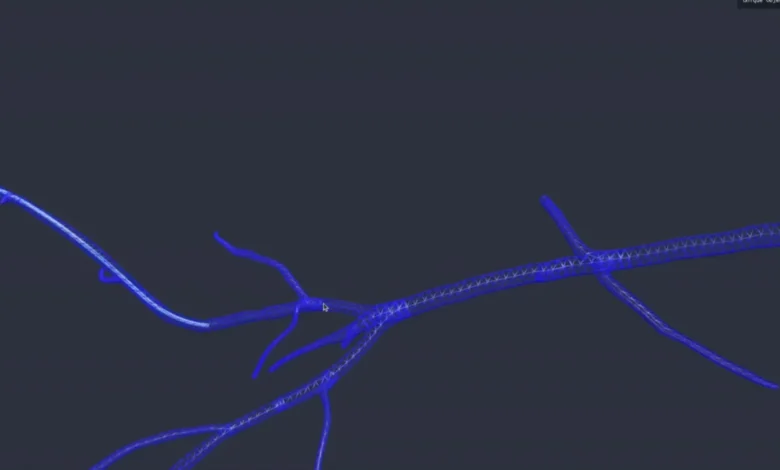
A prime example of the framework’s application lies in its ability to connect detailed vascular anatomy models with the simulation of flexible instruments like catheters and guidewires. Coupled with simulated X-ray imaging and advanced reinforcement learning algorithms, developers can train robots to navigate these complex anatomical pathways with unprecedented precision. While this specific scenario highlights the framework’s capabilities, it is designed with extensibility in mind, poised to incorporate a broader range of devices, anatomies, sensor types, and specialized healthcare robotics domains.
An Ecosystem Building the Future of Medical Robotics
The significance of simulation-driven development is already being recognized and actively applied by leading organizations in the medical robotics sector to tackle specific surgical challenges.
CMR Surgical and Cambridge Consultants, part of Capgemini, are at the forefront of utilizing Cosmos-H-Dreams. They are employing this technology to implicitly learn the intricate interaction physics governing soft-tissue surgical procedures and to generate patient-specific simulations. CMR Surgical has made a substantial contribution to the advancement of open research by sharing nearly 500 hours of anonymized clinical data from its Versius Surgical Robotic System. This invaluable dataset is part of the Open-H Embodiment open dataset and is being used to enhance the development of robotic procedures for conditions such as cholecystectomy, prostatectomy, hernia repair, and hysterectomy. Chris Fryer, Chief Technology Officer at CMR Surgical, emphasized the impact of this collaborative approach, stating, "Open source models allow us to build on shared knowledge, accelerating responsible innovation and, ultimately, gives us the potential to deliver more consistent care and better outcomes for patients worldwide."
Johnson & Johnson MedTech is leveraging the Medical Physics Simulation framework within Isaac for Healthcare, alongside a Cosmos-based foundational model. Their objective is to construct digital twins of their endoluminal MONARCH platform, specifically for urological applications. This involves meticulously modeling complex anatomical structures and simulating challenging kidney-stone scenarios to enhance robotic-assisted procedures.
XCath is actively employing the Medical Physics Simulation framework for the training of endovascular autonomy policies, a critical area for enabling autonomous navigation in blood vessels. Similarly, Inner Logic is accelerating the evolution of medical technology by generating synthetic data. This approach allows them to validate device mechanics and produce robust in silico evidence, which is instrumental in supporting regulatory pathways with the NVIDIA Medical Physical Simulation framework.
Medtronic Structural Heart is exploring the application of the Medical Physics Simulation framework in conjunction with simulated X-ray sensing. Their research aims to generate crucial data for advancing catheter navigation technologies, a vital aspect of minimally invasive cardiac procedures.
A New Layer in the Isaac for Healthcare Stack
The NVIDIA Medical Physics Simulation framework is architected as a modular capability within the broader NVIDIA Isaac for Healthcare ecosystem. This design allows for considerable flexibility, enabling developers to utilize the framework as a standalone tool or to integrate it seamlessly with other advanced components. These integrations include digital twin pipelines, sophisticated medical sensor simulation tools, the NVIDIA Isaac Lab open robot-learning framework, and NVIDIA’s comprehensive suite of open models and pre-trained policies. This layered approach ensures that developers have access to a powerful and adaptable toolkit that can be tailored to a wide array of healthcare robotics applications.
Developers are invited to explore the open-source NVIDIA Medical Physics Simulation framework and review the available reference workflows. This initiative empowers them to begin constructing sophisticated simulation environments tailored to their specific devices, anatomical models, and unique healthcare robotics applications, thereby accelerating the development and deployment of the next generation of medical robots. The availability of this powerful simulation tool signifies a pivotal step forward in making advanced robotic assistance a more accessible and reliable reality in healthcare.
Related posts: