AI Breakthroughs in Atmospheric Modeling Herald a New Era for Public Health and Urban Air Quality Management

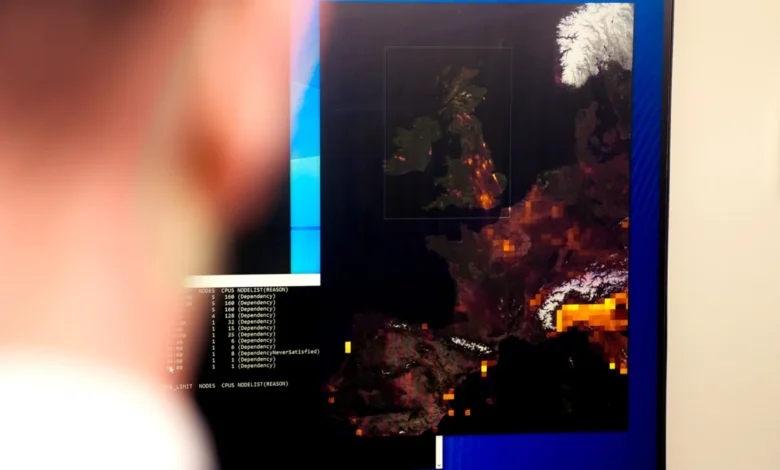
Air pollution remains one of the most critical public health crises of the modern age, with the Royal College of Physicians estimating that poor air quality contributed to approximately 30,000 deaths in the United Kingdom last year alone. Beyond the tragic human toll, the economic burden placed upon the National Health Service (NHS) and the broader economy totals billions of pounds annually. Addressing this challenge has historically been hampered by the computational limitations of traditional chemistry-based climate models. These simulations are notoriously resource-intensive, requiring vast supercomputing clusters to process, which limits their spatial resolution and frequency. However, a transformative shift is underway, as researchers at the University of Manchester, in collaboration with NVIDIA, have successfully repurposed generative AI frameworks—originally designed for global weather forecasting—to model complex, hyper-local pollution fields.
The project, spearheaded by Professor David Topping of the University of Manchester’s Department of Earth and Environmental Sciences, represents a paradigm shift in environmental science. By leveraging NVIDIA’s Earth-2 suite of tools, the team has bypassed the "compute bottleneck" that has long plagued traditional atmospheric modeling. In conventional approaches, the inclusion of detailed chemical interactions within weather models creates significant computational latency, rendering real-time or high-resolution forecasting nearly impossible. By utilizing generative AI to "downscale" existing data, Topping and his team have achieved results that are not only faster but significantly more accessible.
A Chronology of Computational Innovation
The development of this breakthrough followed a rigorous, multi-stage timeline. The initiative began when Professor Topping identified that the generative AI frameworks utilized by NVIDIA’s Earth-2 for climate prediction possessed the latent capacity to handle the fluid dynamics and chemical concentrations found in urban air pollution.
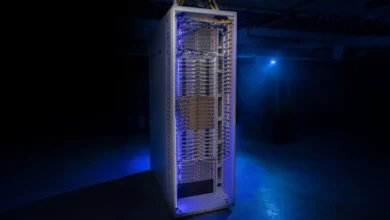
In early 2026, the research team began the process of curating a massive dataset, drawing from a full year of hourly U.K. pollution simulations. The objective was to train a model capable of producing high-fidelity pollution maps at a resolution of 2-3 square kilometers—a significant improvement over coarser global models. The team utilized Isambard-AI, the U.K.’s premier national AI supercomputer located in Bristol. Housing 5,448 NVIDIA GH200 Grace Hopper Superchips and capable of 21 exaflops of AI performance, Isambard-AI provided the necessary infrastructure to train the Earth-2 CorrDiff model. Remarkably, the initial training cycle was completed in just two days, a feat that would have taken traditional physics-based models weeks or even months to achieve on standard clusters.
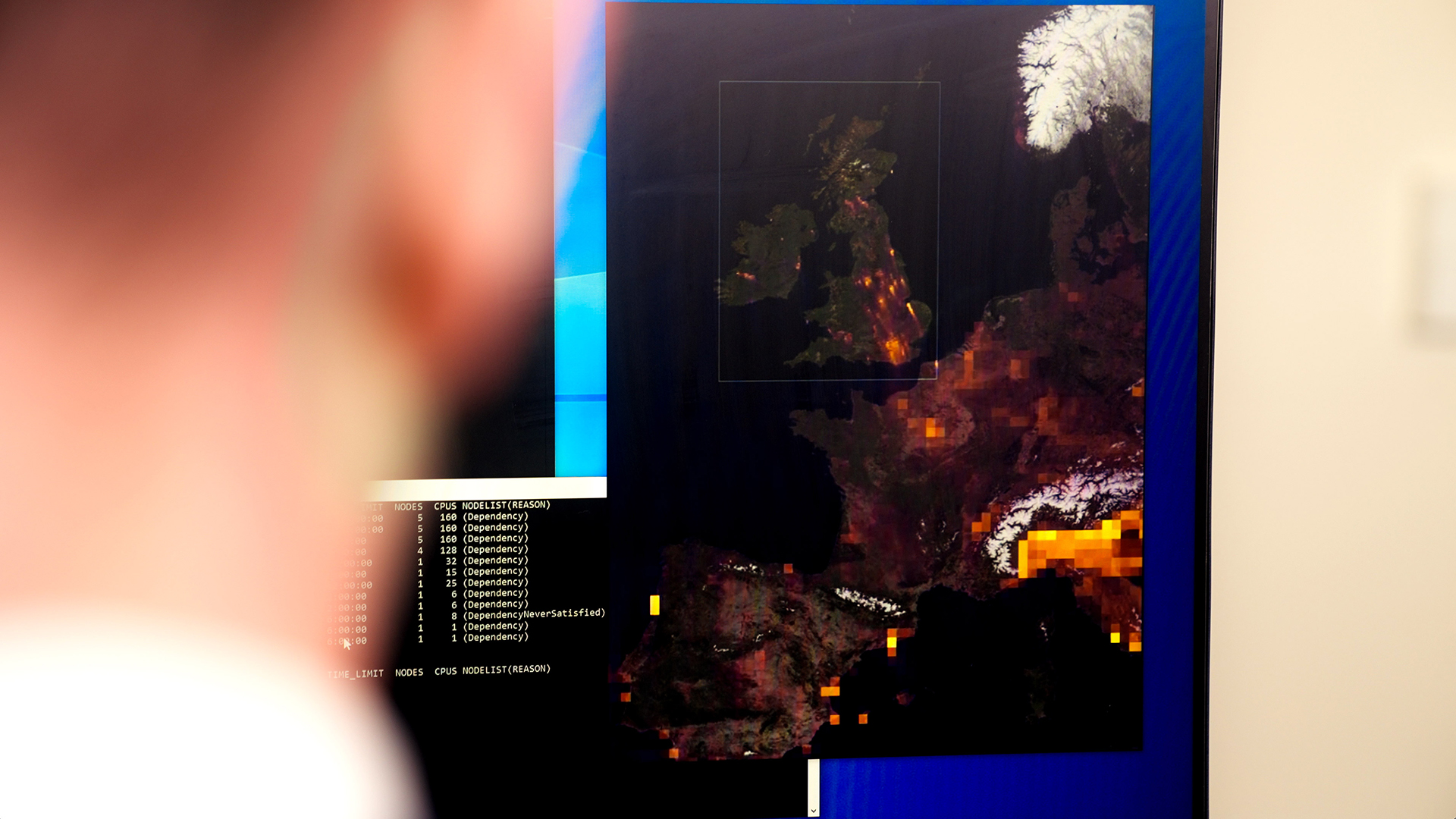
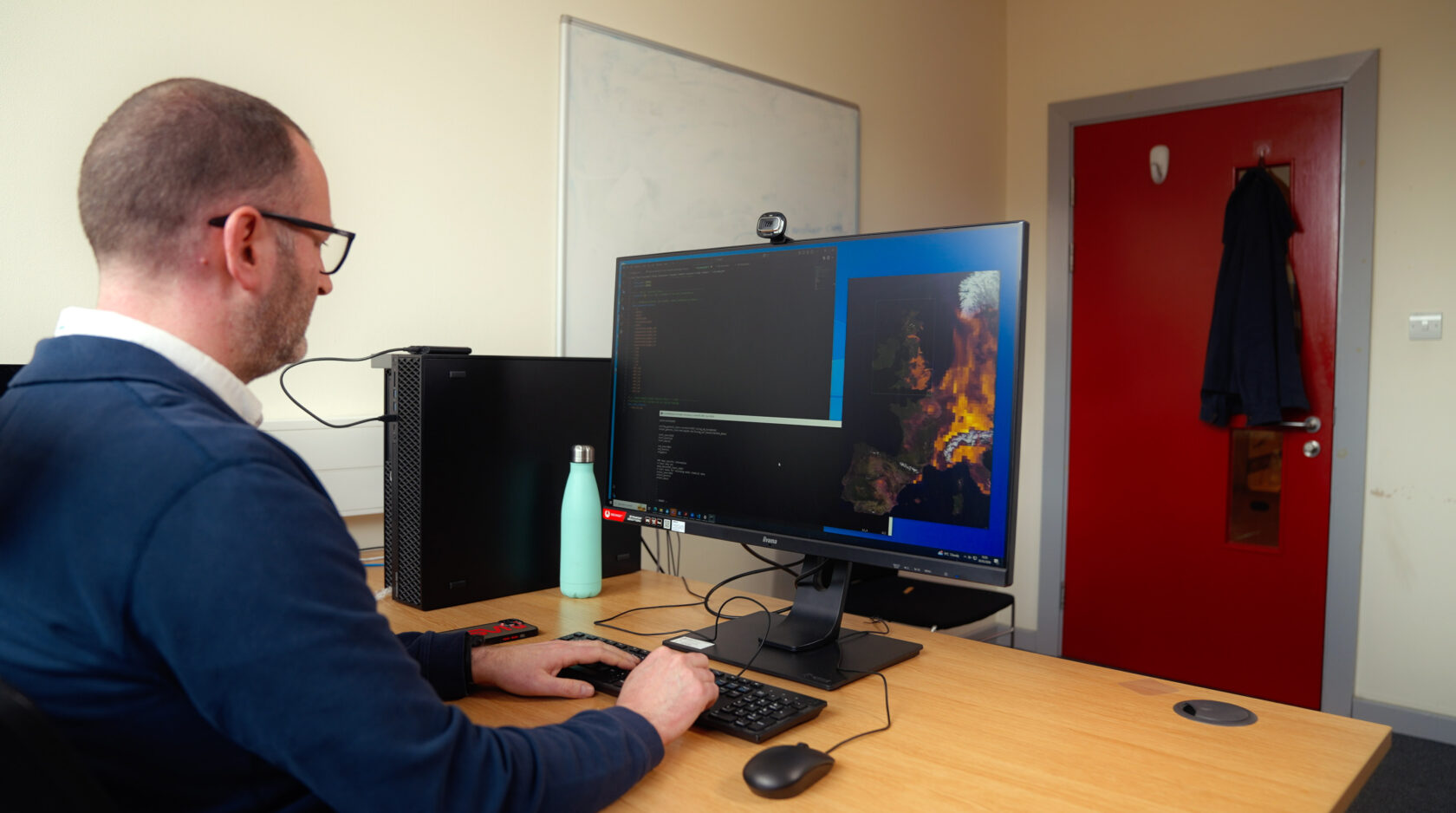
Following the success of the CorrDiff model, the team integrated Earth-2 StormCast, an advanced framework that enables time-dependent forecasting by ingesting real-time air quality observations. This allowed for the transition from static historical analysis to dynamic, actionable forecasting. By late 2026, the team demonstrated that the entire workflow—from training to inference—could be effectively ported from the massive Isambard-AI cluster to the NVIDIA DGX Spark, a compact, desktop-sized AI supercomputer. This portability represents a democratization of science, allowing individual research institutions to run high-level climate modeling without constant reliance on national-scale supercomputing resources.
Supporting Data and Technical Architecture
The efficacy of this new model is rooted in the convergence of generative AI and traditional environmental chemistry. Traditional models, such as the Weather Research and Forecasting model coupled with Chemistry (WRF-Chem), require solving complex partial differential equations for thousands of grid cells simultaneously. In contrast, the Earth-2 approach uses "downscaling," where a generative model learns the statistical relationship between low-resolution weather patterns and high-resolution pollution outcomes.
The use of the DGX Spark system, powered by the NVIDIA GB10 Grace Blackwell superchip, has proven that the "AI for Science" movement is not merely a theoretical exercise. According to Simon McIntosh-Smith, director of the Bristol Centre for Supercomputing, the energy efficiency of this approach is a major benefit. By requiring fewer GPU hours for training and inference, the carbon footprint of the modeling process itself is significantly reduced, aligning the research methodology with the environmental goals the project aims to support.
For researchers like Hao Zhang, a doctoral student at the University of Manchester, the flexibility of the NVIDIA framework was the most impressive aspect of the development process. The ability to switch between different AI frameworks to solve specific aspects of pollution field modeling—such as nitrogen dioxide dispersal versus particulate matter accumulation—suggests a modular future for environmental science where models can be "stacked" to address different pollutants simultaneously.
Official Responses and Collaborative Perspectives
The collaboration between academia and the private sector has been characterized by mutual benefit. NVIDIA’s Niall Robinson, developer relations manager for weather and climate, emphasized that the speed of the model’s development signals a shift in the landscape of scientific discovery. "The fact that this model trained in two days on Isambard-AI—and can now run on a DGX Spark sitting on a desk—changes who can do this science and how quickly," Robinson noted.
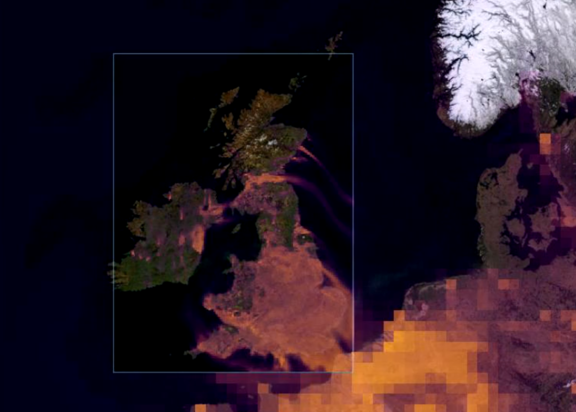
From the academic perspective, the project serves as a template for open-source scientific advancement. The University of Manchester team intends to release the training data and workflows publicly, encouraging international adoption. The logic is simple: if a city in Asia or South America can input its own local air quality data into these pre-trained generative frameworks, they can achieve high-resolution, life-saving forecasts without the need for a multi-million-pound supercomputer.
Broader Implications for Public Health and Policy
The implications of this technology extend far beyond academic journals. The capacity to simulate "what-if" scenarios—such as the impact of a specific traffic-reduction policy or the introduction of a low-emission zone—gives policymakers a robust, evidence-based tool to evaluate environmental regulations before they are implemented. This allows for a more proactive governance style, where potential pollution hotspots are mitigated before they result in spikes in hospital admissions.
Furthermore, the integration with healthcare services could fundamentally alter how chronic conditions are managed. Professor Topping envisions a future where personalized health alerts are sent to vulnerable patients. For instance, an individual living with asthma could receive an automated, high-precision notification on their smartphone informing them of localized pollution levels for the following 24 to 48 hours, allowing them to adjust their activity levels or medication usage accordingly.
The potential to pair this with edge AI—small sensors located on street lamps, buses, or in private residences—could lead to a "real-time" decision-making loop. In the event of an industrial accident, a wildfire, or a sudden weather-induced stagnation event, the model could ingest sensor data instantaneously to provide a live, hyper-local hazard map.
Toward an Agentic Future
As the team looks toward the next five years, the focus is shifting toward "agentic" interfaces. In this vision, the complexities of AI modeling are abstracted away behind a simple, natural language interface. A clinician or a local council member would not need to understand the nuances of generative downscaling; they would simply ask a question—"What will the pollution levels be in this neighborhood tomorrow?"—and the system would trigger the necessary chain of models to provide a scientifically grounded, context-aware answer.
This evolution from "data processing" to "knowledge synthesis" represents the next frontier in climate science. By bridging the gap between massive, inaccessible supercomputing and the practical needs of healthcare and urban planning, the University of Manchester and NVIDIA are setting a new standard for how technology can be leveraged to address the most pressing existential threats of the 21st century.
As researchers prepare to discuss these findings at the "AI for Science: From the Lab to the Frontier" webinar on September 30, the scientific community is keeping a close watch. The success of the CorrDiff and StormCast models in the U.K. serves as a proof-of-concept that, with the right tools, the path to a cleaner, safer, and more informed environment is within reach. The democratization of high-resolution climate modeling is no longer a distant aspiration; it is a developing reality, poised to transform the way we monitor, understand, and interact with the air we breathe.
Related posts: