Global Law Enforcement Takedown of Kratos Phishing-as-a-Service Infrastructure Disrupts Massive Cybercrime Operation

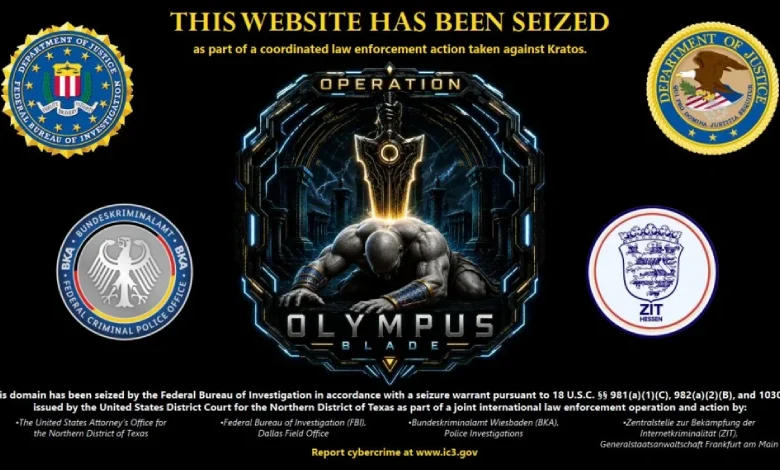
In a coordinated international effort involving German, American, and Indonesian authorities, law enforcement agencies have successfully dismantled the core infrastructure of Kratos, one of the world’s most sophisticated and widely utilized "Phishing-as-a-Service" (PhaaS) platforms. The operation, which culminated in the seizure of over 200 servers and the arrest of the alleged mastermind behind the software, marks a significant victory in the ongoing battle against high-level cybercrime. German investigators characterized Kratos as a cornerstone of the global criminal ecosystem, enabling thousands of low-skill actors to launch devastatingly effective attacks against individuals and corporations alike.
The Frankfurt Public Prosecutor’s Office’s Cybercrime Unit (ZIT) and Germany’s Federal Criminal Police Office (BKA) announced the breakthrough on Monday, July 22, 2026, revealing that the takedown was the result of a months-long investigation into the platform’s sprawling digital footprint. Simultaneously, Indonesian police, acting on intelligence provided by Western counterparts, apprehended the primary developer and operator of the Kratos kit. This joint operation highlights the increasing necessity of cross-border cooperation in tackling decentralized criminal networks that operate without regard for national boundaries.
The Architecture of a Modern Phishing Empire
Kratos was not merely a tool for stealing passwords; it was a comprehensive criminal enterprise designed to bypass modern security protocols. According to technical analysis by the BKA and independent cybersecurity firm ANY.RUN, the kit employed advanced "Adversary-in-the-Middle" (AiTM) techniques. Unlike traditional phishing, which directs victims to a static fake page to harvest credentials, Kratos utilized a Node.js-based reverse proxy. This allowed the attacker to act as a literal intermediary between the victim and the legitimate service—most frequently Microsoft 365.
When a victim entered their credentials into a Kratos-generated page, the software relayed those details to the actual Microsoft login portal in real time. If the victim was prompted for a two-factor authentication (MFA) code, the kit passed that request to the victim and then relayed the code back to Microsoft. Once the login was successful, Kratos did not just capture the password; it intercepted the session cookie. This cookie represents an authenticated state, allowing the attacker to bypass MFA entirely and maintain access to the account without needing the victim’s password or a second-factor device again.
This technical sophistication made Kratos a preferred choice for approximately 1,800 "franchisees"—criminal customers who paid for access to the platform via cryptocurrency. These customers utilized a dedicated web portal and a Telegram-based shop to manage their subscriptions, organize campaigns, and download stolen data. Investigators estimate that these users were responsible for launching roughly 15,000 distinct phishing campaigns every month since the platform’s inception.

Chronology of the Kratos and SneakyLog Campaigns
While the takedown occurred in July 2026, the Kratos infrastructure had been under the microscope of various threat intelligence groups for well over a year. Microsoft Threat Intelligence had been tracking the same platform under the moniker "SneakyLog." According to Microsoft’s telemetry, the platform became a prominent threat in early 2025, specifically targeting Microsoft 365 environments with a focus on credential theft and session hijacking.
A pivotal moment in the investigation occurred in February 2026, when a massive campaign utilized tax-season lures to target approximately 100 organizations across the United States. The attackers focused on critical sectors, including healthcare, retail, and manufacturing. These emails appeared to contain official W-2 tax documents, but instead featured personalized QR codes. This technique, often called "Quishing," is particularly insidious because QR codes are frequently overlooked by traditional email security filters that primarily scan text and URLs. When scanned, these codes directed victims to a Kratos-powered AiTM page, leading to a wave of account takeovers within high-value corporate networks.
The timeline of the Kratos operation reveals a steady escalation in activity:
- Late 2024: Initial versions of the Kratos/SneakyLog kit appear in underground forums, offering basic PHP-based credential harvesting.
- Early 2025: The platform introduces the Node.js reverse proxy, enabling AiTM capabilities and MFA bypass.
- Late 2025: The "Franchise" model reaches peak adoption, with over 1,500 active paying customers.
- February 2026: The massive tax-themed "Quishing" campaign hits U.S. infrastructure, drawing intense scrutiny from Microsoft and federal investigators.
- July 2026: Joint law enforcement action shutters 200 servers and leads to the arrest of the primary developer in Indonesia.
Scale, Impact, and Financial Gains
The sheer scale of the Kratos operation is staggering. Authorities estimate that since the tail end of 2024, the platform has facilitated attacks on hundreds of thousands of victims across more than 30 countries. While the primary concentration of victims was in Europe and the United States, the reach of the "franchisees" was global.
The financial motivation behind the platform was equally significant. Investigators believe the operators earned upwards of 300,000 euros (approximately $325,000 USD) in subscription fees alone. However, this figure only represents the "service fee" paid by the criminals to the developer. The actual economic damage caused by the resulting data breaches, business email compromise (BEC) attacks, and subsequent ransomware deployments is estimated to be in the tens of millions of dollars.
Stolen Microsoft 365 credentials are often the "keys to the kingdom" for modern cybercriminals. Once an inbox is compromised, attackers can:

- Conduct Internal Phishing: Send fraudulent emails from a legitimate internal address to other employees to steal higher-level privileges.
- Execute Business Email Compromise (BEC): Intercept invoices and alter bank details to redirect corporate funds to criminal accounts.
- Exfiltrate Data: Download sensitive corporate communications, intellectual property, and personal employee data for extortion or sale on the dark web.
- Establish Persistence: Use the compromised account to deploy malware or ransomware deep within a company’s network.
Official Responses and Strategic Significance
The takedown has been hailed by law enforcement officials as a model for future cybercrime interventions. Carsten Meywirth, the head of the BKA’s Cybercrime Division, emphasized that the operation proves that even highly professionalized and decentralized infrastructures are not immune to law enforcement. "This operation shows that through international cooperation, we can effectively combat the tools that empower thousands of smaller criminals," Meywirth stated.
Benjamin Krause, a representative from the ZIT, highlighted the "disruptive" nature of the mission. He noted that the goal was not merely to arrest individuals but to dismantle the entire service delivery model. By pulling 200 servers offline and seizing the source code and database of customers, law enforcement has effectively "broken the machine" that sustained thousands of individual criminal campaigns.
This strategy of "infrastructure disruption" is becoming a preferred tactic for agencies like the FBI and the BKA. Rather than playing a game of "whack-a-mole" with individual hackers, authorities are targeting the "service providers" of the criminal world—the developers of the kits and the hosts of the servers—thereby raising the cost and complexity of entry for prospective cybercriminals.
Technical Analysis and Defensive Recommendations
For cybersecurity professionals, the Kratos takedown provides valuable intelligence on the current state of phishing. Analysis from ANY.RUN identified specific indicators of compromise (IoCs) that were consistent across Kratos deployments. The kit’s login pages almost universally loaded two specific SVG assets: barr.svg and lg.svg. Following the entry of credentials, the stolen data was typically "POSTed" to endpoints named next.php or save.php. These markers have a 90% recall rate in identifying Kratos-related activity with almost zero false positives.
However, the takedown also serves as a stark reminder of the limitations of standard Multi-Factor Authentication. Because AiTM kits like Kratos can bypass traditional SMS or app-based codes by stealing session cookies, organizations must look toward "phishing-resistant" authentication.
Microsoft is currently in the process of notifying organizations and individuals affected by the Kratos/SneakyLog campaigns. The remediation process for victims depends on the nature of the compromise:

- Credential Theft: If the kit only harvested a password, a standard password reset and an audit of MFA settings are sufficient.
- Session Hijacking: If the reverse proxy mode was used to steal a session cookie, a password reset is not enough. The attacker’s session remains valid even after the password is changed. In these cases, administrators must manually revoke all active sessions for the compromised user and consider moving high-value accounts to FIDO2-compliant security keys or other phishing-resistant hardware.
The Future of Phishing-as-a-Service
While the seizure of Kratos’s central servers is a massive blow, the threat is far from eradicated. The BKA noted that while the central platform is offline, approximately 1,800 customers still exist, and many may possess local copies of the kit’s code or have established alternative hosting.
Historically, when a major PhaaS platform like LabHost or Kratos is taken down, a vacuum is created in the criminal market. Often, former "franchisees" migrate to rival platforms, or developers release "v2" versions of the software under new branding to evade detection. The infrastructure used by Kratos—including compromised WordPress sites and disposable domains—is a hallmark of the modern web, making it difficult to police entirely.
The success of this operation lies in the disruption of the "brand" and the psychological impact on the criminal community. By demonstrating that developers in Indonesia can be caught through cooperation with German and American authorities, law enforcement is sending a clear message: there is no safe haven for those who build the tools of digital destruction. As the dust settles on the Kratos takedown, the focus now shifts to the 1,800 customers whose transaction histories and communication logs are likely now in the hands of the BKA and the FBI. For the "franchisees" of Kratos, the real legal trouble may only just be beginning.
Related posts: