Amazon EKS Introduces Kubernetes Version Rollbacks, Revolutionizing Upgrade Safety and Operational Resilience

Amazon Web Services (AWS) has announced a significant enhancement to its managed Kubernetes service, Amazon Elastic Kubernetes Service (EKS), with the introduction of Kubernetes version rollbacks. This groundbreaking feature provides cluster administrators with an unprecedented safety net, allowing them to reverse a Kubernetes version upgrade within seven days if unforeseen issues arise, thereby returning their clusters to a previously stable, working state. This development marks a pivotal shift in how organizations can approach the often-treacherous process of upgrading Kubernetes environments, particularly for those managing large fleets of clusters or operating within highly regulated industries.
The Enduring Challenge of Kubernetes Upgrades
For years, upgrading a Kubernetes control plane has been characterized by a critical limitation: the process was largely a one-way street. The open-source Kubernetes project, while robust and rapidly evolving, has historically lacked native support for control plane rollbacks. Once an upgrade was initiated and completed, there was no straightforward mechanism to revert to the previous version. This inherent constraint forced organizations to develop elaborate and often resource-intensive compensating mechanisms. These included stringent "bake periods" for new versions, staggered deployment groups to limit blast radius, multi-stage automated sign-off processes, and, in many cases, upgrade cycles that stretched for months.
The implications of this "no going back" paradigm were profound. With Kubernetes releasing three minor versions per year, a rapid pace of innovation that developers covet, operations teams responsible for hundreds of clusters found themselves in a difficult position. The risk associated with a failed upgrade – potential downtime, data corruption, or application instability – often led to extreme caution. This caution frequently translated into delayed upgrades, leaving clusters stuck on older, sometimes unsupported, versions. The consequences of such delays are far-reaching, ranging from missed security patches and exposure to known vulnerabilities to the inability to leverage new features and, eventually, running up against extended support timelines that can incur significant technical debt and operational burden. Organizations in regulated environments, such as finance or healthcare, faced even greater pressure, as compliance mandates often require timely security updates and a clear path to recovery from operational disruptions.
While the Kubernetes community has been actively working on solutions, with initiatives like KEP-4330 introducing "emulated versions" to ease rollback, these approaches typically keep a cluster in a transitional or semi-upgraded state. They aim to provide a temporary reprieve rather than a full return to a definitively stable, previously validated production environment. This distinction highlights the unique value proposition of the EKS version rollback feature.
Amazon EKS: A True "Undo Button" for Kubernetes
The newly announced Kubernetes version rollbacks for Amazon EKS fundamentally alters this landscape. Unlike emulated versions, which might maintain a cluster in a holding state, EKS version rollback returns the cluster to a fully validated previous version that was actively running in production. This distinction is critical for ensuring operational integrity and minimizing risk. For instance, if an administrator upgrades a cluster from Kubernetes 1.34 to 1.35 and subsequently discovers a compatibility issue with a critical application or an underlying add-on, they now have a seven-day window to roll back to the stable 1.34 version. This eliminates the frantic troubleshooting under pressure, the need to rebuild clusters from scratch, or the arduous process of manually reverting complex configurations. It is, in essence, an "undo button" for Kubernetes version upgrades, providing a much-needed layer of confidence and control.
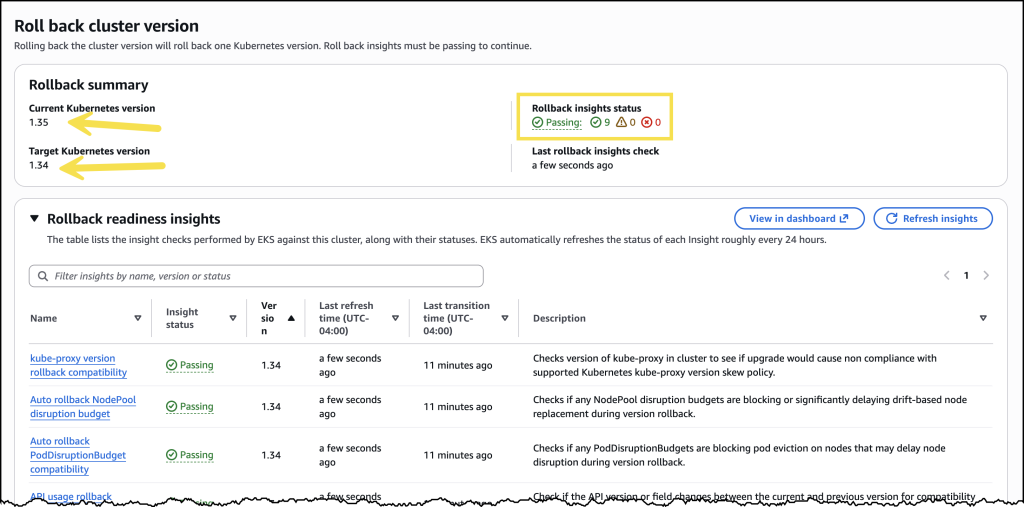
The feature is designed to align with best practices for incremental upgrades, supporting the rollback of one minor version at a time. This methodical approach ensures that the reversion process is as controlled and predictable as the upgrade itself. To further bolster safety and prevent potential issues during a rollback, EKS automatically evaluates the cluster’s rollback readiness through its integrated Cluster Insights feature. This proactive assessment flags critical items, such as node version compatibility with the target rollback version, potential add-on dependencies that might be affected, or deprecated API usage that could cause instability. These insights empower administrators to address potential conflicts before initiating a rollback, significantly reducing the likelihood of encountering further complications. For experienced users or in urgent scenarios where immediate action is paramount, a --force flag is available to bypass these pre-checks, offering flexibility while emphasizing the importance of informed decision-making.
Crucially, this capability extends to all Amazon EKS clusters, regardless of whether customers manage their own worker nodes or leverage AWS’s managed node groups. This broad applicability ensures that a wide spectrum of EKS users can benefit from this enhanced resilience.

Advanced Rollback Capabilities for EKS Auto Mode
For customers who have embraced a fully managed infrastructure approach with EKS Auto Mode, the rollback feature introduces additional layers of sophistication. EKS Auto Mode represents a significant stride towards simplifying Kubernetes operations, offering one-click deployment of production-ready clusters and automating compute, networking, and storage management. This allows development teams to concentrate entirely on their applications rather than the underlying infrastructure complexities.
In an EKS Auto Mode environment, version rollbacks encompass both the control plane and the managed worker nodes. The coordinated rollback of both components is essential to ensure a consistent and stable state across the entire cluster. A key consideration here is the interaction with Pod Disruption Budgets (PDBs). PDBs are Kubernetes objects that specify the minimum number or percentage of pods that must be available during a voluntary disruption, such as node maintenance or, in this case, a node rollback. EKS is meticulously designed to respect these PDBs during the rollback process, prioritizing workload stability above all else. This means that node rollbacks will proceed gracefully, adhering to the defined disruption budgets to minimize impact on running applications. The consequence, however, is that the process can take time, depending on the number of nodes, the pod density, and the specific PDB configurations in place.
To provide administrators with granular control over this potentially time-consuming process, AWS has introduced a dedicated cancel API for node rollbacks in EKS Auto Mode. This API allows administrators to halt an ongoing node rollback at any point. This capability is invaluable in scenarios where the rollback is taking longer than anticipated, or if a change in strategy is deemed necessary. For instance, if a critical window for maintenance is closing, or if a decision is made to modify PDBs to accelerate the process, the cancel API offers the flexibility to adapt. While EKS will never bypass disruption budgets by default – underscoring its commitment to workload stability – administrators retain the option to manually modify or remove PDBs if they determine that accelerating the rollback process outweighs the temporary increase in disruption risk for their specific workloads. This balance of automation and user control is a hallmark of AWS’s approach to managed services.
A Step-by-Step Experience in the EKS Console
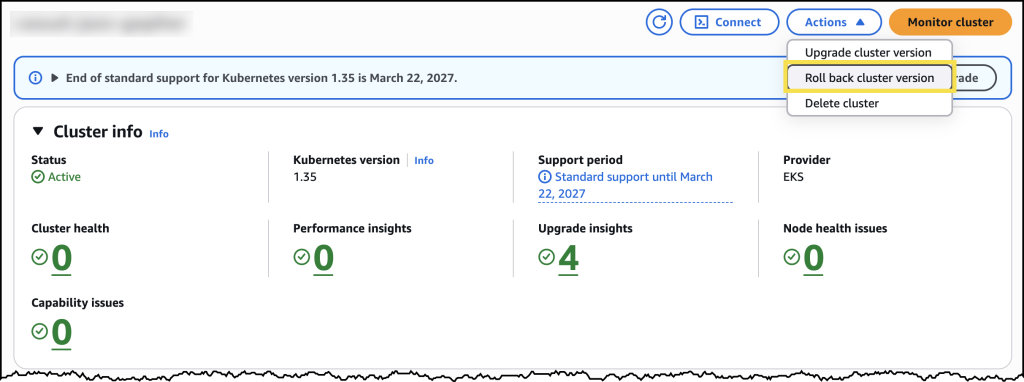
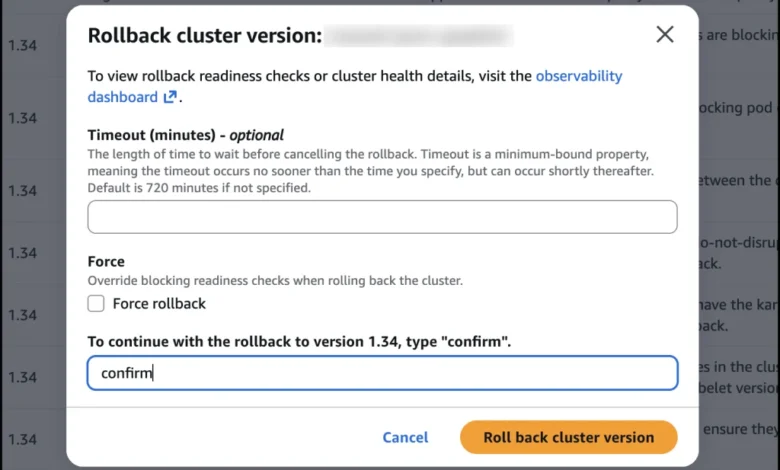
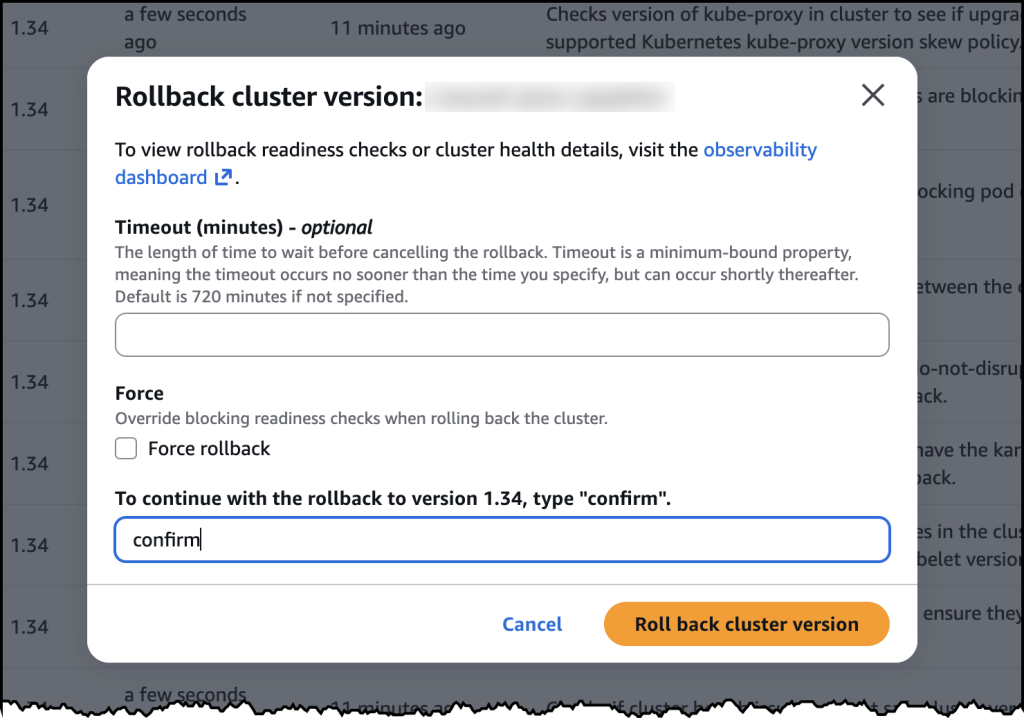
The practical implementation of version rollbacks is designed to be intuitive and accessible directly from the Amazon EKS console. An administrator wishing to perform a rollback would navigate to their cluster’s configuration page, where the option to initiate a version rollback would be clearly presented, alongside information about the remaining rollback window. Before proceeding, a crucial step involves reviewing the "rollback insights." These insights provide a comprehensive overview of the cluster’s readiness, detailing the status of nodes, highlighting any potential compatibility issues, and flagging any add-on dependencies that might require attention. This proactive diagnostic step empowers administrators to make informed decisions and address any potential roadblocks before committing to the rollback.
Once confirmed, the rollback process begins. A notable advantage is that the cluster remains functional throughout, minimizing disruption to ongoing operations. The control plane rollback typically completes within approximately 20 minutes, a timeframe comparable to a standard upgrade. For clusters operating in EKS Auto Mode, the node rollback proceeds gracefully, meticulously adhering to the configured Pod Disruption Budgets. Upon completion, the cluster is restored to its previous, stable Kubernetes version, with all applications running as expected. This seamless experience underscores the robustness and reliability of the new feature.
Economic and Strategic Implications
The introduction of Kubernetes version rollbacks for Amazon EKS carries significant economic and strategic implications for organizations leveraging cloud-native architectures. First and foremost, the feature is available at no additional cost in all commercial AWS Regions where Amazon EKS is offered. Customers only incur the standard EKS and compute costs they would typically pay, making this a pure value-add without new fees. This cost-effectiveness is particularly appealing given the substantial operational overhead that traditional upgrade recovery strategies often entailed.
Operationally, this feature dramatically reduces the burden on engineering teams. The elimination of complex, bespoke recovery plans, coupled with the ability to quickly revert to a known good state, translates directly into reduced downtime, minimized operational stress, and freed-up engineering cycles. Instead of spending days or weeks troubleshooting and rebuilding, teams can resolve upgrade-related issues in a matter of hours, allowing them to focus on innovation rather than remediation.
From a security and compliance perspective, the impact is equally profound. By mitigating the risk associated with upgrades, organizations are far more likely to adopt new Kubernetes minor versions promptly. This proactive approach ensures that clusters benefit from the latest security patches, critical vulnerability fixes, and updated features, making it easier to maintain a strong security posture and adhere to stringent compliance requirements. The specter of clusters falling behind on supported versions, a common consequence of upgrade reluctance, can now be largely averted.
Furthermore, this enhancement fosters innovation. Developers and operations teams can experiment with new Kubernetes features and versions with greater confidence, knowing there’s a safety net if unforeseen incompatibilities arise. This encourages faster adoption of cutting-edge cloud-native technologies, accelerating the pace of digital transformation within enterprises. For AWS, this move further solidifies EKS’s position as a leading, enterprise-grade managed Kubernetes service, offering a level of resilience and operational maturity that differentiates it in a competitive market. It demonstrates AWS’s deep understanding of customer pain points in managing complex distributed systems at scale and its commitment to providing solutions that simplify cloud-native operations.
Broader Industry Context and Future Outlook
The challenges of managing Kubernetes at scale are well-documented across the industry. As Kubernetes becomes the de facto standard for container orchestration, organizations increasingly demand robust tooling and services that abstract away operational complexities. This EKS feature aligns perfectly with the broader trend of cloud providers investing heavily in automation, resilience, and developer experience for their managed services. It highlights the critical role cloud providers play not only in offering infrastructure but also in enhancing the operational safety and efficiency of open-source technologies.
While KEP-4330 represents progress within the open-source community, the EKS version rollback feature provides an immediate, production-ready solution that addresses a long-standing pain point. It serves as a testament to the value of tightly integrated managed services, where the cloud provider can offer capabilities that might be challenging to implement uniformly across a diverse, self-managed Kubernetes ecosystem.
Looking ahead, such advancements pave the way for even more sophisticated cluster management capabilities. One could envision potential future enhancements such as automated rollback triggers based on specific health metrics, even longer rollback windows for highly critical applications, or more granular control over component-specific rollbacks. The experience and data gathered from this EKS feature could also potentially inform and influence future contributions to the open-source Kubernetes project, further enhancing the ecosystem’s overall resilience.
Kubernetes version rollbacks for Amazon EKS are now available in all commercial AWS Regions. This feature represents a significant leap forward in the operational maturity of managed Kubernetes, offering an invaluable tool for cluster administrators. It empowers organizations to embrace the rapid innovation of Kubernetes with newfound confidence, ensuring that their critical applications remain stable, secure, and performant. To get started, interested users can visit the Amazon EKS documentation or explore the feature directly in the Amazon EKS console.