E-commerce Ecosystem Sees Major Advancements with New Tools for Merchants, Covering AI, Payments, Fulfillment, and Social Commerce


The e-commerce landscape is undergoing a significant transformation, marked by a recent surge in innovative solutions designed to empower merchants across various operational facets. This week’s notable developments span critical areas including release-based selling, rapid delivery logistics, enhanced payment security, sophisticated social commerce management, cross-border financial fluidity, automated marketing, and advanced loyalty programs. These introductions reflect a broader industry trend towards greater efficiency, personalization, and a more integrated digital commerce experience, catering to the evolving demands of both businesses and consumers.
Enhancing the Selling Experience: From Drops to AI-Powered Storefronts
The competitive nature of online retail necessitates tools that not only streamline operations but also create unique customer engagement opportunities. Several new offerings address this need, focusing on novel selling models and the integration of artificial intelligence into core business functions.
Squarespace Unveils Tools for Limited-Release Selling and Drops
Squarespace, a prominent website-building and hosting platform, has launched a comprehensive suite of tools specifically designed to support the burgeoning trend of selling limited-release items and product "drops." This strategic move recognizes the significant cultural and commercial impact of scarcity marketing, which has seen immense success in fashion, collectibles, and tech. The new features aim to help merchants capitalize on consumer anticipation and demand.
Key additions include "Badges" and "Email Campaigns" to generate pre-release excitement, mirroring tactics employed by major brands to create viral marketing moments. A "Reserved Cart" function holds items for a limited time during checkout, complete with a countdown timer, mitigating the frustration often associated with fast-selling drops where items disappear from carts. Merchants can also set quantity limits per customer, ensuring broader access and preventing bulk buying by scalpers. Furthermore, Squarespace has introduced "Mini Cart," "Express Checkout," and "Pay Links" to facilitate more direct and frictionless transaction experiences, crucial for high-demand releases where speed is paramount.
The introduction of these features by Squarespace underscores the mainstreaming of limited-edition sales strategies, previously more common on specialized platforms or for larger brands with bespoke solutions. It democratizes access to advanced sales mechanics for small to medium-sized businesses, allowing them to leverage urgency and exclusivity to drive engagement and sales. This move could also position Squarespace as a more attractive platform for creators and brands in niches like streetwear, art, and artisanal goods, where drops are a fundamental part of their business model. Industry data suggests that the global market for limited edition products is growing, with consumers often willing to pay a premium for exclusive items, making these tools a timely addition for Squarespace merchants.
Bluehost Expands AI Business Platform for Small Businesses
In a significant step towards democratizing advanced technology, Bluehost, a leading hosting provider, has unveiled an expanded AI suite tailored specifically for small businesses. This platform aims to simplify complex digital tasks, allowing entrepreneurs to focus on core business growth rather than technical overhead.
The enhanced suite features AI agents capable of performing a wide array of functions, including website building, online store management, lead capture, customer query resolution, and appointment booking. This comprehensive approach means that small business owners, who often wear multiple hats, can offload time-consuming digital tasks to intelligent automation. The "AI Site," "Store," and "Front Desk" components form the core of this offering. Complementary tools include an AI-powered domain name generator, content and copywriting assistance, AI agent hosting, an agent builder for custom solutions, and access to multiple underlying AI models.
This initiative addresses a critical need within the small business sector. According to recent surveys, while many SMBs recognize the potential of AI, adoption remains low due to perceived complexity and cost. Bluehost’s solution aims to lower these barriers, providing an intuitive, integrated platform. The ability for AI agents to handle tasks like customer service inquiries and lead generation can dramatically improve operational efficiency and customer satisfaction, allowing small businesses to compete more effectively with larger enterprises. Analysts predict that AI adoption among SMBs will accelerate rapidly in the coming years, driven by such user-friendly, purpose-built platforms.
Commercetools Introduces Modular Commerce Offerings
Commercetools, a pioneer in autonomous commerce development, has launched new standalone offerings for cart, order management, and product catalog functionalities. This modular approach is designed to provide enterprises with greater flexibility, enabling them to modernize specific components of their commerce infrastructure without necessitating a complete replatforming.

The "Core Commerce" offering delivers robust cart, order management, and B2B-native capabilities, catering to businesses that require sophisticated transaction processing and fulfillment logic. The "Product Catalog" component provides advanced product modeling, pricing, inventory management, and catalog management features, complete with built-in search functionality.
This move aligns with the growing industry shift towards composable commerce, where businesses assemble best-of-breed solutions rather than relying on monolithic platforms. Enterprise-level organizations, in particular, often grapple with legacy systems and the high cost and disruption associated with full-scale migrations. Commercetools’ modular approach allows these companies to incrementally upgrade their capabilities, integrating new, agile services into their existing architecture. This flexibility can lead to faster innovation cycles, reduced time-to-market for new products, and optimized operational costs. The ability to swap out or upgrade individual components also future-proofs their commerce stack against rapidly changing technological landscapes.
Streamlining Logistics and Delivery: Speed and Precision
The modern consumer expects speed and convenience, pushing e-commerce logistics to new frontiers. Innovations in this sector are focusing on real-time data, automation, and seamless integration to meet these escalating demands.
DoorDash Integrates Directly with Shopify for On-Demand Delivery
DoorDash, a leading last-mile logistics platform, has announced a direct integration with Shopify via its App Store, marking a significant step towards enabling broader and more efficient on-demand delivery for merchants. This partnership simplifies the process for U.S. Shopify merchants with a physical storefront to offer rapid delivery services.
Merchants can now add their product catalog to the DoorDash marketplace by simply enabling a new channel within their Shopify admin. This eliminates the need for separate onboarding processes, manual catalog uploads, or disruptions to existing operations. A key benefit is the real-time synchronization of product catalogs, meaning inventory and product details managed in Shopify are automatically reflected on DoorDash. This integration addresses a major pain point for multi-channel retailers, ensuring consistency and accuracy across their sales channels.
The collaboration comes at a time when consumer demand for instant gratification and local delivery services is soaring. The global last-mile delivery market is projected to grow significantly, driven by urbanization and the proliferation of online shopping. For Shopify merchants, this means tapping into DoorDash’s extensive driver network and customer base, expanding their reach beyond traditional e-commerce or in-store pickup. For DoorDash, integrating with one of the largest e-commerce platforms strengthens its position as a versatile logistics partner beyond just restaurant delivery, expanding into general merchandise and groceries. This partnership is expected to drive increased sales for brick-and-mortar retailers looking to enhance their omnichannel strategy.
Cytronic Secures $13.5 Million for Automated E-commerce Fulfillment
Cytronic, a fulfillment-as-a-service provider, has successfully raised $13.5 million in seed funding to accelerate the development of its robotic fulfillment tools. This investment highlights the growing recognition of automation as a critical solution to the challenges facing the e-commerce supply chain.
Cytronic’s initial focus is on direct-to-consumer (DTC) small-parcel fulfillment, targeting product categories such as apparel, beauty products, accessories, household goods, and other compact merchandise. The company aims to deploy advanced robotics and AI to automate warehousing, picking, packing, and shipping processes, thereby reducing operational costs and improving delivery speeds. The funding round was led by Slow Ventures, indicating strong investor confidence in the future of automated logistics.
The e-commerce sector has long grappled with labor shortages, rising fulfillment costs, and the need for greater efficiency, especially with fluctuating demand. Robotic fulfillment solutions like those developed by Cytronic offer a scalable and cost-effective alternative to traditional manual processes. By automating repetitive tasks, companies can achieve higher throughput, reduce errors, and ensure faster order processing, which directly translates to improved customer satisfaction. This investment signals a broader industry trend towards intelligent automation in logistics, particularly for businesses dealing with high volumes of small, diverse products. Analysts predict that robotic fulfillment will become increasingly indispensable as e-commerce continues its rapid expansion.
Instacart Acquires Arpalus for Real-Time Grocery Shelf Intelligence
Instacart, the leading online grocery platform, has announced the acquisition of Arpalus, a video shelf-intelligence technology company. This strategic acquisition is set to significantly enhance Instacart’s ability to provide real-time inventory insights across the grocery retail sector.

Arpalus’s technology transforms a quick video scan of a store shelf into an accurate, real-time picture of inventory. This innovative tool can run on any smartphone or camera-equipped device, making it highly accessible and scalable for retailers. Crucially, the technology will also be integrated with Instacart’s Caper Carts—smart shopping carts equipped with cameras—which traverse grocery store aisles, updating in-store on-shelf inventory in real time.
This acquisition addresses a long-standing challenge in grocery retail: accurate, real-time inventory visibility. Stockouts and inaccurate online product availability are major pain points for both consumers and retailers, leading to lost sales and customer dissatisfaction. By providing precise, up-to-the-minute data on shelf stock, Arpalus’s technology will enable Instacart and its partner grocers to improve order accuracy, reduce substitutions, and optimize inventory management. This not only enhances the online shopping experience but also supports more efficient in-store operations for personal shoppers and staff. The move underscores Instacart’s commitment to leveraging technology to solve complex logistical problems in the perishable goods sector, further solidifying its position as a leader in online grocery.
Inventory Platform Katana Launches Predictive Components
Katana, a multichannel management tool, has announced a significant evolution towards predictive inventory intelligence across various sales channels. This shift introduces four key components designed to empower businesses with proactive decision-making capabilities regarding their stock.
The new offerings include "Katana MCP," a native integration connecting inventory operations to advanced AI assistants like Claude and ChatGPT. This allows businesses to leverage generative AI for insights and recommendations based on their inventory data. "AI Replenishment" is a sophisticated demand forecasting and procurement tool that utilizes AI to predict future needs, helping businesses optimize stock levels and avoid both overstocking and stockouts. "Assisted Import" simplifies data migration by allowing users to map any spreadsheet directly to the platform, streamlining the onboarding process. Finally, "Custom Fields" provides businesses with the flexibility to define their own records across every module, adapting the platform to their unique operational requirements.
These predictive components are a direct response to the increasing complexity of supply chains and the need for greater agility in inventory management. Businesses today operate in an environment characterized by fluctuating demand, global disruptions, and the imperative to maintain optimal stock levels across multiple sales channels. Katana’s new tools aim to move beyond reactive inventory management to a proactive, AI-driven approach. By leveraging demand forecasting and AI insights, merchants can make more informed purchasing decisions, reduce carrying costs, and improve fulfillment rates, ultimately enhancing profitability and customer satisfaction. This represents a significant step forward in making advanced supply chain intelligence accessible to a broader range of e-commerce businesses.
Fortifying Financial Transactions and Merchant Capital
The financial backbone of e-commerce – payments, capital access, and security – is continually evolving. New solutions are emerging to provide merchants with greater control, flexibility, and protection in their financial operations.
Spreedly Launches Vault for Storing Payment Credentials
Spreedly, an open payments provider, has introduced a "vault" designed to enable merchants to securely store and control their payment credentials. This development offers a crucial solution for businesses seeking greater autonomy and flexibility in their payment processing architecture.
The new vault allows merchants to adopt a unified storage solution for customer payment data while still utilizing different payment providers across various regions or for specific transaction types. This approach preserves control and optionality, preventing vendor lock-in. Merchants can choose to build their own payment orchestration layer on top of these portable credentials or adopt Spreedly’s existing orchestration capabilities, all without the need to entirely rebuild their existing payments stack.
In an era of increasing data privacy regulations and heightened cybersecurity threats, the secure storage of payment credentials is paramount. Furthermore, businesses are increasingly seeking to optimize their payment processing by leveraging multiple gateways, reducing transaction fees, and improving authorization rates. Spreedly’s vault empowers merchants to achieve these goals by decoupling credential storage from specific payment processors. This independence provides a strategic advantage, allowing businesses to switch or add payment providers with minimal disruption, negotiate better rates, and enhance payment resilience. It represents a significant step towards greater merchant control in the complex payments ecosystem.
Mastercard Expands Agentic AI in the U.K. for Retailers and Financial Institutions
Mastercard is extending its Agent Suite with the introduction of "Pronto" to the U.K. market. This expansion aims to equip U.K. retailers and financial partners with advanced agentic AI capabilities, enabling them to navigate the evolving landscape of AI-driven commerce and payments.
Through Pronto, businesses can test the discoverability of their products by AI agents, ensuring their offerings are optimized for future AI-powered shopping experiences. The platform also allows them to scale payment experiences in a manner that builds consumer trust within an AI environment and to develop robust plans for handling disputes at scale.
The proliferation of generative AI and intelligent agents is set to fundamentally reshape how consumers discover, evaluate, and purchase goods and services. Mastercard’s initiative in the U.K. is a proactive measure to help businesses adapt to this paradigm shift. By allowing retailers and financial institutions to test and refine their strategies in an AI-ready environment, Pronto helps ensure that future payment interactions are secure, seamless, and trustworthy. This move highlights Mastercard’s commitment to staying at the forefront of payment innovation, anticipating the needs of a future where AI agents play an increasingly central role in commerce. It also underscores the importance of building consumer confidence in new payment technologies.
FinXP and Buckzy Partner on Real-Time Cross-Border Payments
FinXP, a Europe-based payment infrastructure provider, has announced a strategic partnership with Buckzy Payments, a global cross-border embedded finance platform. This collaboration aims to significantly expand real-time cross-border payment capabilities, addressing the growing demand for faster and more efficient international transactions.
The partnership combines FinXP’s regulated European infrastructure with Buckzy’s real-time international payment network, notably leveraging stablecoin infrastructure for enhanced efficiency. Under the agreement, eligible Buckzy clients will gain access to FinXP’s Single Euro Payments Area (SEPA) capabilities, facilitating seamless transactions within the Eurozone. Conversely, FinXP’s clients will benefit from Buckzy’s extensive international banking network and advanced stablecoin infrastructure, enabling broader global reach and faster settlement times.
The global e-commerce market is increasingly borderless, but cross-border payments often remain a significant bottleneck due to high fees, slow processing times, and complex regulatory landscapes. This partnership directly tackles these challenges by integrating robust, regulated infrastructure with innovative real-time payment technology. The use of stablecoin infrastructure, in particular, offers the potential for near-instant settlement and reduced costs compared to traditional banking rails. This collaboration is expected to empower businesses engaged in international trade, providing them with more agile and cost-effective ways to manage their cross-border finances, ultimately fostering greater global commerce.
Flute Partners with Jaris to Provide Working Capital for Merchants
Flute, a payments platform, has partnered with Jaris, an embedded finance service, to offer working capital and instant payouts to merchants. This collaboration aims to provide businesses with flexible and rapid access to funds, addressing a common challenge faced by many e-commerce entrepreneurs.
Through this partnership, merchants can apply for working capital directly from their Flute dashboard, receiving approval from Jaris. A key feature of this offering is instant payouts, which enable merchants to receive a portion of their current day’s sales immediately, including on weekends and holidays. This contrasts sharply with traditional payment processing cycles that often involve delays of several days.
Access to immediate working capital is crucial for small and medium-sized businesses, particularly in e-commerce, where cash flow can be volatile due to inventory purchases, marketing expenses, and fluctuating sales. Traditional lending processes can be slow and cumbersome, often requiring extensive documentation. By embedding financing options directly within a payments platform, Flute and Jaris are streamlining access to capital, providing merchants with the liquidity needed to manage operations, seize growth opportunities, and respond to unforeseen expenses. This innovation reflects a broader trend in fintech to integrate financial services seamlessly into operational platforms, making them more accessible and responsive to business needs.
PayPal Launches Pay in 30 Days for U.K. Shoppers
PayPal has expanded its popular "Buy Now, Pay Later" (BNPL) offerings with the launch of "Pay in 30 Days" for shoppers in the U.K. This new option provides millions of U.K. customers with increased financial flexibility, allowing them to complete purchases and defer payment without incurring interest or fees.
Available to PayPal’s nearly 30 million U.K. customers, "Pay in 30 Days" enables shoppers to pay the full amount of their purchase up to 30 days later. Crucially, this service comes with no interest, sign-up fees, or additional charges, making it an attractive option for consumers managing their budgets. For merchants, the integration is seamless, as "Pay in 30 Days" works within the existing PayPal checkout experience, requiring no new integration efforts.
The introduction of this service comes amidst a significant surge in the adoption of BNPL solutions globally. While BNPL offers convenience to consumers, it also presents a valuable tool for merchants to increase conversion rates and average order values. By offering a risk-free payment deferral option, PayPal aims to cater to consumer preferences for flexible payment methods, particularly in uncertain economic times. This move also strengthens PayPal’s competitive position in the rapidly expanding BNPL market, which has seen increased regulatory scrutiny and competition. For merchants, it means potentially higher sales volume and customer satisfaction without taking on additional credit risk, as PayPal handles the financing and collection.

Revolutionizing Marketing and Customer Engagement
Effective marketing and robust customer engagement are pivotal for e-commerce success. New tools are leveraging AI, automation, and social platforms to create more personalized, efficient, and impactful interactions with consumers.
TikTok Shop Tests Managed Services Program for Merchants
TikTok Shop is reportedly testing a managed services program in the U.S., aiming to enhance seller performance and accelerate growth on its burgeoning e-commerce platform. This pilot program signifies TikTok’s aggressive push to capture a larger share of the social commerce market.
TikTok is actively recruiting participants for this pilot, where it will assume oversight of a significant portion of a merchant’s Shop business. This comprehensive management includes critical areas such as marketing strategy, automated advertising and testing through its proprietary GMV Max tool, optimizing product listings for discoverability and conversion, hiring and managing content creators, and generating AI-powered promotional videos.
The initiative addresses a key challenge for many merchants: navigating the complexities of social commerce, particularly on a dynamic platform like TikTok. Many small businesses lack the resources, expertise, or time to effectively manage all aspects of their presence, from content creation to advertising optimization. By offering managed services, TikTok aims to lower the barrier to entry and success for merchants, thereby boosting the overall Gross Merchandise Value (GMV) on its platform. This move also reflects the broader trend of platforms offering more hands-on support to their sellers, recognizing that merchant success directly translates to platform growth. For participating merchants, it could mean faster scaling and improved performance, albeit with a degree of relinquishing control to TikTok’s operational teams. The social commerce market is rapidly expanding, and TikTok’s strategy here is a clear signal of its ambition to be a dominant player.
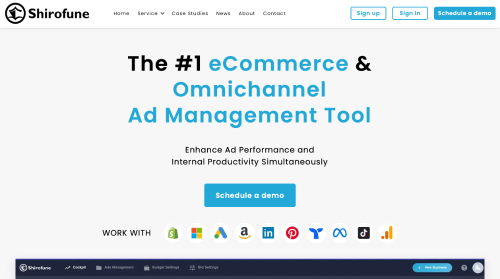
Shirofune Integrates with Walmart Connect to Help Brands Automate Campaigns
Shirofune, a digital advertising automation platform, has announced its integration with Walmart Connect, Walmart’s retail media platform. This partnership enables advertisers and agencies to manage their Walmart Connect campaigns alongside other major advertising channels, including search, social, and broader retail media networks, all from a centralized platform.
The integration means that Shirofune’s automation engine can now support budget pacing and bid adjustments based on campaign performance specifically for Walmart Connect campaigns. This capability helps advertisers optimize their ad spend in real-time, maximizing return on investment. Furthermore, the platform facilitates the management of campaigns across multiple clients and streamlines day-to-day advertising operations, reducing manual effort and potential errors.
The retail media landscape is one of the fastest-growing segments in digital advertising, with major retailers like Walmart building sophisticated platforms to monetize their vast customer data and online traffic. However, managing campaigns across multiple retail media networks, in addition to traditional search and social channels, can be incredibly complex and time-consuming. Shirofune’s integration with Walmart Connect provides a much-needed solution for brands and agencies seeking to centralize and automate their retail media strategies. This automation allows for more efficient budget allocation, improved campaign performance, and a more holistic view of advertising efforts across different channels, ultimately driving better sales outcomes for brands selling on Walmart.
Dotdigital Launches AI-Powered Loyalty Platform
Dotdigital, a customer experience platform, has unveiled an AI-powered tool designed to help marketers build, manage, and optimize loyalty programs. This launch comes in response to new research indicating a "loyalty crisis," with only a small percentage of consumers finding brand marketing relevant.
The new loyalty platform offers a suite of features aimed at enhancing customer retention and engagement. These include flexible points earning structures, multi-tiered loyalty programs, comprehensive rewards management, and detailed analytics to track program performance. Native integrations with Dotdigital’s existing platform and Shopify ensure seamless implementation and data flow for merchants already using these systems.
In an increasingly crowded e-commerce market, customer acquisition costs are rising, making customer retention more critical than ever. However, many traditional loyalty programs struggle to resonate with modern consumers who expect personalized and relevant experiences. Dotdigital’s AI-powered platform addresses this by enabling marketers to create more dynamic and tailored loyalty programs. AI can analyze customer data to identify optimal reward structures, personalize offers, and predict churn risks, thereby improving the effectiveness of loyalty initiatives. By fighting back against the "loyalty crisis," Dotdigital aims to help brands cultivate deeper, more meaningful relationships with their customers, translating into higher lifetime value and sustained growth.

Sprinklr Introduces Real-Time AI Customer Engagement
Sprinklr has significantly enhanced its customer experience management platform with new real-time AI features, aiming to revolutionize how brands interact with their customers across various touchpoints. These updates leverage advanced AI to provide more intelligent and responsive engagement.
The platform’s new capabilities include "Voice AI" for improved voice-based customer interactions, deeper integration with "MCP" (presumably a messaging or contact platform) for unified communications, and "ViralMoment video analytics" to extract insights from visual content. A notable addition is "LLM Insights," which helps teams understand and improve how their brand appears in generative AI answers, a critical consideration as AI assistants become more prevalent. Furthermore, "Sprinklr Copilot" has been upgraded to assist in creating and optimizing social posts and campaigns, offering AI-driven content generation and performance prediction.
These real-time AI features reflect the growing imperative for brands to deliver consistent, personalized, and efficient customer experiences across an ever-expanding array of digital channels. As consumers increasingly interact with brands through social media, messaging apps, and AI assistants, the ability to respond intelligently and in real-time becomes a competitive differentiator. Sprinklr’s advancements enable brands to monitor customer sentiment, respond quickly to inquiries, and proactively manage their brand image in the AI-driven digital sphere. This comprehensive approach to AI-powered customer engagement is crucial for maintaining brand relevance and fostering loyalty in a fast-paced, digital-first world.
Broader Industry Impact and Future Outlook
The collective impact of these recent innovations paints a clear picture of the e-commerce industry’s trajectory: a move towards greater automation, personalization, and seamless integration. The pervasive theme of Artificial Intelligence stands out, transforming everything from website creation and customer service to inventory management and marketing campaign optimization. This suggests a future where AI acts as a foundational layer, democratizing advanced capabilities for businesses of all sizes.
The emphasis on niche selling models like limited drops, coupled with robust fulfillment and payment solutions, indicates a maturing market that supports diverse business strategies. Meanwhile, the continued investment in cross-border payments and secure credential management highlights the global nature of e-commerce and the ongoing need for trustworthy and efficient financial infrastructure.
For merchants, these developments promise increased operational efficiency, reduced manual labor, and enhanced capabilities to compete in a crowded marketplace. For consumers, the outcome is likely to be faster deliveries, more personalized shopping experiences, and greater flexibility in payment options. However, the rapid pace of technological change also necessitates continuous adaptation and strategic investment from businesses to fully leverage these new tools. As the digital commerce ecosystem continues to evolve, the integration of AI, sophisticated logistics, and customer-centric financial solutions will remain key drivers of growth and innovation.