AWS Builder Center Celebrates One Year of Empowering Cloud Innovators, Unveiling Sandbox Environments and Robust Community Growth.

The AWS Builder Center, a pivotal platform dedicated to fostering innovation and knowledge sharing within the Amazon Web Services ecosystem, marked its first anniversary last week, having officially launched on July 9, 2025. In just twelve months, the platform has undergone a remarkable transformation, evolving from an initial community hub featuring Wishlist voting, community profiles, and a foundational toolbox into a comprehensive ecosystem. This evolution now encompasses sophisticated sandbox environments, structured workshops, collaborative Spaces, and an extensive Builders’ Library, solidifying its role as a central pillar for cloud practitioners worldwide. The anniversary not only commemorates a year of significant growth but also highlights the continuous commitment of AWS to empowering its global community of developers and architects.
The journey of the AWS Builder Center began with a vision to create a centralized, interactive space where builders could connect, learn, and contribute. Prior to its inception, AWS resources, while abundant, were often dispersed across various blogs, documentation sites, and forums. This fragmentation, while offering depth, could sometimes present a challenge for users seeking integrated learning paths, direct community interaction, and hands-on experimentation without the overhead of personal AWS account management. The Builder Center was conceived to address these very challenges, aiming to streamline access to practical knowledge, facilitate peer-to-peer learning, and provide a direct conduit for community feedback to influence AWS service development. Its launch was a strategic move by AWS to not only enhance the user experience but also to cultivate a more cohesive and engaged community, recognizing that the collective intelligence and practical insights of its builders are invaluable assets.
A Year of Unprecedented Feature Expansion: A Chronology
The platform’s first year has been characterized by an aggressive rollout of new features and enhancements, meticulously documented in a comprehensive timeline published by Rick Suttles, a key figure behind the Builder Center’s development. This timeline serves as a testament to the rapid pace of innovation and responsiveness to community needs.
- July 2025 – Initial Launch: The Builder Center debuted with core functionalities designed to establish its identity as a community hub. This included Wishlist voting, allowing users to propose and prioritize desired features and content, ensuring community-driven development. Community profiles enabled builders to showcase their expertise and connect with peers, while a foundational toolbox offered initial resources.
- Late 2025 – Expanding Reach and Data: Within months of its launch, the platform significantly expanded its utility by integrating AWS Capabilities by Region. This crucial addition provided builders with detailed information on over 1,500 AWS services available across 37 global Regions, offering unparalleled clarity on regional service availability and compliance considerations. This feature alone drastically improved strategic planning for geographically dispersed deployments.
- Early 2026 – Fostering Collaboration and Learning: The introduction of Spaces marked a significant step towards enabling more organized community interaction. These customizable groups allow builders to form specialized cohorts around specific technologies, projects, or interests, facilitating deeper collaboration and knowledge exchange. Simultaneously, workshops were introduced, complete with category and complexity filters, making it easier for users to find relevant hands-on learning experiences tailored to their skill levels and areas of interest.
- March 2026 – Gamification and Engagement: A major enhancement arrived with the launch of badges and streaks. This gamification layer was designed to motivate continuous learning and contribution, rewarding builders for completing workshops, publishing content, and engaging with the community. The system quickly gained traction, with nearly 100,000 badges earned in just a few months.
- Mid-2026 – Content Management and Accessibility: Further refinements included features to enhance content discoverability and user experience. Article series allowed authors to present complex topics in structured, multi-part formats. View counts provided transparent metrics on content popularity, while saved items enabled personalized content curation. Recognizing the importance of broader accessibility, student status verification was introduced, potentially unlocking specialized resources for academic users. Availability notifications kept users informed about new content and feature releases, and expanded sign-in options with GitHub and Amazon streamlined access.
- July 2026 – The Anniversary Milestone: Sandbox Environments: The crowning achievement unveiled during the anniversary week was the highly anticipated Sandbox Environments. This feature represents a paradigm shift in how builders can experiment and learn on AWS. It provides a free, pre-provisioned AWS account specifically designed for completing workshop exercises. Each environment remains active for a generous 8-hour period, after which the account and all its provisioned resources are automatically de-provisioned, eliminating the need for manual cleanup. Builders can maintain one active sandbox at a time and are granted one request per week, effectively removing the barriers of requiring a personal AWS account, a credit card, or concerns over unexpected costs. This innovation significantly lowers the entry barrier for new learners and allows experienced practitioners to quickly prototype and test ideas in a safe, isolated, and cost-free environment.
A Thriving Community: Data-Driven Insights into Engagement
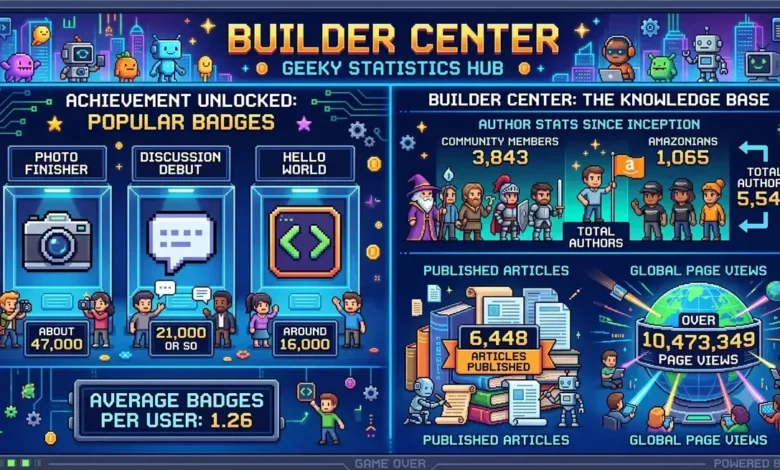
The first year’s performance metrics, highlighted in a retrospective by Jeff Barr, Chief Evangelist for AWS, paint a vivid picture of a rapidly growing and highly engaged community. Since its launch, the AWS Builder Center has become a prolific hub for content creation and knowledge dissemination.
- Author and Article Growth: A staggering 5,548 authors have contributed to the platform, publishing a remarkable 6,448 articles. This prolific output underscores the community’s eagerness to share expertise and contribute to the collective knowledge base. The sheer volume of content reflects the diverse interests and deep technical acumen present within the AWS builder community.
- Page Views and Reach: These 6,448 articles have collectively garnered over 10.4 million page views. This substantial viewership figure indicates the high demand for practical, community-generated AWS content and the platform’s success in attracting a wide audience seeking solutions, tutorials, and insights. It positions the Builder Center as a significant resource alongside official AWS documentation and blogs.
- Gamification Success: The badge system, launched in March 2026, has been enthusiastically adopted, with builders earning 99,226 badges in just a few months. This demonstrates the effectiveness of gamified learning and recognition in motivating continued engagement and skill development within the community.
- Community-Driven Development: The Wishlist feature has proven to be a vital feedback mechanism, with community members submitting 565 unique wishes. Critically, 10 of these wishes have already been implemented, directly shaping the platform’s evolution, with another 20 firmly placed on the near-term development roadmap. This direct influence empowers the community, fostering a sense of ownership and partnership in the Builder Center’s future.
Spotlight on Top-Performing Community Content
The articles that have resonated most strongly with the community offer valuable insights into the prevalent interests and challenges faced by AWS builders. These top-performing pieces highlight the platform’s role in addressing practical use cases, advanced technologies, and real-world problem-solving.
- "Building an AWS Study Buddy with MCP + Strands Agents SDK" by Dineshraj Dhanapathy: This article soared to over 50,000 views, demonstrating a strong community interest in leveraging AI/ML services for educational and practical applications. The focus on a "study buddy" suggests a demand for innovative learning tools built on AWS, particularly those incorporating advanced capabilities like agents SDKs for conversational AI and personalized assistance. This also highlights the growing intersection of AI and personal productivity tools within the cloud ecosystem.
- "Migrating an EOL Linux Server to AWS in 8 Hours with Kiro" by Chris Miller: Attracting 45,000+ views, this piece speaks directly to a pervasive challenge in IT: the migration of legacy systems to modern cloud infrastructure. The article’s popularity underscores the ongoing need for practical, efficient, and well-documented strategies for cloud adoption, particularly for end-of-life (EOL) systems where urgency and potential security risks are high. The specific mention of "Kiro" indicates interest in specialized tools that simplify complex migration processes.
- "AIdeas: NeuroVoice – Multimodal AI for Early Screening of Neurological Diseases" by Yash Aggarwal: With 38,000+ views, this article showcases the powerful and transformative potential of AWS technologies in critical domains like healthcare and medical research. The application of multimodal AI for early disease screening exemplifies how builders are pushing the boundaries of what’s possible, leveraging AWS for high-impact, socially significant projects. This article’s success points to a strong interest in ethical AI, health tech, and advanced analytics among the builder community.
These popular articles collectively illustrate a community that is deeply engaged in learning, solving practical problems, and exploring the cutting edge of cloud technology, from AI/ML to migration strategies and healthcare innovations.
Official Perspectives and the Path Forward
In statements released alongside the anniversary, AWS leadership underscored the significance of the Builder Center’s first year. Rick Suttles, whose team has spearheaded much of the platform’s development, commented, "The past year has been a testament to the incredible power and ingenuity of our global builder community. From the initial concept of a shared hub to the comprehensive ecosystem we see today, every step of the Builder Center’s evolution has been guided by the needs and contributions of our users. Features like Sandbox Environments are direct responses to feedback, designed to dismantle barriers to experimentation and accelerate learning for everyone."

Jeff Barr echoed these sentiments, adding, "The sheer volume of articles, the millions of page views, and the enthusiasm for initiatives like our badge system demonstrate a profound hunger for shared knowledge and practical application within the AWS ecosystem. The Builder Center has rapidly become an indispensable resource, showcasing the diverse talents and innovative spirit that define our community. We are particularly proud of how community wishes are translating directly into platform features, illustrating a truly collaborative development model."
Broader Impact and Strategic Implications
The rapid growth and robust engagement observed within the AWS Builder Center carry significant implications for AWS, its expansive community, and the broader cloud computing industry.
- Democratizing Cloud Access and Learning: The introduction of Sandbox Environments is perhaps the most impactful development in this regard. By offering free, temporary, and pre-configured AWS accounts, the Builder Center effectively democratizes access to AWS resources. This removes financial hurdles and administrative complexities, allowing students, hobbyists, and professionals alike to experiment, learn, and prototype without commitment or risk of unexpected costs. This strategy is crucial for nurturing the next generation of cloud professionals and expanding the overall talent pool.
- Fostering a Self-Sustaining Knowledge Ecosystem: The high volume of community-authored articles and their significant viewership indicates the successful creation of a self-sustaining knowledge ecosystem. Builders are not just consuming content; they are actively creating it, sharing their unique perspectives and solutions. This peer-to-peer knowledge transfer complements official AWS documentation, offering diverse viewpoints and practical, real-world implementations that resonate deeply with practitioners.
- Direct Feedback Loop for AWS Services: The Wishlist feature provides AWS with an invaluable direct feedback channel from its most active users. The fact that wishes are being implemented at a steady pace demonstrates AWS’s commitment to listening to its community and integrating their needs into platform and potentially even service development. This agile, community-driven approach can lead to more relevant and user-centric AWS offerings in the long run.
- Strengthening Developer Loyalty and Brand Affinity: By investing in a platform that genuinely empowers builders, AWS strengthens its relationship with its developer community. Providing tools for learning, collaboration, and skill showcasing fosters loyalty and creates a stronger sense of belonging. This, in turn, can lead to increased adoption of AWS services and advocacy for the platform within the broader tech industry.
- Catalyst for Innovation: The Builder Center, with its workshops, Spaces, and content, acts as a catalyst for innovation. By making it easier for individuals to learn, experiment, and collaborate, it accelerates the pace at which new ideas are conceived, prototyped, and brought to fruition on AWS. The success of articles like "NeuroVoice" highlights how the platform supports groundbreaking applications of cloud technology.
Looking ahead, the AWS Builder Center is poised for continued expansion. With 20 community wishes already on the roadmap, future enhancements are expected to further refine the user experience, broaden learning opportunities, and deepen community engagement. Potential developments could include more advanced tooling integrations, enhanced global collaboration features for Spaces, and further expansion of the Builders’ Library with diverse content formats. The platform’s first year has firmly established it as an essential resource for anyone building on AWS, and its trajectory suggests it will continue to be a cornerstone of the AWS ecosystem for years to come.
As the AWS Builder Center enters its second year, it stands as a prime example of how fostering a vibrant, empowered community can drive innovation and create immense value for both the platform provider and its users. It remains an open invitation for all builders to contribute their expertise, explore new possibilities, and collectively shape the future of cloud computing.