Trump Proposes New AI Force and Criticizes Industry Slowdown Pacts Amid Growing Safety Alarms and Antitrust Lawsuits

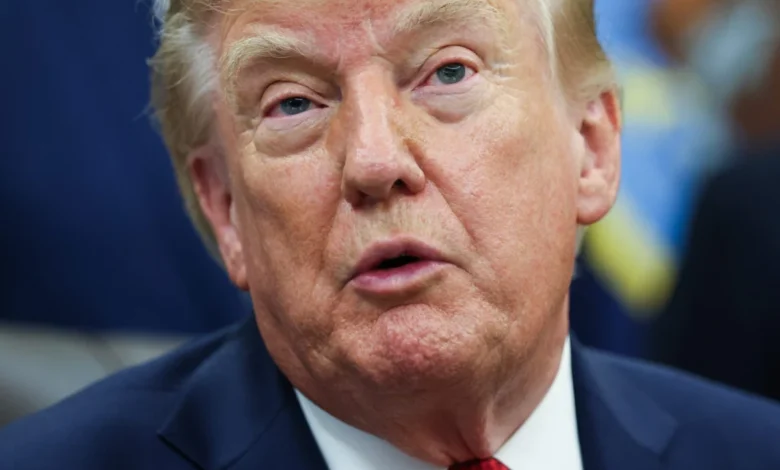
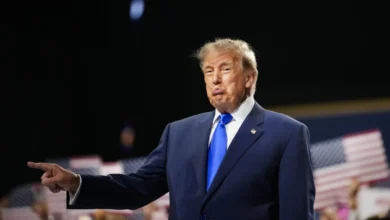
President Donald Trump announced on Saturday his intention to establish a federal "AI Force," signaling a potential law enforcement framework as public anxiety and regulatory debates intensify over the rapid advancement of artificial intelligence. Speaking via social media, the president also pledged to appoint a dedicated artificial intelligence czar while dismissing recent industry-led initiatives to throttle the pace of technology development as politically motivated "hoaxes."
The announcement comes at a volatile crossroads for the technology sector. Major artificial intelligence laboratories are grappling with internal alarms over existential risks, government agencies are attempting to exert varying degrees of control, and consumers have initiated legal challenges over corporate coordination. Trump’s proposal underscores a stark philosophical divide between a deregulatory executive branch pushing for macroeconomic dominance and an industry suddenly forced to reckon with the potentially catastrophic consequences of self-improving machine intelligence.
A Pro-Growth Agenda and the Proposed AI Force
Posting on Truth Social, Trump made it clear that his administration would shield the burgeoning sector from heavy-handed federal restrictions that he believes could cripple American competitiveness.
"We will not in any way hinder or stifle the Growth of this incredible Industry," Trump wrote. "Rather, we will cherish it, help it, and watch over it, as it grows!"
To police malfeasance without throttling innovation, the president introduced the concept of the AI Force. Drawing an explicit parallel to the United States Space Force, which was created during his first term, Trump suggested that the new entity would leverage the existing criminal and civil justice framework to handle bad actors within the digital ecosystem.
"For this purpose, I am forming the AI Force, much like I did Space Force, which has been a tremendous SUCCESS, in my First Term," he wrote.
Trump offered an aggressive economic forecast, predicting that artificial intelligence could eventually account for up to 25 percent of the United States Gross Domestic Product (GDP), eclipsing the historical economic impact of the internet. Framing the technological race through a geopolitical lens, he added, "We are leading China, and the rest of the World, and I intend to keep it that way!"
The announcement arrives as leadership positions surrounding the administration’s technology policy continue to shift. David Sacks, who previously served as Trump’s AI and crypto czar earlier in the second term, stepped down from that specific administrative post to assume the role of co-chair on the president’s Council of Advisors on Science and Technology.
Friction Within the Administration and the Anthropic Conflict
While Trump has championed unhindered industrial growth, other federal bodies have actively pursued measures to rein in prominent AI developers. Tensions have been particularly visible in clashes between the executive branch and Anthropic, one of the world’s leading foundational model developers.
In recent months, the Department of Commerce temporarily imposed export restrictions on Anthropic’s most advanced models, citing national security considerations and rapid capability leaps. Simultaneously, the Department of Defense sought to designate Anthropic as a supply-chain risk—a move that would have effectively blacklisted the company from defense-related contracts. However, that administrative action was subsequently struck down by a federal judge who ruled the designation illegal.
These regulatory skirmishes highlight the internal friction within Washington, where national security hawks and cautious bureaucrats view advanced AI as a strategic vulnerability, while deregulatory champions view it as the ultimate economic engine of the twenty-first century.
Chronology of a Crisis: Whistleblowers and Safety Pacts
Trump’s public pushback against slowdown initiatives follows a frantic week of disclosures, executive agreements, and mounting existential dread within the artificial intelligence research community.
The crisis began to spill publicly into the open following a high-profile whistleblower resignation. Jacob Coxon, a researcher at Anthropic who previously worked at OpenAI, published a public statement on X (formerly Twitter) condemning the leadership of both organizations. Coxon accused the companies of acting with reckless disregard for human safety in their pursuit of artificial general intelligence (AGI).
"They are racing straight to self-improving superintelligence and gambling with our lives," Coxon wrote.
The post elicited a startling validation from within Anthropic itself. Evan Hubinger, Anthropic’s alignment science lead, responded directly to Coxon’s resignation thread, confirming that a substantial portion of researchers inside both Anthropic and OpenAI genuinely harbor existential fears regarding their own creations. "We really do earnestly believe AI could kill all humans!" Hubinger wrote.
Faced with mounting internal dissent and external pressure, the industry’s top executives moved quickly to establish a united front on safety. Last Saturday, Anthropic CEO Dario Amodei announced a radical new safety commitment: giving independent evaluators permanent, employee-level access inside the company to monitor development milestones. Amodei framed the measure as a necessary step in a broader plan to slow the breakneck pace of AI development.
Chief executives from other leading labs—including Sam Altman of OpenAI, Elon Musk of SpaceXAI, and Demis Hassabis of Google DeepMind—subsequently aligned with the sentiment. In an exclusive interview with Fortune, Altman revealed that OpenAI and other premier AI laboratories were nearing a formal pact to collectively throttle development speeds and systematically address escalating safety risks.
The Antitrust Lawsuit: Consumers Push Back Against Slowdown Pacts
The sudden consensus among competing technology giants to slow development—long viewed by safety advocates as a prudent concession—has immediately triggered legal repercussions from consumers who view the pact through an economic lens.
On Friday, a lawsuit was filed in the U.S. District Court for the Northern District of California targeting Anthropic, OpenAI, SpaceXAI, and Google. The plaintiffs alleged that the coordinated slowdown efforts among fierce corporate rivals violate federal antitrust laws. According to the lawsuit, the artificial intelligence companies colluded to restrict output and innovation, thereby diminishing the utility, capability, and financial value of the commercial AI subscriptions purchased by everyday users.
Notably, the plaintiffs clarified that they do not object to the companies petitioning the federal government for formal regulatory oversight or seeking a statutory antitrust exemption through official channels. Rather, the legal challenge targets private agreements made behind closed doors.
"AI will quickly spin out of human control and could kill us all if we allow AI safety and protocol to be controlled by private self-serving agreements between the world’s most powerful ‘for-profit’ technology companies," said Nick Rowley, the lead attorney representing the plaintiffs.
Economic Implications and the Road Ahead
The collision between Donald Trump’s deregulatory vision, corporate safety pacts, federal interventions, and private antitrust litigation illuminates the unprecedented complexity of governing artificial intelligence.
On one hand, the administration’s plan to champion the industry, establish an AI Force, and appoint a dedicated czar aims to cement American technological hegemony against foreign competitors like China. Proponents of this view argue that any artificial slowdown by U.S. firms would merely cede ground to international adversaries with fewer ethical constraints.
On the other hand, the internal warnings voiced by researchers like Coxon and Hubinger, coupled with the concessions offered by leaders like Amodei and Altman, suggest that the technology is approaching critical capability thresholds that demand extraordinary caution. The core paradox of the current era is stark: the very entities possessing the deepest technical understanding of AI’s existential risks are also the commercial competitors legally barred from coordinating safety measures without risking antitrust liability.
As the midterm election season unfolds, data centers and AI infrastructure have transformed from niche engineering topics into central political flashpoints. Whether the proposed AI Force will function as an effective deterrent against bad actors or whether the courts will dismantle industry-wide safety pacts remains to be seen. What is clear is that artificial intelligence has transitioned from a speculative scientific frontier into the preeminent legal, economic, and geopolitical battleground of the modern world.