The AI Overdrive: How Generative Search is Reshaping Local Business Discovery and Why Your Star Rating Might Be the Least of Your Worries

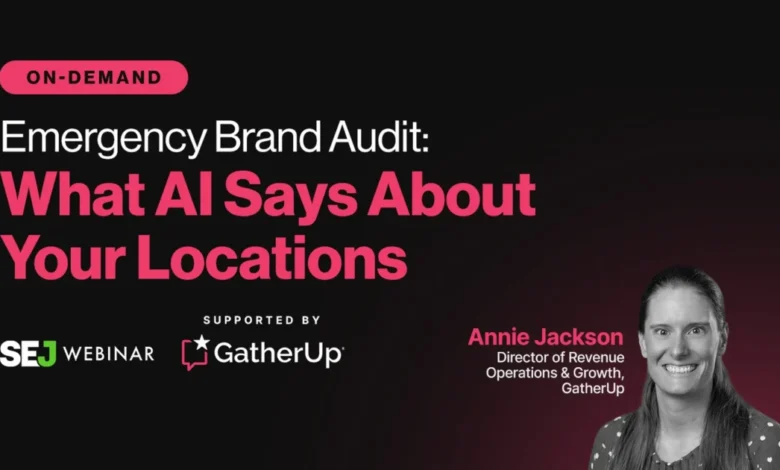
A recent presentation by GatherUp executives Annie Jackson and Jason Wertham has illuminated a significant shift in how consumers discover local businesses, driven by the rapid integration of artificial intelligence into search engines. The core takeaway: AI-powered answers, often derived from a complex interplay of reviews, public mentions, and listing data, are increasingly prioritizing query relevance over traditional metrics like star ratings, presenting both challenges and opportunities for businesses seeking visibility.
The session, which detailed a four-prompt audit and a strategic "build, manage, defend" rollout for businesses, highlighted a real-world scenario that encapsulates the changing landscape. Annie Jackson, Director of Revenue Operations and Growth at GatherUp, recounted her experience using Google to find a "no-touch car wash that fits an SUV in Norfolk, VA." To her surprise, Google’s AI overview surfaced a business with a 3.3-star rating, but prominently displayed clearance height and 24/7 operating hours directly above the star rating itself. This instance, where specific query matching seemingly outweighed a less-than-stellar customer rating, underscored a fundamental change in how AI synthesits information for consumers.
"Google answered my questions, but this business is actually showing up as a 3.3 star," Jackson stated, emphasizing the AI’s prioritization of contextual information directly addressing her search parameters. "It’s surfaced the context of my query above the star rating." Jason Wertham, Vice President of Review Defense Operations at GatherUp, elaborated on this phenomenon, explaining that AI tools now construct their understanding of locations by aggregating data from reviews, online listings, and various web mentions. This synthesized description is then presented to potential customers, often before they even visit a business’s own website.
This shift has profound implications for local search engine optimization (SEO) and reputation management. As AI models become more sophisticated, their ability to understand nuanced queries and deliver tailored answers directly impacts consumer behavior. The example of the 3.3-star car wash winning out in a specific search query suggests a future where businesses might need to optimize for AI comprehension as much as for traditional search engine algorithms.
The Evolving Consumer Search Behavior: Embracing the AI Summaries
Consumer adoption of AI-powered search tools for local business discovery is accelerating rapidly. Data collected by GatherUp in the fall of 2025 revealed a significant trend: 55% of consumers had consulted Google or Bing AI summaries for local information, while 48% had leveraged ChatGPT for similar queries. Notably, 31% of respondents had used these AI tools multiple times, indicating a growing reliance on this new form of information retrieval.
Jackson’s car wash query serves as a practical illustration of this evolving behavior. Moving beyond simple searches like "car wash near me," consumers are now posing more complex, descriptive questions. The AI’s ability to parse these detailed queries, such as "no-touch car wash for my SUV in Norfolk, VA," and extract relevant details from its vast database of over 300 million places and 500 million review contributors, is redefining the initial stages of the customer journey.
Wertham further noted that these AI tools are becoming increasingly personalized, factoring in user context such as the time of day or even inferred characteristics like vehicle type. "The time of day when you’re actually doing this query in Google Maps could impact which businesses are getting returned in those results," he explained. This means that an AI model that recognizes a user owns an SUV might tailor future local business recommendations accordingly, even if that detail isn’t explicitly restated in subsequent searches.
To help businesses navigate this new terrain, Jackson and Wertham presented a "four-prompt emergency audit." This audit is designed to reveal precisely what AI tools like ChatGPT, Google AI Overviews, and Ask Maps are currently communicating about a multi-location brand. Following this audit, they outlined a comprehensive "build, manage, defend" rollout strategy aimed at shaping and improving the AI-generated answers that customers receive.
The Role of Reviews in the AI Ecosystem: Beyond the Listing
A critical point of discussion revolved around how customer reviews contribute to AI answers. Wertham clarified a common misconception: major directory service providers like Google and Yelp actively block Large Language Model (LLM) crawlers from accessing review content directly from business profiles on their platforms. This means that while reviews remain crucial for local search rankings and conversions within the listings themselves, their direct influence on AI-generated summaries is mediated.
"The major directory service providers, Google, Yelp, and others, they do not allow LLM tools like ChatGPT and Claude to scrape or crawl the review data on the business listing," Wertham stated. "You’ll notice they’re not citing specific reviews from those platforms."
However, the moment these reviews are republished on publicly accessible platforms or embedded on a business’s own website, they become fair game for LLMs. "The same reviews become crawlable the moment you republish them," Wertham added. "Post them to public social channels or embed them in review widgets on your own site and, in Wertham’s words, ‘now they’re fair game for the LLM tools to be pulling in.’"
This distinction is vital for businesses aiming to influence AI-generated answers, particularly for queries involving terms like "popular" or "highly reviewed" businesses. If review content is confined solely to a third-party directory, it cannot be accessed and incorporated by LLMs into their summaries. "If you’re relying on the review platforms to do that for you, it’s not going to be enough," Wertham emphasized.
The actionable advice stemming from this insight is to actively republish customer reviews across various digital touchpoints. The GatherUp session provided guidance on which widget and social media placements make review content most readable by AI, including strategies for ensuring that business replies are carried along with the reviews. Furthermore, Wertham delved into the significance of first-party review capture – survey responses that never reach public platforms – and shared an anecdote about how 11,000 such reviews from a single customer proved impactful.
The Diminishing Dominance of Star Ratings in AI Search
The traditional reliance on a high average star rating is being challenged by the evolving dynamics of AI-driven local search. The audit examples presented during the session demonstrated that AI answers rarely cited average star ratings. Instead, they consistently referenced specific review content.
Consumer data collected by GatherUp corroborates this trend. A significant 45% of users now prioritize review recency over star rating, and 60% place more trust in detailed written reviews than in rating-only assessments. Moreover, 70% of consumers prefer to receive a review request within 72 hours of a transaction, highlighting the importance of timely feedback.
Wertham pointed out that consumers frequently override default "most relevant" review sorting options in search engines and opt for "newest" reviews. This behavior stems from the understanding that the most recent feedback offers the most accurate prediction of their potential experience. Consequently, a strong average rating built on older reviews carries less weight than a consistent stream of recent, positive feedback.
"I’d rather go to a business with 1,000 reviews and a 3.9 or 4.2 than 30 reviews and a 5.0," Wertham stated, illustrating the shift in consumer preference towards volume and recency.
The GatherUp session’s strategic framework addresses this by organizing response efforts into three core workstreams: build, manage, and defend. "Build" involves establishing consistent listings and a steady volume of reviews. "Manage" focuses on prompt responses to reviews and monitoring within a 72-hour window. "Defend" entails protecting the business’s hard-earned rating against policy-violating reviews and tactics like "review smothering," where a deluge of negative reviews can bury positive ones.
The Volatile Nature of AI Answers: Navigating Inconsistency
The unpredictable nature of AI-generated answers is another critical aspect for businesses to comprehend. Jackson likened the experience of querying AI to operating a slot machine, noting that asking the same question across different devices or accounts can yield vastly different results. This inherent variability means that a single query is not a reliable indicator of how a business is being represented.
"Asking AI a question is kind of like a slot machine," Jackson explained. "It’s going to be giving back similar data, but each time it’s going to look a little differently."
This inconsistency challenges traditional SEO metrics, suggesting that "position" may be the wrong metric for AI visibility. Instead, the breadth of sources feeding an AI’s answer, referred to as total citations, becomes a more critical predictor of whether a brand appears at all. A brand might be absent from one device’s AI answer but lead the results on another.
Google’s own evolving guidance on optimizing for generative AI also signals a shift. Wertham highlighted a significant update: the "AI slop penalty." Google is now actively identifying and penalizing low-value, AI-generated content. This means generic AI blog posts or repurposed FAQ content, which previously might have been ignored, could now actively harm a business’s visibility.
To mitigate the impact of this AI volatility, businesses are advised to conduct their AI audits using incognito or temporary-chat modes. This approach helps to prevent stored context from skewing the results. Furthermore, running these audits on a regular schedule is recommended to measure the effectiveness of visibility efforts. The GatherUp session introduced a monthly re-run method for tracking whether optimization strategies are positively influencing AI-generated answers.
Addressing Key Concerns: A Q&A with the Experts
During the presentation, several pertinent questions were raised by attendees, offering further insights into the practical application of these AI strategies:
Q: What is the fastest thing I can do this week to change what AI says about my company?
Jason Wertham emphasized the immediate impact of addressing listings and evangelizing reviews: "Address your listings. Make sure your listings are all correct and all consistent, whatever platforms you’re on. And then make sure that you are evangelizing your reviews off of the third-party directory where you’re receiving them. Post them to your social media platform, post them to a section of your website." Annie Jackson concurred, stressing the importance of foundational elements: "Make sure you have the basics down. Get the basics down, make sure those are set, and then you can move into the more elaborate things." She illustrated this with an anecdote about a local restaurant whose Facebook page mistakenly listed the owner’s personal cell number, leading to a constant stream of unwanted calls.
Q: How long before content changes actually show up in AI answers?
Annie Jackson explained that the speed of AI updates varies. Small factual changes, such as store hours and phone numbers, tend to update rapidly. However, fundamental aspects of a business’s identity, "what you’ve been known for," will take longer to reflect in AI answers, generally ranging from two weeks to a month, with a longer tail for more significant shifts. She reiterated that a business’s own website serves as the fastest lever for communicating new offerings, as reviews are unlikely to announce them proactively.
Q: My weakest location has old bad reviews that keep showing up. Do I have to wait for them to age out?
Jason Wertham clarified that while age naturally diminishes a review’s relevance, certain factors can extend their impact. Keyword-heavy reviews and those from "Local Guides" tend to hold ranking power longer. Even emoji reactions can prevent a review from slipping, despite not actively contributing to upward momentum. Importantly, policy-violating reviews remain disputable regardless of their age. Wertham noted that his review defense team regularly removes reviews that are over ten years old. The most reliable long-term solution, he stressed, is to consistently build volume and velocity, as recency ultimately outweighs older content in determining long-run relevancy.
Q: How should franchisors handle this when each franchisee controls their own profile?
Wertham identified a critical challenge for franchisors: the "consistency gap." While the brand bears the brunt of AI-generated answers, individual franchisees often manage their own profiles. To address this, he recommended establishing clear best practices, offering white-labeled or partner tools that franchisees are likely to adopt, and providing them with a comprehensive playbook. He also suggested that franchisors proactively run audit prompts on behalf of franchisees and coach them on the findings, recognizing that a single location’s misrepresentation in AI answers can negatively impact the entire brand.
The Path Forward: A Comprehensive Strategy for AI Visibility
The full on-demand webinar offers a deep dive into these critical topics, providing attendees with the four emergency audit prompts, a downloadable handout, the complete "build, manage, defend" rollout strategy, a method for monthly measurement, and a detailed walkthrough of review defense protocols for disputing policy-violating reviews. Jackson’s "AI narrative audit" offer is also available within the recording.
As generative AI continues its rapid integration into consumer search habits, businesses must adapt their strategies to ensure they are accurately and favorably represented in these new digital information streams. The era of solely optimizing for traditional search engines is evolving, demanding a more nuanced approach that considers the complex algorithms and vast datasets powering the AI overviews that are increasingly shaping customer discovery.