The Founders Designed a Government That Accounts for a Degree of Depravity in Mankind

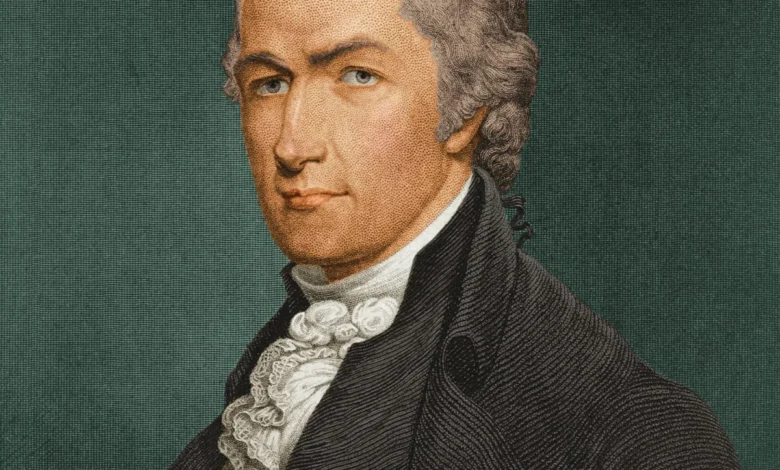
The nascent United States, forged in the crucible of revolution, grappled with a fundamental paradox: how to establish a government that could secure liberty while acknowledging the inherent imperfections of human nature. This profound question occupied the minds of the nation’s founders as they navigated the treacherous waters of nation-building in the aftermath of the American Revolutionary War. The initial governmental framework, the Articles of Confederation, proved to be a testament to this pervasive suspicion of concentrated power, but its ultimate inadequacy spurred a more ambitious reimagining of governance.
The immediate post-war period revealed the severe limitations of a government structured as a loose confederation of sovereign states. While effective in marshaling colonial resistance against Great Britain, this arrangement quickly fostered internal discord and hindered national progress. The Second Continental Congress, in its attempt to solidify this nascent union, drafted the Articles of Confederation in 1777. However, the ratification process was protracted, a reflection of the deep-seated rivalries and divergent interests among the states. Issues such as the equitable management of western territories and the establishment of a sound national financial system became significant points of contention, delaying the Articles’ full adoption until 1781, a mere two years before the war’s conclusion.
The very structure of the Articles of Confederation underscored a profound distrust between the states. Each state was fiercely protective of its autonomy, reluctant to cede any significant authority to a central governing body. This cautious approach, born from the recent experience of tyrannical rule, resulted in a national government endowed with severely limited powers. The absence of a robust executive branch and a national judiciary left the confederation ill-equipped to enforce its own resolutions or to mediate disputes between states. The national legislature, described by the Articles as a "league of friendship," functioned more as a deliberative assembly of state representatives than as a truly representative body of the nation’s populace.
Under the Articles, a unicameral Congress held legislative power, with each state casting a single vote, regardless of its size or population. The bar for enacting significant legislation was set extraordinarily high, requiring a supermajority, while any amendment to the Articles demanded unanimous consent from all states. For many, this deliberate slowness and the inherent constraints on federal power were viewed as essential safeguards against the kind of governmental overreach they had so recently escaped. The specter of British abuses loomed large, and a cautious approach to national authority seemed prudent.
However, the decade of the 1780s proved to be a period of escalating crises that challenged the viability of the confederation. The Newburgh Conspiracy in 1783, a near-mutiny by unpaid Continental Army officers, highlighted the national government’s inability to meet its financial obligations. Interstate trade disputes created economic friction, and a pervasive economic depression further exacerbated social unrest. Most critically, Shays’ Rebellion in Massachusetts (1786-1787), a tax revolt by indebted farmers led by Revolutionary War veteran Daniel Shays, demonstrated the national government’s impotence in quelling internal insurrections. These events collectively underscored the urgent need for a more unified, effective, and interventionist national government.

The Nationalist Vision and the Constitutional Convention
In response to these mounting challenges, a cohort of influential figures, often referred to as nationalists, convened in Philadelphia in the summer of 1787 for the Constitutional Convention. Prominent among them were Alexander Hamilton, James Madison, and John Jay, who would later articulate their vision in the influential Federalist Papers. Their core belief was that a government’s primary role should be to protect citizens not only from external threats but also from their own potential for self-destruction and societal chaos.
These nationalists advocated for a more robust and centralized national union. They sought to harmonize the diverse interests of the new republic by dismantling interstate trade barriers, consolidating state debts, and establishing a stronger central administrative apparatus headed by a vigorous executive. Crucially, they envisioned a tripartite federal government, comprising a bicameral legislature, an executive branch, and a national judiciary, each endowed with significantly expanded powers compared to their counterparts under the Articles.
The proposed Constitution, a stark departure from the Articles, incorporated provisions for uniform national commercial regulation, exclusive federal authority over currency issuance, enhanced executive powers for foreign policy, and a comprehensive federal court system. It also explicitly granted the national government the power to suppress insurrections, a direct response to the failures witnessed during Shays’ Rebellion.
The deliberations at the Convention, which included luminaries such as George Washington and Benjamin Franklin, placed a particular emphasis on the federal government’s capacity to manage domestic unrest and fiscal policy. The proximity of Shays’ Rebellion, a protest against taxes levied to repay war debts that disproportionately burdened common citizens while benefiting elites, provided a potent and timely illustration of the Articles’ shortcomings. Nationalist theorists like Hamilton, Madison, and Jay viewed such revolts not as legitimate grievances but as the product of "factions" – dangerous social movements fueled by demagogues exploiting the populace’s baser instincts and unchecked desires.
The Federalist Papers: A Defense of a Skeptical View of Humanity
The proposed Constitution, as it emerged from the Convention, faced significant opposition from a group of political writers who came to be known as the Anti-Federalists. These often anonymous critics voiced concerns that the new Constitution represented an unwarranted concentration of federal power that would ultimately imperil the hard-won liberties secured by the Revolution.
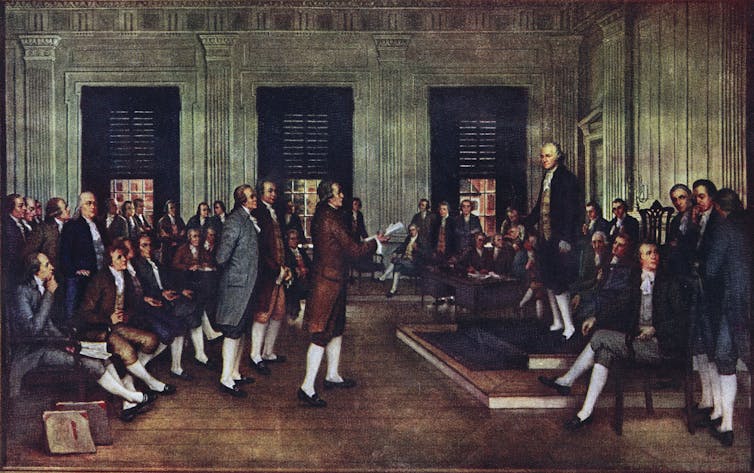
It was in this climate of intense debate that Hamilton, Madison, and Jay penned the Federalist Papers. Adopting the collective pseudonym "Publius," they published 85 essays in New York newspapers between 1788 and 1789, meticulously defending the proposed Constitution and advocating for its ratification. Their arguments were deeply rooted in a philosophical examination of human nature, positing that the inherent flaws and imperfections of mankind necessitated a strong, well-structured government capable of both channeling and restraining these tendencies.
At the heart of their defense lay the principle articulated by Madison in Federalist No. 51: "If men were angels, no government would be necessary." This statement encapsulates the Federalist conviction that human beings are not inherently virtuous and are susceptible to self-interest, ambition, and a propensity for conflict. They argued that any government that relied solely on the inherent goodness or civic virtue of its citizens was doomed to failure.
A Timeline of the Road to the Constitution:
- 1777: The Second Continental Congress adopts the Articles of Confederation, the first constitution of the United States.
- 1777-1781: States slowly ratify the Articles of Confederation due to disagreements over western lands and financial matters.
- 1781: The Articles of Confederation are fully ratified by all 13 states.
- 1783: The Newburgh Conspiracy highlights the national government’s inability to pay its debts.
- 1780s: Growing interstate trade disputes and economic depression plague the young nation.
- 1786-1787: Shays’ Rebellion in Massachusetts exposes the weakness of the federal government in quelling domestic unrest.
- May-September 1787: The Constitutional Convention meets in Philadelphia to revise the Articles, ultimately drafting a new Constitution.
- September 17, 1787: The U.S. Constitution is signed by delegates at the Convention.
- 1788-1789: Hamilton, Madison, and Jay publish the Federalist Papers in support of the Constitution’s ratification.
- 1789: The U.S. Constitution is ratified by the required number of states and goes into effect.
The Federalist authors saw the potential for destructive impulses not only in the general populace but also within political leaders. Madison, in Federalist No. 10, famously described faction as "sown in the nature of man," suggesting that self-interest and the formation of groups with common objectives, often at odds with the public good, were an inevitable consequence of human society.
Hamilton, in Federalist No. 6, challenged the prevailing notion that republics were inherently peaceful. He argued that political leaders and states were driven by ambitions and jealousies, characteristics that he believed were inherent flaws in the Articles of Confederation and a fundamental law governing interstate relations. He warned that without a strong unifying force, the subdivisions of states would inevitably engage in "frequent and violent contests with each other," a grim prediction rooted in his observation that "men are ambitious, vindictive, and rapacious."
Consequently, the Federalists argued for a government with the capacity for coercive authority. In Federalist No. 15, Hamilton asserted that laws without penalties are mere "advice or recommendation," highlighting the necessity of enforcement mechanisms. A government that could not enforce its mandates was, in essence, powerless.
The Federalist Papers, therefore, framed the proposed Constitution as a pragmatic solution to the inherent depravity in mankind, a concept Madison acknowledged when he wrote of "a degree of depravity in mankind." However, they were not entirely pessimistic. They also maintained that carefully designed institutions and a balanced governmental structure could effectively manage these dangerous impulses. Madison, in Federalist No. 73, tempered this skepticism by noting that "There are other qualities in human nature which justify a certain portion of esteem and confidence," suggesting that while humans were flawed, they were not irredeemably so.
The Implications of a Government Designed for Imperfection
The Federalist framework, with its emphasis on checks and balances, separation of powers, and a strong yet limited federal government, has profoundly shaped the American political landscape. The understanding that government must account for human fallibility has led to institutional designs intended to prevent the tyranny of the majority and the abuse of power by the elite. The system of checks and balances, whereby each branch of government can limit the power of the others, is a direct manifestation of this principle.
The ongoing debates surrounding the interpretation and application of the Constitution can often be traced back to this fundamental tension between the ideal of liberty and the reality of human nature. The Federalist Papers remain a critical resource for understanding the philosophical underpinnings of American governance, offering insights into why the founders designed a system that, while striving for freedom, also acknowledged the need for robust structures to contain the less noble aspects of human behavior. The enduring legacy of this foundational debate lies in the creation of a government built not on the assumption of human perfection, but on the realistic appraisal of human imperfection. This pragmatic approach has allowed the United States to navigate centuries of change and challenge, continuously striving to balance individual liberty with the need for order and stability.