AWS Weekly Roundup: Generative AI in Agribusiness, Security Innovation, and Infrastructure Advancements

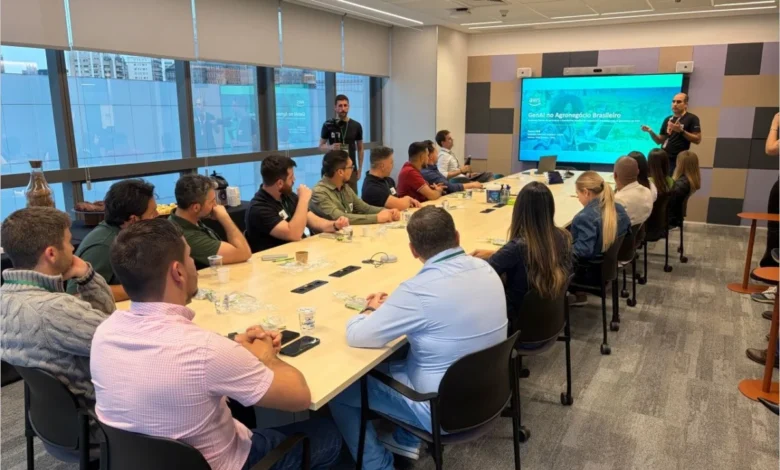
The integration of generative artificial intelligence into traditional industrial sectors remains the primary driver of technological adoption, as evidenced by recent developments in the Brazilian agribusiness market and new security initiatives from Amazon Web Services. During a recent executive briefing at the AWS headquarters in São Paulo, industry leaders highlighted that for sectors like agriculture, the success of AI is measured not by the complexity of the underlying models, but by the accessibility of the interface. In environments where operators are frequently mobile—often managing complex logistics from behind the wheel of a vehicle—voice-based AI interfaces have become a critical bridge between data and decision-making. This shift underscores why updates to foundational technologies, such as the Amazon Polly generative engine, carry significant weight in real-world operational workflows.
The Evolution of Voice Interaction in High-Mobility Environments
The recent expansion of the Amazon Polly generative engine, which added 14 new voices across nine locales, reflects a broader trend toward natural language processing (NLP) as a primary interface for enterprise software. Among the new additions are two Brazilian Portuguese voices, Leo and Carolina, designed to provide more expressive and natural-sounding synthesis. This is not merely an aesthetic update; for the agribusiness sector, where connectivity and hands-free operation are paramount, the ability to receive real-time updates—such as market fluctuations or logistical alerts—via a natural voice interface is a functional necessity.
By integrating these advanced voices into existing workflows via the SynthesizeSpeech API, companies can deploy sophisticated, localized voice assistants without re-engineering their core infrastructure. The expansion of Polly’s catalog, which now encompasses 57 generative voices across 11 languages, demonstrates a move toward hyper-localization, ensuring that regional nuances are captured to enhance user engagement and reduce cognitive load for field operators.
Addressing the Shrinking Window of Vulnerability
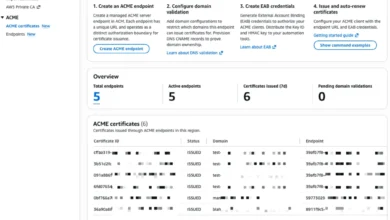
While user interfaces are evolving, the security landscape is simultaneously grappling with a critical reduction in the time between vulnerability disclosure and active exploitation. AWS has responded to this urgency with the general availability of AWS Continuum, a service designed to redefine vulnerability management from a passive reporting tool into an active, end-to-end remediation framework.
The urgency for such a tool was underscored by recent telemetry from the Amazon MadPot project. Evidence indicated that exploitation attempts for the PHP2Shell vulnerability occurred on October 17, four days prior to the formal public disclosure of CVE-2026-109618 and CVE-2026-109619. Alarmingly, proof-of-concept exploit code was actively circulating at 02:00 UTC on the day of disclosure, fully twelve hours before the official embargo was set to lift. This timeline serves as a stark reminder that traditional patch cycles, often measured in days or weeks, are effectively obsolete in the face of modern automated threat actors.
AWS Continuum addresses this by building a comprehensive context graph of an organization’s software repositories and infrastructure. Rather than providing a standard list of vulnerabilities, the service ranks findings based on the proximity of the threat to business-critical systems. By reproducing exploitable findings in an isolated sandbox environment and offering proof-of-concept code, Continuum allows security teams to prioritize remediation based on actual risk rather than static severity labels. While the system currently requires human approval for final code merges—a "human-in-the-loop" approach—the infrastructure is designed to eventually support autonomous remediation for low-risk, high-confidence patches.
Scaling Microservices with Amazon ECS Gateway
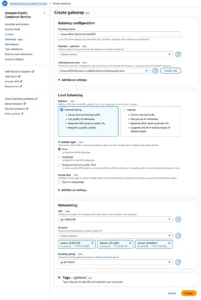
In the realm of cloud architecture, the introduction of the Amazon ECS Gateway marks a significant shift in how platform and application teams collaborate. Traditionally, the burden of managing network configuration, TLS certificates, and web ACLs often created bottlenecks between infrastructure engineers and software developers.
The ECS Gateway decouples these responsibilities by allowing platform teams to define a centralized gateway that governs network subnets, security policies, and load balancer settings. Application teams can subsequently opt-in to this environment by adding a gateway connector to their service definitions. This architecture allows up to 25 services to share a single Application Load Balancer (ALB), significantly optimizing costs and reducing the management overhead associated with individual load balancer provisioning. With support for up to 10,000 clusters and five gateways per cluster, this service is designed to accommodate the scaling needs of massive enterprise microservice architectures, allowing for incremental adoption without requiring service downtime.
Advancements in Machine Learning and Data Infrastructure
The past week also saw substantial progress in machine learning infrastructure and data migration capabilities.
TorchNeuron and Hardware Flexibility
AWS has introduced TorchNeuron in public beta, a native PyTorch backend for AWS Trainium. This tool allows developers to transition their existing PyTorch models to Trainium-powered infrastructure by modifying only the configuration code—specifically, changing the target device to ‘neuron’—rather than rewriting the underlying logic. By maintaining compatibility with eager execution and torch.compile, this release aims to prevent vendor lock-in and provide a seamless path to high-performance training on custom silicon, supported by the concurrent release of AWS Neuron 2.33.
SageMaker AI and Training Sessions
Amazon SageMaker AI has streamlined the process of model customization by removing the need for manual GPU management. New "Training Sessions" are now generally available, allowing developers to focus on the post-training loop, including reward signals and custom loss functions. SageMaker automates the complexities of distributed execution, fault recovery, and checkpoint storage. The economic model is equally refined: users pay only for the tokens processed, with the billing meter pausing during the scoring of batches, providing a more predictable cost structure for iterative model tuning.

Bedrock and Structured Outputs
The integration of structured outputs for Anthropic’s Claude models on Amazon Bedrock addresses a longstanding challenge in generative AI: the reliability of model responses. By enabling schema-compliant JSON outputs, AWS has eliminated the need for complex post-processing, custom parsing, and retry logic. This is particularly significant for automated financial and clinical workflows, where the accuracy and format of extracted data are critical for compliance and decision-making.
Database Migration Milestones
Large-scale data migration also saw success stories this week, notably the migration of 119 TB of data from Oracle Exadata to Amazon RDS for Oracle by U.S. Bank. Utilizing a pipeline composed of Oracle XTTS (Cross-Platform Transportable Tablespaces), AWS DataSync, and Amazon EFS, the bank achieved a baseline copy in roughly seven days. With average cutover times of four hours per database and zero data loss, this project illustrates the feasibility of moving massive, legacy on-premises workloads to managed cloud database services without disrupting business operations.
Strategic Outlook and Future Events
The velocity of these releases highlights a broader trend: AWS is moving away from generic infrastructure services toward specialized, outcome-oriented tools that reduce the cognitive and operational burden on engineering teams. Whether through the automated vulnerability remediation of Continuum, the simplified networking of the ECS Gateway, or the refined training loops in SageMaker, the common denominator is the reduction of "undifferentiated heavy lifting."
Looking ahead, the industry is preparing for the annual AWS re:Invent conference, scheduled for November 30 to December 4 in Las Vegas. With more than 2,200 sessions planned, the event is expected to provide further clarity on how these foundational technologies will integrate into the next generation of enterprise AI applications. Furthermore, the finalization of the 2026 Brazilian community season, culminating in the AWS Community Day in Belém on October 31, underscores the company’s commitment to fostering local technical expertise in emerging markets. As these technologies continue to mature, the focus for organizations will likely shift from the "how" of implementation to the "why" of architectural strategy, ensuring that infrastructure investments are directly aligned with business-critical outcomes.
Related posts: