Microsoft Breaks Records with July 2026 Patch Tuesday Addressing 570 Vulnerabilities as AI Transforms Cybersecurity Landscapes

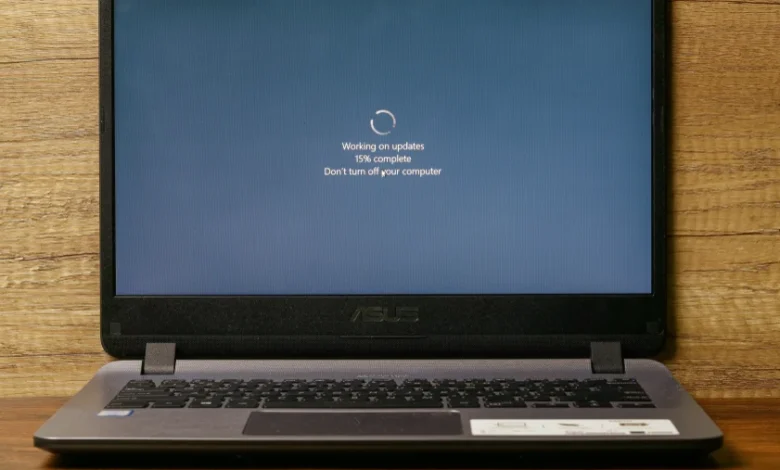
Microsoft Corp. has officially shattered all previous records for monthly security updates, releasing a massive wave of software patches today to address at least 570 security vulnerabilities across its Windows operating systems and associated software suite. This figure represents a nearly threefold increase over the company’s previous record-setting release just last month, signaling a radical shift in the volume and velocity of vulnerability management. Microsoft executives have attributed this unprecedented surge in bug discoveries to the integration of advanced artificial intelligence (AI) tools in the software testing and auditing process, marking a new era in the ongoing arms race between software defenders and cyber adversaries.
Of the 570 vulnerabilities addressed in the July 2026 update, nearly 60 have been classified as "critical" by Microsoft’s security teams. A critical rating is the highest severity level assigned by the company, indicating that a vulnerability could allow for remote code execution (RCE) without any interaction from the user. In such scenarios, malware or a malicious actor could theoretically seize full control over a target device, accessing sensitive data or using the system as a jumping-off point for further network infiltration.
In addition to the sheer volume of fixes, Microsoft identified three "zero-day" vulnerabilities—flaws that were known to the public or actively exploited before a patch was available. Two of these zero-days are currently being leveraged in active cyberattacks, necessitating immediate action from IT administrators and individual users alike.
The Role of Artificial Intelligence in Vulnerability Discovery
The primary driver behind this month’s staggering patch count is the deployment of AI-driven discovery mechanisms. In a detailed blog post released on July 9, Pavan Davuluri, Microsoft’s Executive Vice President of Windows and Devices, explained that the company has evolved its vulnerability management lifecycle to match the speed of modern technology. Davuluri noted that AI is now capable of scanning vast repositories of code to identify patterns and anomalies that were previously invisible to human auditors or traditional automated fuzzing tools.
"The pace of vulnerability discovery is changing with advances in AI making it possible to find more issues, faster, across more code, with new mechanisms that can accelerate both discovery and analysis," Davuluri wrote. He warned Windows users and enterprise clients to expect a "higher volume of security updates" as a permanent fixture of future security releases.
Industry analysts suggest that while AI helps Microsoft clean up its codebase, it also creates a double-edged sword. As defenders use AI to find and fix bugs, attackers are using similar large language models (LLMs) and machine learning algorithms to reverse-engineer patches and develop functional exploits within hours of a security bulletin’s release.
Detailed Breakdown of Key Vulnerabilities
The July 2026 patch cycle addresses a wide spectrum of issues, ranging from privilege escalation to security feature bypasses. Among the most concerning are the zero-day flaws and high-severity bugs affecting core enterprise services.
Zero-Day Exploits and Privilege Escalation
Two of the zero-day weaknesses identified this month allow attackers to elevate their user rights on a compromised system. This is a critical step in most cyberattacks, as it allows a low-level user or a piece of malware to gain administrative or "SYSTEM" level access, effectively bypassing local security controls.
Specific attention has been drawn to CVE-2026-56155, a vulnerability in Active Directory Federation Services (ADFS), and CVE-2026-56164, which affects Microsoft SharePoint. Both flaws are significant because they impact identity management and collaboration tools central to modern corporate infrastructure. These two vulnerabilities are among approximately 250 elevation-of-privilege (EoP) flaws fixed in this release, highlighting a concerted effort by Microsoft to harden the "identity" layer of its ecosystem.
Security Feature Bypass in Windows BitLocker
Another notable fix is CVE-2026-50661, a security feature bypass vulnerability in Windows BitLocker. BitLocker is the standard encryption tool used to protect data on Windows devices. According to Microsoft, this bug could allow an attacker with physical access to a device to bypass encryption and access protected data. While Microsoft stated that the details of this bug have been made public, the company is currently not aware of any active exploitation in the wild. However, for organizations with high-risk mobile workforces, the potential for data theft from lost or stolen laptops remains a high priority.
Microsoft Copilot and Remote Code Execution
As Microsoft continues to integrate AI into its own products, the security of those AI tools has come under scrutiny. Jack Bicer, Director of Vulnerability Research at Action1, highlighted CVE-2026-48561, a remote code execution (RCE) flaw in Microsoft Copilot. Carrying a near-perfect CVSS threat score of 9.6, this vulnerability allows an unauthorized attacker to execute code over a network.
The attack vector is particularly modern: an attacker could host a malicious website that, when visited via Microsoft Edge for Android, triggers the browser to automatically send specially crafted prompts to Copilot. This "prompt injection" style of attack leverages the integration between the browser and the AI assistant to compromise the user’s device or data without their knowledge.
The "Exploitability Index" Under Fire
The massive influx of patches has reignited a debate regarding how Microsoft communicates the risk of these bugs. For years, Microsoft has used an "Exploitability Index" to predict how likely it is that a vulnerability will be reliably exploited by hackers. However, some security experts argue that this human-centric rating system is failing to keep pace with AI-assisted exploitation.
Satnam Narang, a senior staff research engineer at Tenable, pointed out a discrepancy in this month’s reporting. Microsoft initially labeled the SharePoint zero-day (CVE-2026-56164) as "Exploitation Less Likely," despite the fact that the Cybersecurity and Infrastructure Security Agency (CISA) had already added the flaw to its Known Exploited Vulnerabilities (KEV) catalog on July 1.
Narang referenced recent findings from Anthropic’s Red Team, which demonstrated that their "Mythos Preview" AI model could produce proof-of-concept exploits for 13 out of 14 vulnerabilities that humans had rated as "unlikely" to be exploited. "What this means is that our way of looking at Patch Tuesday has changed," Narang said. "The exploitability index is centered around humans, not AI tools, and as these tools continue to improve, defense needs to improve alongside it."
A Chronology of the July 2026 Patch Cycle
The lead-up to this record-breaking release followed a rapid timeline that underscores the current volatility of the threat landscape:
- July 1, 2026: CISA alerts the public to an active exploit targeting Microsoft SharePoint, adding it to the KEV list and requiring federal agencies to patch within a specific timeframe.
- July 4-6, 2026: Security researchers begin reporting a spike in "prompt injection" experiments targeting mobile versions of Microsoft Copilot.
- July 9, 2026 (Morning): Microsoft Executive VP Pavan Davuluri publishes a strategic blog post preparing the industry for a "higher volume" of updates, citing AI discovery.
- July 9, 2026 (10:00 AM PT): Microsoft officially releases the 570 patches, including fixes for three zero-days.
- July 9, 2026 (Afternoon): Major software vendors, including Adobe and Google, release their own concurrent patch batches, confirming an industry-wide trend toward high-frequency updates.
Broader Industry Trends: The "AI Patch Wave"
Microsoft is not alone in this sudden escalation of security maintenance. Chris Goettl, Vice President of Product Management at Ivanti, observed that the entire software industry is shifting its cadence. Adobe announced today that it will move to a twice-monthly security bulletin schedule, publishing on the second and fourth Tuesday of every month. Adobe, like Microsoft, explicitly cited the use of AI in their development and testing pipelines as the reason for the increased frequency.
Other tech giants are following suit. Cisco, Mozilla, and Oracle have all increased the frequency of their security communications. Most notably, Google’s total patch count for June 2026 exceeded 900 security fixes across its various platforms, including Chrome, Android, and Cloud.
This industry-wide shift suggests that the "Patch Tuesday" tradition—once a manageable monthly event for IT departments—is evolving into a continuous cycle of updates.
Implications for Enterprise Stability and Security
While the rapid discovery and remediation of bugs is a net positive for security, the sheer volume of changes poses a significant risk to system stability. Enterprise environments often rely on complex, interconnected legacy software that can be sensitive to changes in the underlying operating system.
Security experts are advising a cautious approach to this month’s updates. Given that 570 patches are being applied simultaneously, the probability of a "regression"—a software update that accidentally breaks existing functionality—is higher than usual.
"Backing up your Windows system and data is always a good idea before applying updates," experts noted. "Given the volume of patches addressed this month, it may be wise for end users and non-critical systems to wait a few days to see if the community reports any widespread stability issues or ‘blue screen’ events."
For IT administrators, the recommendation is to prioritize the "critical" and "zero-day" patches while running the broader set of updates through a test environment (a "pilot group") before a global rollout. This strategy allows organizations to mitigate the risk of a "bricked" fleet of computers while still addressing the most pressing security threats.
Conclusion: The Future of Defensive Cybersecurity
The July 2026 Patch Tuesday serves as a landmark event in the history of cybersecurity. It marks the moment when the scale of software vulnerabilities moved beyond human-scale management and into the realm of machine-to-machine conflict. As Microsoft and its peers leverage AI to find flaws at an exponential rate, the burden of defense shifts to the speed of deployment and the resilience of automated patching systems.
The era of the "triple-digit patch count" is likely here to stay. For organizations and individuals, the takeaway is clear: the window of time between the discovery of a bug and its active exploitation is shrinking, and the only viable defense is a robust, proactive, and increasingly automated approach to digital hygiene.
Related posts: