Anthropic CEO Dario Amodei Headed to White House Dinner With President Trump Following High-Profile SNL Lampooning

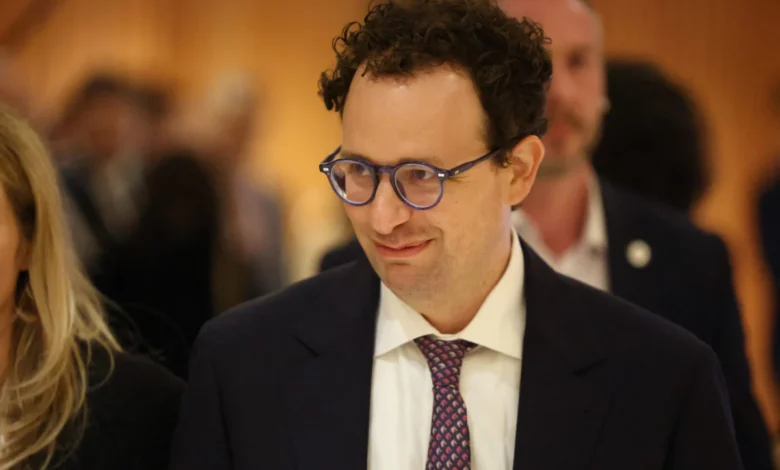
The intersection of artificial intelligence policy, executive power, and popular culture collided dramatically over the weekend for Anthropic Chief Executive Officer Dario Amodei. In the span of a single weekend, the prominent tech executive found himself simultaneously lampooned on national television by the long-running comedy institution Saturday Night Live and quietly scheduled for a high-stakes, one-on-one dinner with President Donald Trump at the White House.
The impending meeting between the leader of one of the world’s most influential generative artificial intelligence laboratories and the sitting president marks a critical juncture. It represents their first formal, private encounter following months of escalating friction over the ideological, regulatory, and national security trajectory of advanced artificial intelligence development. The dinner, initially broken by Axios and independently verified by industry sources, caps off a whirlwind news cycle for Amodei, whose public profile has expanded far beyond Silicon Valley boardroom circles into the center of American political discourse.
The Main Facts of the White House Invitation
The White House dinner invitation comes at a time of profound tension between the current presidential administration and Silicon Valley’s frontier AI developers. Amodei, who has consistently positioned Anthropic as a safety-first organization prioritizing ethical guardrails and measured deployment, will sit down with a president who has fiercely championed rapid technological advancement and deregulation.
This private engagement stands in stark contrast to the public theater of recent weeks. Amodei’s policy positions—advocating for a deceleration of unbridled capability scaling to ensure societal safety—have repeatedly run up against the Trump administration’s aggressive posture on American technological dominance. By bringing the head of Anthropic directly into the executive residence, the administration is signaling a direct, leader-to-leader approach to hashing out differences that have previously manifested as regulatory clashes, courtroom battles, and public disputes.
A Timeline of Escalating Tensions and Divergent Philosophies
To fully understand the weight of the upcoming White House dinner, one must examine the rapid sequence of events that has characterized the relationship between Anthropic and the federal government throughout 2026.
The friction is rooted in a fundamental philosophical divide regarding how artificial intelligence should be developed, governed, and integrated into national infrastructure. While technology companies grapple with existential safety risks, political leaders are intensely focused on geopolitical competition—specifically ensuring that the United States maintains an insurmountable lead over global rivals like China in the race for artificial general intelligence (AGI).
Key Chronology of Events
- Early 2026: Tensions peak between the Pentagon and Anthropic. Following the company’s insistence on imposing strict ethical guardrails and usage restrictions on its frontier models, the Department of Defense designates Anthropic a "supply-chain risk." This designation effectively bars defense contractors and military agencies from utilizing the company’s technology, sending shockwaves through the defense-tech ecosystem.
- April 18, 2026: Despite the heavy-handed Pentagon designation, signs of a fractured administration emerge. While defense officials maintain a hostile stance, other key executive branch officials adopt a considerably friendlier and more collaborative posture, signaling that the administration does not speak with a unified voice regarding AI governance.
- August 28, 2026: Anthropic secures its first major legal victory in its ongoing court battle against the Department of Defense. A federal court reviews the supply-chain risk designation, providing temporary relief and validating the company’s legal strategy to challenge what it terms executive overreach.
- September 12, 2026: Dario Amodei publicly outlines a comprehensive, structured plan to pace frontier AI development. The framework explicitly calls for tech companies and regulators to slow down the race for raw capability expansion in favor of rigorous safety evaluations and alignment research.
- September 19, 2026: President Trump pushes back sharply against the emerging culture of AI caution. Dismissing public safety concerns and regulatory pushback as a partisan "Democratic hoax," Trump announces plans to rebrand the entire sector under the banner of "super intelligence" and proposes the creation of a dedicated governmental "AI Force."
- September 27, 2026: Amodei enters the mainstream cultural zeitgeist when he is heavily lampooned on the season premiere of Saturday Night Live. Hours later, news breaks that he is scheduled to dine with President Trump at the White House that same evening.
The Philosophical Chasm: Pacing Versus Acceleration
The core of the disagreement between Amodei and the Trump administration centers on the velocity of technological progress. Amodei’s September 12 roadmap for pacing frontier development was designed to address mounting anxieties within the scientific community regarding loss of control, autonomous cyberweapons, and systemic economic displacement. By arguing that society needs time to adapt, build defensive guardrails, and establish robust international norms, Amodei aligned himself with the precautionary school of thought.
Conversely, President Trump’s recent policy announcements reflect an accelerationist ideology. By demanding a total rebrand of artificial intelligence to "super intelligence" and rejecting safety-related warnings as politically motivated, the administration has framed the AI race as an existential geopolitical imperative. In the administration’s view, any attempt to deliberately slow down American AI labs—even in the name of safety—threatens to hand technological and military supremacy to foreign adversaries.

This ideological chasm explains why the Pentagon’s supply-chain risk label was applied in the first place. When a private corporation attempts to dictate the parameters under which the military can utilize its software, it challenges traditional notions of sovereign command and control. Anthropic’s willingness to fight this designation in court, culminating in its August legal win, demonstrated that the company was prepared to challenge federal agencies in the judicial arena to protect its corporate charter and safety standards.
Cultural Satire Meets Political Realism
The surreal nature of modern technological governance was underscored earlier in the evening when Saturday Night Live targeted Amodei in its cold open sketch. Being lampooned on national television is a traditional rite of passage for billionaires and tech moguls—previous targets include Elon Musk, Mark Zuckerberg, and Sam Altman. However, the timing of the parody, airing mere hours before a confidential, high-level dinner with the leader of the free world, highlighted the bizarre pedestal upon which artificial intelligence leaders currently sit.
For the general public, the SNL treatment signaled that artificial intelligence has transitioned from a niche computer science topic into a dominant cultural touchstone. For Washington insiders, it underscored the immense personal notoriety that tech CEOs have accumulated as they steer humanity toward what many believe is a historic inflection point.
Official Responses and Stakeholder Reactions
While neither the White House nor Anthropic released exhaustive readouts ahead of the private dinner, political analysts and industry insiders have offered varied interpretations of what the meeting signifies.
Industry trade groups have cautiously welcomed the dialogue, noting that open communication channels between Silicon Valley leadership and the executive branch are essential for avoiding disruptive regulatory surprises. Proponents of responsible AI development view the dinner as an opportunity for Amodei to personally brief the president on the technical realities of frontier models, explaining why safety research is not merely an ideological preference, but a structural necessity for maintaining stable systems.
On the other hand, national security hawks and administration loyalists maintain that private enterprise must align fully with national priorities. From this perspective, companies that prioritize internal ethical frameworks over unrestricted government integration risk undermining national defense capabilities. Whether Amodei and Trump can find common ground during their meal remains an open question, but the willingness to break bread suggests a mutual recognition that the current stalemate cannot persist indefinitely.
Broader Economic and Geopolitical Implications
The outcome of the Amodei-Trump dinner could ripple far beyond the borders of the United States, influencing global standards for artificial intelligence governance. As the European Union implements its rigid AI Act and nations across Asia formulate their own regulatory frameworks, the posture of the United States government remains the primary anchor for the global technology market.
If the Trump administration can reconcile its desire for rapid capability growth with Anthropic’s emphasis on safety and institutional guardrails, it could forge a hybrid model of AI governance that balances innovation with risk mitigation. Conversely, if the ideological gap proves unbridgeable, the relationship between frontier labs and federal agencies may face renewed hostility, potentially driving top-tier research talent and capital out of the domestic ecosystem.
As Dario Amodei transitions from the satirical stage of Saturday Night Live to the formal dining rooms of the White House, the stakes could not be higher. The conversation held behind closed doors tonight will help determine whether the future of artificial intelligence is guided by a spirit of collaborative caution or unyielding acceleration.