TikTok Rejects Meta Ads Amid Escalating Industry Conflict Over Teen Safety Settlements

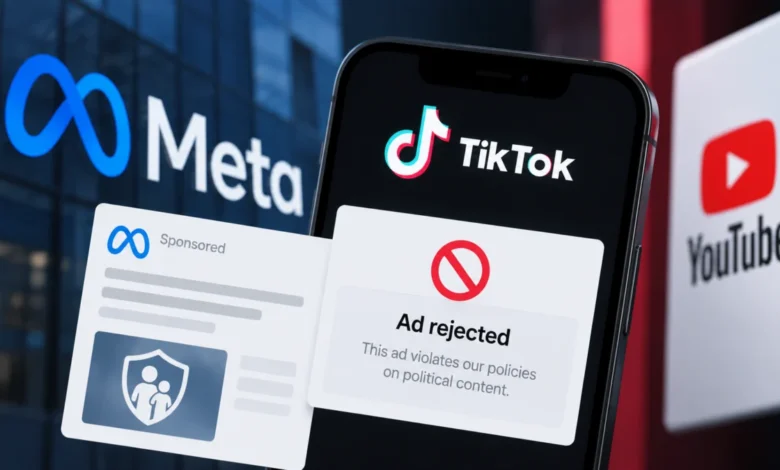
The digital landscape has become the stage for a high-stakes standoff between the world’s largest social media conglomerates, as TikTok has officially blocked a series of advertisements from Meta that sought to pressure both TikTok and YouTube into joining a multibillion-dollar child safety settlement. This rejection marks a significant escalation in a public relations and legal battle that pits Meta against its primary competitors, forcing a spotlight on the tensions between corporate accountability, competitive market positioning, and the evolving standards for child digital safety.
The friction originates from a landmark agreement reached by Meta—the parent company of Facebook and Instagram—with a coalition of U.S. state attorneys general. Under the terms of this deal, Meta has committed to paying up to $16.7 billion to settle allegations that its platforms were engineered in ways that negatively impacted the mental health and well-being of minors. However, the viability of a substantial portion of this settlement—roughly $10 billion—is explicitly contingent on the participation of other industry giants, specifically TikTok and YouTube.
The Mechanism of the Dispute
Meta’s strategy involves a complex mix of legal maneuvering and public advocacy. By attempting to place advertisements on TikTok’s own platform, Meta sought to utilize its rival’s infrastructure to mobilize public opinion and force the platform’s leadership to the negotiating table. The advertisements featured a mix of imagery, text, and voiceovers calling for industry-wide adoption of the safety standards Meta has agreed to implement.
TikTok’s decision to block these ads, confirmed by sources close to the matter, was rooted in its stringent policy against "political content." By classifying Meta’s campaign as political advocacy rather than standard commercial advertising, TikTok effectively silenced the message within its own ecosystem. This highlights a critical friction point: where does corporate responsibility and public policy advocacy end, and where does prohibited political advertising begin? For Meta, the move was a necessary step in forcing a conversation on "industry-wide standards"; for TikTok, the ads represented an external attempt to influence platform policy through paid media, a practice it has strictly curtailed.
Chronology of the Safety Settlement Saga
The timeline of these events underscores the urgency with which Meta is pursuing this issue:
- August 2026: Meta reaches a $16.7 billion settlement with U.S. state attorneys general regarding the design of its platforms and their impact on youth. The deal includes a conditional clause tying $5 billion in payments to the participation of TikTok and YouTube under similar terms.
- Late August 2026: Meta begins a public campaign, issuing statements and media assets asserting that teen safety cannot be achieved in a silo.
- Early September 2026: Meta attempts to launch a paid advertising campaign on the TikTok platform, directly tagging the competitor and YouTube to join the settlement.
- Mid-September 2026: TikTok rejects the campaign, citing its ban on political advertisements. Simultaneously, both TikTok and YouTube appear to distance themselves from collaborative government panels on screen time, including a planned session with the Health and Human Services (HHS) department.
- Late September 2026: Continued silence from both TikTok and YouTube regarding Meta’s public pressure tactics suggests a strategy of non-engagement, leaving the future of the $10 billion conditional settlement in flux.
The Economic and Strategic Rationale
Meta’s argument for this campaign is twofold: moral responsibility and competitive equilibrium. Meta contends that if it is forced to implement rigid restrictions—such as daily usage caps, nighttime access locks, and limits on notification frequency during school hours—while its competitors operate without such constraints, it will suffer a "competitive disadvantage." In the attention economy, time spent on one platform is time lost by another. If teenagers perceive Facebook or Instagram as "restricted" or "less accessible," they are highly likely to migrate to platforms where these features are not currently enforced.
From a financial perspective, the stakes are massive. The $5 billion commitment from each rival is designed to ensure that the burden of reform is distributed across the market. If TikTok and YouTube refuse to participate, Meta is left in a position where it must either adhere to strict regulatory compliance while losing market share to unfettered rivals, or attempt to renegotiate the terms of its own settlement with the state attorneys general.

Industry Implications and Regulatory Reach
The broader impact of this conflict cannot be overstated. We are witnessing a transition in how social media platforms interact with governmental oversight. Historically, platforms operated as independent entities with self-regulated policies. The current situation suggests that state attorneys general are moving toward a model where industry-wide, standardized behavior is the expected norm for social media giants.
The refusal of TikTok and YouTube to engage with Meta’s campaign—and their reported withdrawal from federal panels—suggests that these companies are wary of being painted into a corner by a competitor’s legal agreement. By staying disengaged, they avoid implicitly accepting the premise that their platforms are "harmful" in the same way the courts and states have alleged regarding Meta’s products.
Furthermore, this dispute exposes the limitations of paid media as a tool for corporate diplomacy. Meta’s failure to secure advertising space on TikTok demonstrates that platform-controlled ad policies can effectively mute even the most powerful corporations. It also raises questions about the definition of "political content" in the age of social media regulation. When a private company uses its platform to push for public policy changes that affect its competitors, is it engaging in corporate social responsibility or political campaigning?
Looking Ahead: The Future of Teen Digital Safety
The outcome of this standoff will likely reshape the digital experiences of millions of young users. If Meta succeeds in pressuring its peers, the internet could see a de facto "standardized youth experience," characterized by chronologically curated feeds, hidden engagement metrics like "likes," and strict screen-time boundaries across all major applications.
Conversely, if TikTok and YouTube maintain their resistance, the regulatory landscape may shift toward a more fragmented approach. Regulators may be forced to pass direct legislation or mandates that apply to all companies regardless of their willingness to settle, potentially leading to a more volatile legal environment for tech firms.
As the situation develops, the focus remains on the $10 billion contingency. If the settlement fails to attract the necessary signatories, the original agreement reached by Meta may need to be restructured or re-litigated. For now, the silence from the offices of TikTok and YouTube remains the most significant variable in this equation. Their refusal to engage suggests that while they are certainly aware of the pressure, they are not yet prepared to concede to a framework dictated by their biggest rival.
For the general public and parents, the debate underscores a reality that has existed since the inception of the smartphone: social media is not a monolith, but a series of interconnected environments. As long as these environments are governed by competing corporate interests, a unified standard for teen safety remains a distant, albeit heavily contested, goal. The outcome of this specific conflict will serve as a bellwether for how the tech industry—and the governments that regulate it—will handle the intersection of digital commerce and the protection of the next generation of users.