Gateway Capital Partners Reaches First Close for Target 25 Million Dollar Fund II to Bolster Midwest Startup Ecosystem

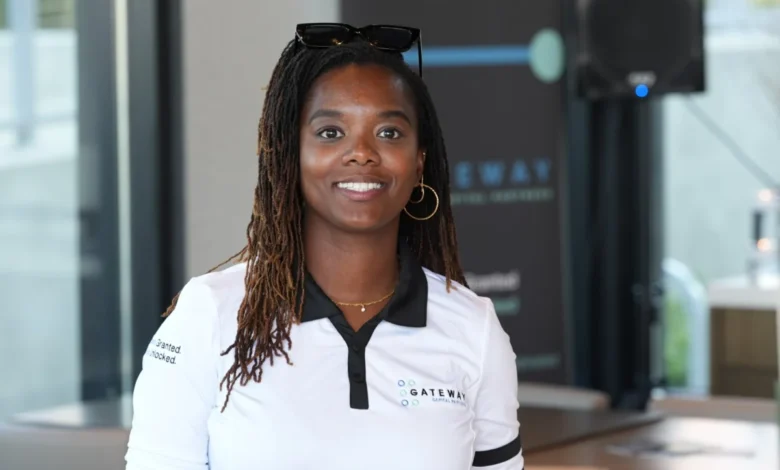
Gateway Capital Partners, a prominent venture capital firm based in Milwaukee, Wisconsin, has officially announced the first close of its second flagship investment vehicle, Fund II, which carries an ultimate target of $25 million. This milestone, confirmed by firm founder Dana Guthrie, signals the formal commencement of the fund’s investment operations, allowing the firm to begin deploying capital into high-potential startups. While the specific dollar amount of this initial close was not publicly disclosed, the move marks a significant expansion for the firm, which has become a cornerstone of the burgeoning venture ecosystem in the American Midwest.
The transition from fundraising to active investment via Fund II represents a pivotal moment for Gateway Capital. Launched in 2020, the firm has rapidly established itself as a critical bridge for early-stage companies that often find themselves overlooked by the traditional venture capital hubs of Silicon Valley, New York, and Boston. By securing the first close, Gateway Capital ensures it can maintain the momentum generated by its inaugural $13 million fund, continuing its mission to identify and scale disruptive technologies within the region.
Strategic Deployment and Investment Thesis
Fund II is structured to provide substantial support to pre-seed and seed-stage companies. According to Guthrie, the fund expects to issue average checks ranging between $500,000 and $600,000. This capitalization level is designed to provide startups with enough runway to achieve critical product-market fit or to scale operations ahead of a Series A round. The firm’s strategy involves backing at least 20 companies through this fund, a target that emphasizes a diversified portfolio approach intended to mitigate the inherent risks of early-stage investing while maximizing the potential for regional "breakout" successes.
While Gateway Capital remains technically industry-agnostic, the firm maintains a strategic "bias" toward sectors that align with the existing industrial strengths of the Midwest. Specifically, the fund will prioritize investments in supply chain management, logistics, and manufacturing-focused artificial intelligence (AI). This focus is not accidental; it reflects a sophisticated understanding of the "Rust Belt’s" transformation into a "Tech Belt," where legacy industries are increasingly seeking digital solutions to improve efficiency, transparency, and output.
The emphasis on manufacturing AI, in particular, highlights a growing trend in the venture capital world. As global supply chains face increasing volatility due to geopolitical tensions and climate-related disruptions, the demand for predictive analytics and automated logistics has skyrocketed. By focusing on these areas, Gateway Capital is positioning its portfolio companies to solve real-world industrial problems, often securing "sticky" enterprise contracts with established regional manufacturers.
The Evolution of Gateway Capital: A Chronological Context
To understand the significance of Fund II, one must look at the trajectory of Gateway Capital since its inception. Dana Guthrie founded the firm in 2020, a year characterized by extreme market volatility but also a surge in digital transformation. At the time, Guthrie, an engineer by trade with a background at Johnson Controls, recognized a systemic gap in the Milwaukee startup scene. Despite having a wealth of technical talent and a strong industrial base, Milwaukee lacked the venture infrastructure necessary to keep home-grown startups from migrating to the coasts in search of capital.
Gateway’s Fund I was launched with $13 million in 2020, focusing on early-stage investments within the Greater Milwaukee area. The success of that fund in identifying resilient founders and providing hands-on mentorship provided the proof of concept needed to scale. By the middle of 2023, amidst a broader national slowdown in venture capital activity, Guthrie and her team began the ambitious process of raising Fund II.
The timeline of Fund II’s capital raise is particularly noteworthy. The venture capital environment in late 2023 and early 2024 has been described by many analysts as a "VC Winter," where limited partners (LPs) have become significantly more selective. The ability of Gateway Capital to reach a first close in this climate underscores the strength of its performance history and the compelling nature of its Midwest-focused thesis.
Supporting Data and the Midwest Venture Landscape
The expansion of Gateway Capital comes at a time when the Midwest is capturing a larger share of the national venture conversation. According to data from various industry reports, including PitchBook and the National Venture Capital Association (NVCA), "Rise of the Rest" initiatives have begun to bear fruit. While total venture deal value nationally saw a decline from the record highs of 2021, the Midwest has shown a degree of resilience, often characterized by more reasonable valuations and a focus on capital-efficient business models.
In Wisconsin specifically, the venture ecosystem has seen steady growth. Data indicates that Milwaukee-based startups are increasingly attracting interest from out-of-state investors, but local "lead" investors like Gateway Capital remain essential. By providing the initial institutional check, Gateway validates these startups, making it easier for them to attract follow-on funding from larger national firms.
Furthermore, the focus on supply chain and logistics is backed by macroeconomic data. The Midwest remains the logistical heart of North America, with a significant percentage of the continent’s manufacturing and freight passing through the region. Startups that can shave even a fraction of a percentage point off operational costs through AI or better logistics software represent a multi-billion dollar opportunity.
Regional Implications and Stakeholder Perspectives
The announcement of Fund II’s first close has been met with quiet optimism among regional economic stakeholders. While Gateway Capital declined to share the exact amount of the first close, the operational status of the fund is a win for the Milwaukee business community. Local economic development organizations have long argued that the lack of "seed-stage" capital is the primary bottleneck for the city’s tech growth.
From the perspective of entrepreneurs, the existence of a $25 million fund dedicated to the region provides a level of certainty. It suggests that founders do not necessarily need to relocate to San Francisco or New York to find sophisticated investors who understand industrial technology. For LPs, Gateway Capital offers a way to diversify portfolios with assets that are not correlated with the high-burn, consumer-tech trends of the Silicon Valley ecosystem.
Industry analysts suggest that Guthrie’s background as an engineer provides an added layer of due diligence. In an era where "deep tech" and "industrial AI" are often used as buzzwords, having a fund manager who understands the technical feasibility of a product is a competitive advantage. This technical oversight likely played a role in securing the commitments necessary for the first close of Fund II.
Broader Impact on the Venture Capital Industry
Gateway Capital’s Fund II is part of a broader movement toward decentralized venture capital. For decades, the industry was heavily concentrated in a few select zip codes. However, the rise of remote work, the democratization of cloud computing, and the increasing importance of "vertical" software (software built for specific industries) have made regional funds more viable.
The success of Gateway Capital serves as a blueprint for other mid-sized cities. By leveraging local industrial expertise and focusing on the "unsexy" but highly profitable sectors of manufacturing and logistics, regional funds can achieve returns that rival their coastal counterparts. Moreover, these funds play a crucial role in job creation. Every startup funded by Gateway in Milwaukee contributes to the local tax base and helps build a talent pool of experienced tech workers, creating a virtuous cycle of innovation.
As Fund II moves toward its final close of $25 million, the eyes of the regional investment community will be on Guthrie and her team. The next 20 companies backed by this fund will likely define the next decade of Milwaukee’s technological identity. Whether it is a platform that uses AI to predict machine failure on a factory floor or a logistics solution that optimizes long-haul trucking routes, the capital deployed from this fund will be at the forefront of the Midwest’s industrial evolution.
Conclusion and Future Outlook
The first close of Gateway Capital Partners’ Fund II is more than just a successful fundraising milestone; it is a testament to the durability of the Midwest startup model. By doubling down on the region’s inherent strengths—manufacturing, supply chain, and logistics—Dana Guthrie is positioning Gateway Capital to lead the next wave of industrial innovation.
As the firm begins its search for the 20+ companies that will make up the Fund II portfolio, the focus will remain on founders who demonstrate not only technical brilliance but also the "Midwestern grit" that has come to define the region’s entrepreneurial spirit. With $25 million as the eventual goal, Gateway Capital is well on its way to cementing its legacy as a primary engine of economic and technological growth in Milwaukee and the broader Midwest. The investment operations starting now will be watched closely by investors and founders alike, as they signal the beginning of a new chapter in the firm’s history and the region’s economic story.