Federal Investigators Uncover Ties Between Elite Ransomware Negotiation Firms and the Notorious ShinyHunters Hacking Group

In a stunning development that threatens to upend the cybersecurity industry, U.S. federal investigators have identified senior executives at prominent ransomware negotiation firms who allegedly maintained deep, illicit ties to the ShinyHunters hacking collective. The investigation, which has gained significant momentum following the group’s audacious breach of the FBI’s recruitment portal, fbijobs.gov, reveals a disturbing pattern of collusion where those hired to protect organizations may have been actively facilitating extortion. Sources close to the inquiry suggest that at least one U.S.-based executive played a hands-on role in maintaining “Shinywire,” a dedicated portal designed to pressure victims into meeting ransom demands.
The ShinyHunters collective has become a primary target for international law enforcement after amassing an estimated $70 million in extorted funds during the 2026 calendar year alone. The group, which evolved from a France-based operation into a global syndicate under the leadership of a teenage administrator known as "Rey," has claimed responsibility for dozens of high-profile data breaches. The current federal crackdown follows a series of swift arrests across the Netherlands and North America, effectively dismantling layers of the group’s command structure and exposing a murky underworld where the line between “security consultant” and “criminal accomplice” has become dangerously blurred.
A Timeline of Escalation and Law Enforcement Action
The recent unraveling of the ShinyHunters operation began in earnest on September 15, 2026, when Dutch authorities conducted a high-stakes raid on the residence of Pepijn van der Stap. During the apprehension, which involved the use of flash-bang grenades to prevent the suspect from wiping digital evidence, police secured access to an active Signal account. The communications logs retrieved from this device provided a roadmap for investigators, linking the Dutch hacker directly to ransomware negotiators in both Canada and the United States.

By early October, the pressure on the syndicate intensified. On October 3, 2026, international reports confirmed that "Rey," the Jordanian teenager who had assumed the mantle of group administrator, had been detained by authorities in Amman and was reportedly cooperating with the FBI. This pivot in intelligence gathering culminated on October 9 with the arrest of Edward Dubrovsky, a 54-year-old Canadian cybersecurity executive. Court records indicate that Dubrovsky, who had previously authored professional literature on the efficacy of negotiating with hackers, now faces charges of extortion and interfering with interstate commerce.
The Anatomy of the Shinywire Extortion Portal
Central to the FBI’s findings is the existence of "Shinywire," a sophisticated victim-shaming website that operated from May 2026 until its seizure in mid-October. Unlike standard leak sites, Shinywire functioned as a business-to-business pressure tool. It hosted entries for nearly 100 organizations, providing them with a clear path to contact negotiators, view samples of their own stolen data, and receive countdown timers for the publication of sensitive information.
Investigators believe that executives from prestigious consulting firms—some with staff counts exceeding 1,000—were instrumental in the site’s daily operations. By hosting these portals, the facilitators were able to monitor victim behavior in real-time. Forensic analysis of chat logs has revealed that these executives were often privy to internal breach details before the victims themselves had fully realized their networks were compromised. Perhaps most damning is the evidence suggesting that key figures, including the recently charged Dubrovsky, were aware that ShinyHunters had successfully exfiltrated highly sensitive personnel files from FBI servers but chose not to report the vulnerability to the bureau, opting instead to let the extortion play out.
The "Ghostbyte" Connection and Industry Corruption
The investigation has also cast a harsh light on the past activities of industry figures, specifically regarding the pseudonym "Ghostbyte." Research by threat intelligence firms, including Constella Intelligence, links this handle to Daniel Tobok, the former CEO of the Toronto-based cybersecurity firm Cypfer. Documents recovered from previous ransomware incidents involving the Dharma group show that the attackers explicitly directed victims to contact "Ghostbyte" at a specific email address to obtain "guarantees" regarding the restoration of encrypted files.

While Cypfer has publicly distanced itself from the current criminal allegations, noting that it has not been contacted by law enforcement and that it was recently acquired by the Apros Group, the revelations have sparked an industry-wide crisis of confidence. The intersection of these companies—Aon, Cytelligence, and CyberSteward—highlights a concentration of personnel who have moved through the same circles, raising systemic questions about how ransom negotiations are handled when the negotiators may have prior, or even active, relationships with the threat actors themselves.
Financial Incentives and the Conflict of Interest
At the heart of this controversy is the controversial practice of "percentage-based" ransom negotiation. In many instances, incident response firms charge a flat fee for their services, but those specializing in ransomware often secure a commission based on the total ransom amount. This structure creates an inherent conflict of interest: the negotiator has a direct financial incentive to ensure the payment occurs and is maximized, rather than helping the client minimize their losses or develop alternative recovery strategies.
Mark Camillo, CEO of CyberAcuView, has been vocal about the need for greater transparency in the ransomware ecosystem. "No one in the ecosystem should be profiting purely on the size of the ransomware transaction," Camillo noted, advocating for a shift away from commission-based models that align the negotiator’s interests with those of the criminal extortionists.
This trend has not gone unnoticed by the U.S. Department of Justice. The recent prosecution of MonsterCloud CEO Zohar Pinhasi—who allegedly paid hackers $8 million while billing clients $19 million for "remediation"—and the sentencing of Angelo Martino for conspiring with the Blackcat/ALPHV group, signal a new federal mandate to clean up the sector. The government is no longer viewing these firms as neutral third parties; they are increasingly being treated as potential conduits for criminal proceeds.

The Human Cost: Data Resale and Persistent Extortion
The consequences of paying these ransoms are not merely financial. The case of PowerSchool, an education technology giant that suffered a massive breach in 2024, serves as a grim cautionary tale. Despite a reported $2.85 million payment intended to secure the deletion of student and teacher data, the information resurfaced months later. Individual school districts found themselves facing secondary extortion attempts, proving that paying a ransom provides no technical or legal guarantee that data has been destroyed.
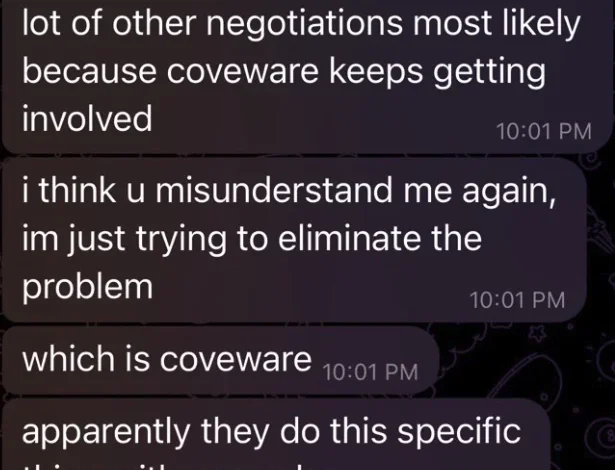
Leading incident response firms, such as Coveware and Unit 221B, have maintained a consistent policy against paying ShinyHunters, arguing that such payments only fuel the group’s ability to conduct further attacks. This stance has made them targets of the group itself. Internal Telegram communications obtained by investigators reveal that ShinyHunters leaders were acutely frustrated by firms that advised clients against paying, with the group openly discussing ways to "eliminate" the "problem" posed by ethical cybersecurity consultants.
Implications for the Cybersecurity Landscape
The revelations surrounding ShinyHunters and its alleged corporate enablers represent a watershed moment for the digital security industry. As the line between legitimate incident response and criminal facilitation thins, corporations are being forced to re-evaluate their relationships with third-party security vendors.
The immediate implications are three-fold:

- Regulatory Scrutiny: Law enforcement is likely to demand full transparency regarding how negotiation fees are structured and whether those fees are tied to the volume of cryptocurrency transferred to criminal wallets.
- Duty to Report: The failure of executives to inform the FBI of the agency’s own data breach will likely result in stricter mandatory reporting requirements for all cybersecurity contractors.
- Insurance Reform: Cyber insurance carriers, which currently dictate which firms a victim must use for incident response, are under mounting pressure to conduct deeper due diligence on the firms they place on their "approved" lists.
As the legal proceedings against Edward Dubrovsky and other suspects continue to develop under seal, the broader cybersecurity community remains on high alert. The "ShinyHunters" affair has proven that the greatest threat to organizational integrity may not be the hacker at the keyboard, but the trusted consultant who sits at the negotiation table, working to ensure the ransom is paid at any cost. For now, the FBI’s investigation serves as a stark reminder that in the high-stakes world of cyber extortion, trust is the most expensive commodity of all.