AWS Weekly Roundup: Generative AI in Agribusiness and New Security Paradigms

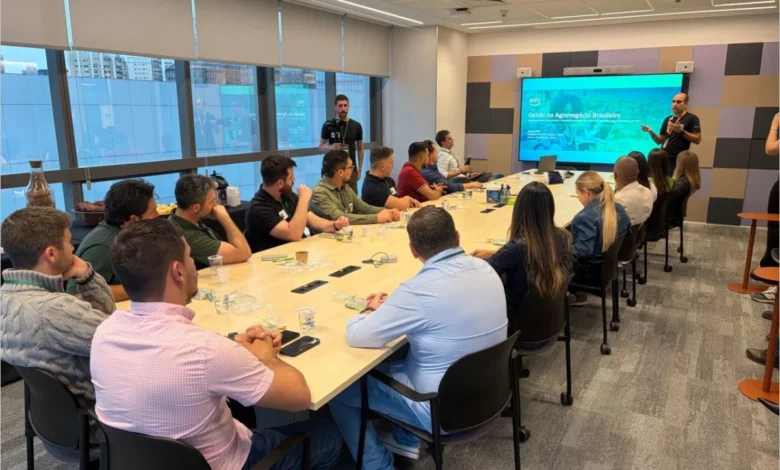
The integration of generative artificial intelligence into traditional sectors like Brazilian agribusiness highlights a shift toward high-utility, voice-first interfaces, even as the broader enterprise landscape faces increasingly sophisticated cybersecurity threats. Recent engagements at the AWS office in São Paulo underscored a critical realization among technology leaders: for industries where workers are constantly mobile—often navigating vast farmlands while operating heavy machinery—the traditional graphical user interface is rapidly being supplanted by voice-activated systems. This shift in operational requirements provides the context for the latest advancements in Amazon Polly, which has expanded its generative engine to include 14 new voices, notably adding Brazilian Portuguese capabilities. By facilitating hands-free interaction, this technology addresses a fundamental hurdle in industrial digital transformation: the need for seamless, low-friction information delivery in remote, field-based environments.
The Security Imperative: Closing the Vulnerability Gap
While generative AI continues to refine user accessibility, the security landscape has grown increasingly volatile. AWS has shifted its approach to vulnerability management, moving away from passive scanning toward active, end-to-end remediation. This strategic pivot is driven by empirical evidence that the "window of opportunity"—the time between the public disclosure of a vulnerability and its active exploitation—has effectively evaporated.
Recent telemetry from the Amazon Threat Intelligence team provides a stark illustration of this danger. On October 17, 2026, the company’s MadPot honeypot sensors identified exploitation attempts targeting a PHP2Shell vulnerability. This detection occurred four days before the official public disclosure of CVE-2026-109618 and CVE-2026-109619. By the time the formal advisory was released on October 21, proof-of-concept exploits were already circulating globally twelve hours before the embargo was scheduled to lift.
This data indicates that the traditional model of relying on multi-day patch cycles is no longer sufficient. Security professionals must now assume that any vulnerability is being actively targeted from the moment of discovery, necessitating a proactive, rather than reactive, defense posture.
AWS Continuum: A New Standard for Vulnerability Management
In response to the shrinking timeline for exploit deployment, AWS has introduced AWS Continuum, a service designed to bridge the gap between detection and remediation. Unlike traditional security tools that generate static reports for human review, Continuum constructs a context-aware graph of an organization’s software repositories and infrastructure.

The service functions by reproducing identified vulnerabilities in an isolated sandbox, generating proof-of-concept code that allows security teams to visualize the threat rather than simply interpreting a severity score. By ranking vulnerabilities based on their proximity to business-critical systems, Continuum allows for prioritized remediation. Currently, the workflow requires human approval for all fixes, ensuring that the integration of automated patching does not inadvertently disrupt production environments. However, the architecture is designed to support autonomous remediation gated by confidence thresholds, signaling a future where security operations can match the speed of automated exploit delivery.
Optimizing Infrastructure: The Amazon ECS Gateway
The evolution of cloud infrastructure continues with the introduction of the Amazon ECS Gateway, a service designed to decouple network management from application development. Historically, the burden of managing load balancers, security groups, and TLS certificates has created bottlenecks between platform and application teams.
The ECS Gateway simplifies this by allowing platform administrators to define high-level network policies, subnets, and AWS WAF web ACLs. Application developers then "opt-in" to this infrastructure by adding a gateway connector, which automatically provisions the necessary DNS hostnames, listener rules, and target groups. The economic and operational efficiency of this model is significant; a single Application Load Balancer (ALB) can support up to 25 services, and the service intelligently scales infrastructure based on usage. With support for up to 10,000 clusters and five gateways per cluster, this release provides a scalable framework for organizations looking to minimize the operational overhead associated with microservices management.
Advancements in Machine Learning and Model Customization
The broader AI ecosystem on AWS continues to expand with several key updates aimed at reducing the complexity of model training and deployment.
The Amazon Polly generative engine upgrade represents a major expansion in multilingual support, now encompassing 57 generative voices across 11 languages and 25 locales. The addition of Hindi and Finnish, alongside the enhanced Brazilian Portuguese options, reflects a growing demand for high-fidelity, natural-sounding synthetic speech in global markets.
For high-performance computing, the public beta of TorchNeuron enables native PyTorch support for AWS Trainium. This allows developers to transition models to Trainium-optimized hardware with minimal configuration changes—specifically the .to('neuron') command—rather than requiring a complete rewrite of the codebase. This capability is expected to reduce hardware lock-in, allowing companies to focus on model development rather than underlying infrastructure compatibility.

Additionally, Amazon SageMaker AI has introduced new training session APIs, which abstract away the management of GPU allocation, fault recovery, and distributed execution. By allowing users to focus on defining custom loss functions and reward signals, AWS is lowering the barrier to entry for advanced model customization. The platform’s ability to pause the billing meter during reward-function processing further optimizes the cost structure for researchers and developers.
Enterprise Migration and Scalability Case Studies
Real-world application of these technologies continues to drive large-scale digital transformation. A notable example is the recent migration performed by U.S. Bank, which transitioned 119 terabytes of data from Oracle Exadata to Amazon RDS for Oracle. By utilizing a pipeline driven by Oracle XTTS, AWS DataSync, and Amazon EFS, the bank successfully migrated four massive databases with zero data loss. The project, which involved a seven-day baseline copy and average cutover times of four hours per database, demonstrates the feasibility of moving critical legacy financial systems into cloud-native environments without compromising operational availability.
Future Outlook: Industry Events and Strategic Direction
As the industry prepares for the upcoming AWS re:Invent conference, scheduled for November 30 to December 4 in Las Vegas, the strategic focus remains clear: accelerating the velocity of deployment while hardening the underlying security architecture. The event, which will host over 2,200 sessions, is expected to serve as a bellwether for the next generation of cloud-native development.
Furthermore, community-driven events such as the AWS Community Day Brasil Norte in Belém illustrate the global reach of these technologies, highlighting how local developers are applying these tools to specific regional challenges.
In summary, the confluence of generative AI’s rapid adoption and the increasing sophistication of cyber-attacks has forced a structural change in how enterprise software is built, secured, and maintained. The transition toward autonomous security, simplified gateway management, and hardware-agnostic training environments reflects a mature cloud ecosystem. For organizations operating in traditional industries, the challenge ahead is no longer about determining whether these technologies are applicable, but about how quickly they can integrate these services into their core operational workflows to maintain a competitive advantage. The era of the "patch-by-hand" cycle is coming to a close, and in its place, a more dynamic, automated, and voice-enabled future is beginning to take shape.
Related posts: