Federal Investigators Uncover Deep Ties Between Cybersecurity Executives and the ShinyHunters Hacking Syndicate

The landscape of global cyber extortion has shifted from a battle between defenders and attackers into a complex, murky web of compromised intermediaries. Recent investigations by U.S. federal authorities into the ShinyHunters hacking group have revealed an alarming trend: executives within the legitimate cybersecurity and ransomware negotiation industry are allegedly operating in tandem with the very criminals they are paid to combat. This development, which has sent shockwaves through the cybersecurity sector, suggests that some practitioners have abandoned their fiduciary duties to become active participants in the extortion economy.
ShinyHunters, a prolific cybercrime collective responsible for an estimated $70 million in illicit gains during 2026 alone, has long been a thorn in the side of international law enforcement. While the group originated in France, its leadership eventually transitioned to a teenage hacker based in Amman, Jordan, known by the alias Rey. The recent penetration of the FBI recruitment portal, fbijobs.gov, served as a catalyst for an accelerated federal crackdown, leading to a series of arrests that have peeled back the layers of this criminal enterprise.
A Chronology of Escalation and Intervention
The unraveling of the ShinyHunters network began in earnest on September 15, 2026, when Dutch authorities apprehended Pepijn van der Stap. The operation was tactical and precise; police utilized flash-bang grenades to neutralize Van der Stap while he was actively engaged in encrypted communications. Forensic analysis of his seized Signal account provided investigators with a roadmap of his digital interactions, specifically highlighting his frequent exchanges with ransomware negotiators based in Canada and the United States.

These digital footprints led directly to the October 9 arrest of Edward Dubrovsky, a 54-year-old Canadian cybersecurity executive. Court documents indicate that Dubrovsky, who had authored professional literature on handling cyber extortion, was charged with interfering with interstate commerce and threatening to disclose stolen data. Prosecutors have argued that Dubrovsky possessed advance knowledge of the FBI data breach—information he failed to report to the agency—and maintained a symbiotic relationship with the hackers that predated the public disclosure of the attacks.
The investigation also identified the existence of "shinywire[.]com," an extortion portal utilized by the group to pressure victims. Federal investigators believe that at least one executive at a major, prestigious U.S.-based consulting firm played a direct, operational role in maintaining this site. The portal functioned as a digital shaming board, hosting entries for nearly 100 victim organizations, complete with samples of exfiltrated data and countdown timers designed to coerce payment.
The Anatomy of the Extortion Business Model
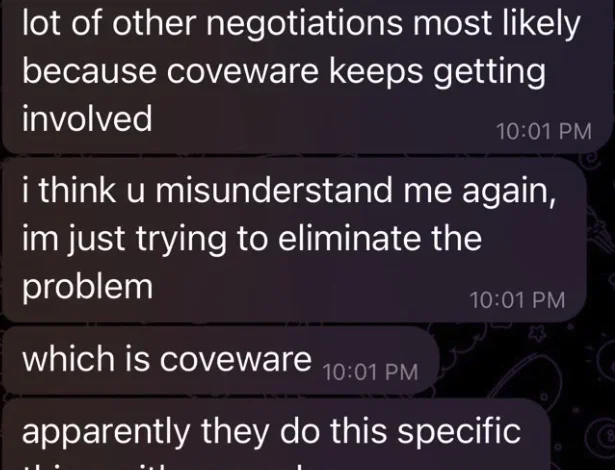
The core of this crisis lies in the perverse financial incentives inherent in the ransomware remediation industry. When an organization is struck by a cyberattack, they are often directed by their insurance carriers to specific incident response firms. While firms like Coveware and Unit 221B have maintained a strict stance against paying ransoms, others operate under models that incentivize higher payouts.
Industry analysts, such as Mark Camillo of CyberAcuView, point to the practice of charging a percentage of the total ransom as a primary source of conflict. When a negotiator’s compensation is tied to the final settlement figure, they have a professional disincentive to lower the price or advise against payment. This model has transformed some negotiators into de facto business partners for threat actors.

The case of Zohar Pinhasi, CEO of MonsterCloud, further illustrates this systemic rot. Charged by the Department of Justice on October 7, Pinhasi is alleged to have secretly paid $8 million in ransoms to hackers while charging his own clients $19 million for "remediation services" that supposedly involved no payments to the criminals. This practice of "double-dipping"—extorting the client while collaborating with the attacker—has become a significant focus for the Department of Justice.
Historical Context: The Ghostbyte Connection
The professional history of individuals linked to these investigations suggests that the overlap between "white hat" security and "black hat" criminal activity is not a recent phenomenon. Long-standing reports, including those involving the Dharma ransomware group as far back as 2018, indicate that victims were sometimes explicitly directed by hackers to contact specific IT firms to "guarantee" the safety of their data.
Investigations into Daniel Tobok, the former CEO of Cypfer, have brought the nickname "Ghostbyte" back into the public eye. Evidence uncovered by breach tracking services suggests that email addresses associated with Tobok share commonalities with those used by ransomware actors in historical campaigns. While Cypfer has formally distanced itself from such practices and emphasized that it is not under investigation, the industry at large is currently facing an existential crisis regarding the integrity of its leadership.
The Impact on Victims and National Security
The consequences of this collusion are not merely financial; they are deeply personal and potentially catastrophic for national security. The hack of the FBI’s recruitment portal exposed highly sensitive medical records, Social Security numbers, and psychological evaluations of government employees. The fact that an industry insider allegedly knew of this breach and chose to withhold it from federal authorities underscores the severity of the betrayal.

Furthermore, victims who pay are often left with no guarantee of data deletion. The PowerSchool breach, which affected 62 million students and 9.5 million teachers, serves as a grim case study. Despite a $2.85 million ransom payment, the data remained in the wild, leading to secondary waves of extortion against individual school districts months later. These events confirm that the "proof of deletion" offered by hackers—and facilitated by complicit negotiators—is fundamentally worthless.
Broader Implications and Industry Reform
The aggressive response from the FBI and the Department of Justice marks a turning point in how the United States handles the nexus of cyber-extortion. By treating these negotiators as co-conspirators, federal authorities are signaling an end to the "wild west" era of ransomware response. The arrest of high-profile figures like Dubrovsky serves as a warning that legal immunity does not extend to those who profit from the victimization of others.
For the cybersecurity industry, the path forward requires radical transparency. Organizations must scrutinize the fee structures of their chosen incident response firms and demand full disclosure regarding all communications with threat actors. The current climate of distrust has left many victims vulnerable, as they now must vet their own responders to ensure they are not working in league with the adversary.
As the legal proceedings against those linked to ShinyHunters continue, the cybersecurity community is left to grapple with a difficult reality: the most dangerous threats may not be the teenagers in foreign jurisdictions, but the professionals in tailored suits who sit across the table during a crisis. The erosion of trust in these firms may be the most significant long-term consequence of the ShinyHunters saga, forcing a necessary, albeit painful, restructuring of how data breach responses are managed in the digital age.

The investigation remains active, with authorities in Jordan, the Netherlands, and the United States continuing to share intelligence. As more information emerges from the seized communications and under-seal court records, the full extent of this collusion is expected to grow, potentially leading to further indictments across the cybersecurity sector. For now, the message from the FBI is clear: the era of complicit negotiation is over, and those who facilitate the criminal enterprise will be held to the same standard as the hackers themselves.