Amazon ECS Gateway simplifies ingress networking for containerized applications at scale

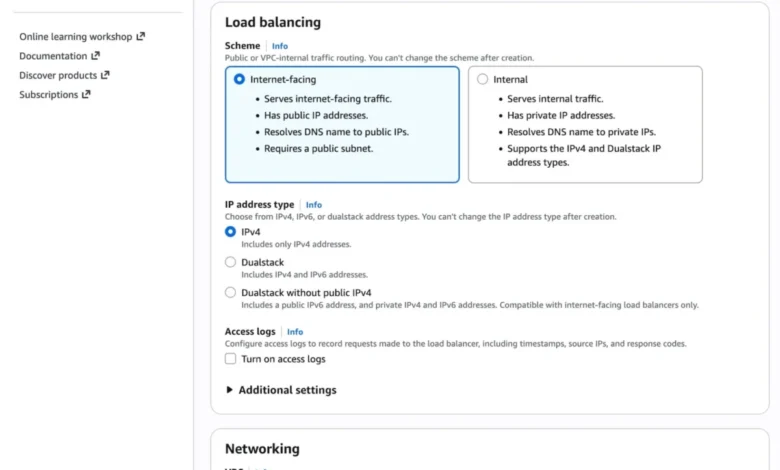
Managing containerized applications at enterprise scale often requires navigating a complex web of infrastructure interdependencies. As organizations expand their footprint on Amazon Elastic Container Service (Amazon ECS), platform engineering teams frequently encounter a recurring operational bottleneck: the manual configuration of ingress networking for every individual service. Historically, the deployment of a new service necessitated the coordinated provisioning of Application Load Balancers (ALBs), AWS Certificate Manager (ACM) certificates, AWS WAF web access control lists, and granular security groups. This overhead, compounded by the ongoing requirement to maintain synchronization as services scale, has long been a primary source of deployment friction and configuration drift. To address these challenges, AWS has officially introduced Amazon ECS Gateway, a new account-level resource designed to automate the lifecycle management of ingress infrastructure directly within a user’s AWS account.
The Evolution of ECS Networking
The introduction of ECS Gateway marks a significant pivot in how AWS manages the intersection of compute and network layers. In the early stages of container adoption, developers were responsible for managing the "plumbing" of their own microservices. As the industry shifted toward Platform-as-a-Service (PaaS) models, the burden of managing infrastructure shifted toward platform teams, who found themselves acting as intermediaries between infrastructure providers and application developers.
For several years, the standard practice involved using AWS CloudFormation or Terraform to template the creation of load balancers alongside container tasks. However, as organizations moved toward thousands of microservices, the "one-service-per-load-balancer" model became increasingly expensive and operationally fragile. The launch of ECS Gateway responds to this specific pain point by centralizing the intelligence of ingress management into a single, cohesive entity that understands the lifecycle of the containerized workload it supports.

Operational Mechanics and Architecture
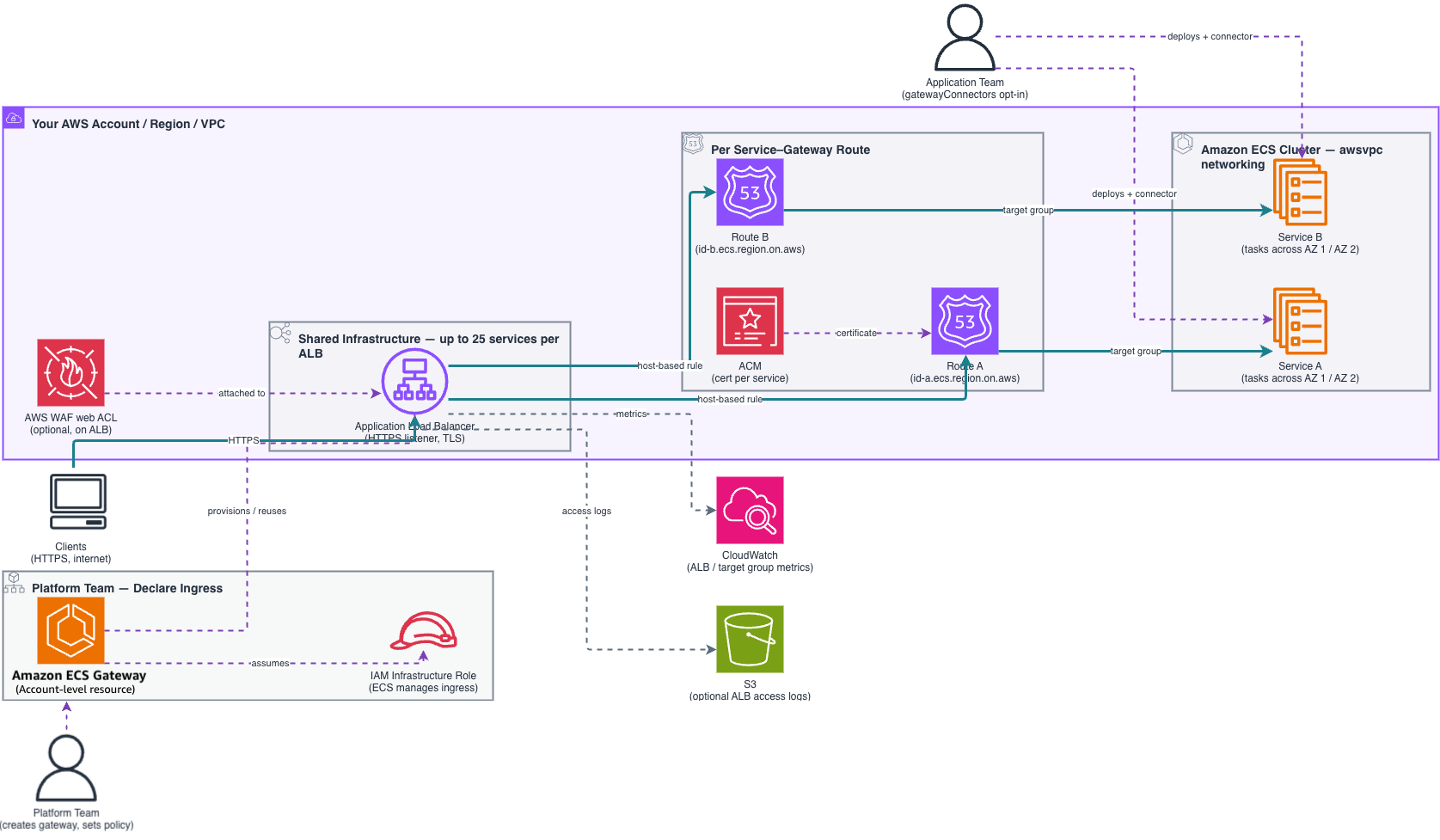
At its core, ECS Gateway functions as an orchestrator of networking resources. It introduces a clear separation of responsibilities: platform teams define the gateway’s parameters—such as security policies and networking boundaries—while application teams simply "connect" their services to the gateway.
By leveraging host-based routing, the system allows up to 25 individual services to share a single Application Load Balancer. This density significantly optimizes infrastructure costs and reduces the total count of load balancers an organization must monitor. The system is dynamic; it provisions the first ALB upon the arrival of the initial service and automatically scales by adding further ALBs as capacity thresholds are met. Conversely, when services are decommissioned, the gateway manages the cleanup process, removing unused infrastructure and ensuring that orphaned resources do not inflate the monthly cloud bill.
The architecture relies on a many-to-many relationship between gateways and clusters. A single gateway can support up to 10,000 clusters, while a cluster can be associated with up to five different gateways. This flexibility allows platform teams to segment traffic by environment—for instance, maintaining separate gateways for public-facing internet traffic and private, internal-only traffic—without creating redundant configuration files for every application deployment.
Implementing ECS Gateway: A Technical Workflow
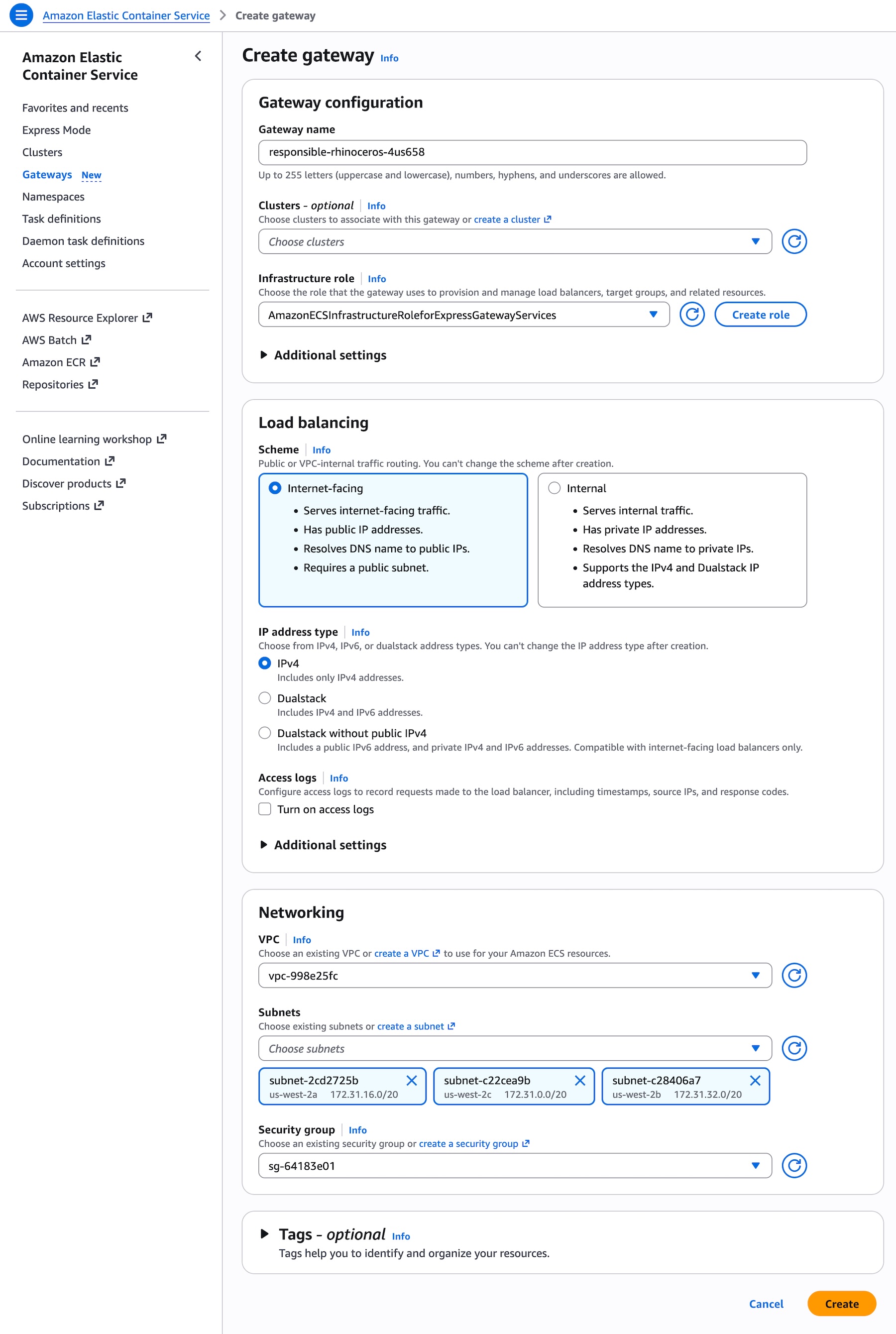
The transition to ECS Gateway follows a structured deployment path. Platform teams begin in the ECS console or via the AWS Command Line Interface (AWS CLI) by defining a gateway name and assigning an infrastructure-specific AWS Identity and Access Management (IAM) role. This role provides the necessary permissions for ECS to programmatically manage ALBs, certificates, and security groups on the user’s behalf.

Once configured, the gateway remains dormant until a service is linked to it. When an application developer creates or updates an ECS service, they include a "gateway connector" in their task definition. This connector acts as a handshake. Upon deployment, the ECS control plane evaluates the cluster’s associated gateways. If the service’s requirements match the gateway’s configuration—such as access type (public vs. private), VPC compatibility, and Availability Zone coverage—the connection is finalized.
The system then automates the following sequence:
- Provisioning of a dedicated ACM certificate for the service.
- Generation of a unique, ready-to-use DNS hostname.
- Creation of listener rules that direct traffic from the shared ALB to the service’s specific target group.
- Enforcement of security group rules that permit traffic flow exclusively from the ALB to the container.
Implications for DevOps and Infrastructure Teams
The introduction of this service carries significant implications for the DevOps lifecycle. By automating the "plumbing," companies can expect a measurable increase in deployment velocity. In traditional setups, wait times for infrastructure provisioning—often hindered by manual approvals or complex CI/CD scripts—can last minutes or even hours. ECS Gateway compresses this into a near-instantaneous process, as the underlying infrastructure is either already warm or created on-demand.
Furthermore, the risk of configuration drift is substantially mitigated. Because the ECS control plane is the source of truth, human error in manual load balancer configuration—such as incorrect listener rules or misconfigured SSL/TLS termination—is virtually eliminated. The consistency provided by this managed service ensures that security and compliance standards are enforced uniformly across the organization’s entire container estate.
Strategic Context and Market Positioning
This release is part of a broader trend of AWS abstracting away the undifferentiated heavy lifting associated with cloud networking. It follows a series of enhancements to AWS Fargate and ECS aimed at making container management feel more like a serverless experience. By moving the complexity of ingress into the managed service layer, AWS is effectively lowering the barrier to entry for smaller teams while providing the scale required by global enterprises.
Industry analysts suggest that this shift reflects the maturation of the container orchestration market. Where early Kubernetes and ECS implementations focused on the challenge of "how to run a container," the current focus has shifted to "how to run 10,000 containers at a predictable cost and security posture."
Economic Considerations
While ECS Gateway itself is provided at no additional charge, it is crucial to note that the underlying infrastructure it creates—ALBs, CloudWatch logs, ACM certificates, and data transfer costs—remains billable. However, the economic efficiency gained by host-based routing (sharing one ALB across 25 services) is expected to result in a lower "total cost of ownership" per service.
For organizations currently managing hundreds of ALBs, the transition to a consolidated gateway model could lead to a substantial reduction in the fixed-cost portion of their networking bill, as fewer load balancers mean lower base hourly rates.
Future Outlook and Integration
The integration of ECS Gateway with the broader AWS ecosystem, including the AWS MCP Server and various AI-powered coding assistants, signals a future where infrastructure management is increasingly intent-based. Developers can now describe their networking requirements through APIs, and the system assumes the responsibility of translating that intent into real-world resource configurations.
As AWS continues to roll out this feature globally, the focus for many organizations will likely shift from building custom "ingress controller" abstractions to adopting this native capability. The ability to adopt the gateway incrementally—by running it alongside existing load balancers during a migration phase—provides a low-risk path for teams looking to modernize their infrastructure.
The deployment of Amazon ECS Gateway represents a fundamental shift in the management of containerized ingress. By moving away from manual, per-service infrastructure provisioning and toward an automated, policy-driven model, platform teams are better positioned to focus on application delivery rather than the underlying network architecture. As organizations continue to scale their microservices, the operational efficiencies gained through this automation will likely become a standard expectation for cloud-native infrastructure management.
Related posts: