AWS Lambda Web Functions mark a significant shift in serverless computing by enabling native HTTP application support without code refactoring.

This new form factor, announced today by Amazon Web Services (AWS), allows developers to deploy standard web frameworks—including Express.js, Hono, Fastify, and Next.js—directly onto the Lambda platform. By eliminating the requirement to wrap code in event-driven handlers, AWS is effectively bridging the gap between traditional container-based web hosting and the efficiency of serverless compute. This evolution addresses one of the most common friction points for developers transitioning legacy or standard web applications to the cloud: the "adapter tax." Previously, engineers were forced to rewrite business logic to fit the specific constraints of the Lambda event-driven programming model. With Web Functions, the runtime now natively understands HTTP, allowing applications to listen on a designated port just as they would in a standard Linux environment.
A New Chapter in Serverless Architecture
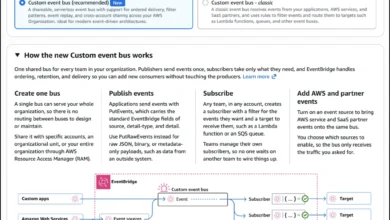
The introduction of Lambda Web Functions expands the platform’s compute offerings to three distinct pillars, all underpinned by the high-performance Firecracker virtualization technology. The existing "Lambda Event Functions" will continue to serve asynchronous, event-driven tasks, such as processing S3 uploads or consuming SQS queues. Meanwhile, the specialized "Lambda MicroVMs" remain the sandbox environment for executing untrusted, user-generated code.
The new "Lambda Web Functions" are specifically engineered for the high-concurrency, I/O-intensive nature of modern web traffic. By enabling multi-concurrent execution within a single environment—supporting up to 128 concurrent requests per instance—AWS is shifting the billing paradigm. Unlike event-based Lambda, which bills based on the duration of a single execution, Web Functions utilize active CPU billing. This model ensures that developers are not penalized for the "I/O wait" time inherent in database queries, API calls, or streaming AI token responses.
The Chronology of Serverless Evolution
The path to this launch reflects a decade-long maturation of serverless technology. When AWS Lambda was first unveiled in 2014, it introduced the world to event-driven, function-as-a-service (FaaS) computing. It was revolutionary for back-end tasks but often cumbersome for developers trying to host complex HTTP APIs.
For years, the developer community relied on third-party adapters and wrappers to translate HTTP requests into Lambda-compatible event objects. In 2018, the introduction of Firecracker microVMs significantly improved startup times and density. In 2020, the support for container images added more flexibility. Today’s announcement of Web Functions is the logical culmination of this journey: providing a first-class, "HTTP-native" citizen within the Lambda ecosystem. By removing the need for intermediary code, AWS is directly targeting the productivity bottlenecks that have kept many enterprise-grade web applications on traditional EC2 or container services like Amazon ECS or EKS.
Technical Implications and Operational Efficiency
The shift toward native HTTP support carries significant implications for operational overhead. In a traditional setup, deploying a global web application requires a complex orchestration of load balancers, auto-scaling groups, and multi-region routing configurations. With Web Functions, the AWS CLI handles the heavy lifting through a simplified deployment interface.
A single command, aws lambda-web deploy, automates the entire provisioning lifecycle. This includes packaging the source code, creating an immutable revision, and establishing a live HTTPS endpoint. Perhaps more importantly, the platform now handles global traffic distribution natively. By specifying multiple regions—for instance, US East, Europe (Ireland), and Asia Pacific (Tokyo)—the service automatically configures latency-based routing. This allows a single global URL to intelligently route users to the nearest regional deployment, significantly reducing latency without the need for manual DNS configuration or third-party global load balancers.
Furthermore, the integration with Amazon CloudFront has been streamlined. Developers can now utilize Origin Access Control (OAC) to secure their Web Functions. This ensures that the Lambda endpoint is unreachable from the public internet, accepting traffic only from the designated CloudFront distribution. This security posture effectively replicates the "private origin" architecture previously reserved for static S3 buckets, now applied to dynamic, compute-heavy web applications.

Industry Context and Economic Analysis
From an economic perspective, the change in billing is the most compelling aspect for CFOs and engineering leads. In traditional Lambda models, developers often paid for the time the execution environment spent waiting for a database response. Because Web Functions focus on active CPU consumption, applications that are "chatty" with external services or that perform significant data retrieval will likely see a reduction in compute costs.
Market analysts have noted that this move positions AWS more aggressively against competitors like Vercel, Fly.io, and Cloudflare Workers, all of which have built their value propositions on the ease of deploying standard web frameworks. By providing a "serverless-native" environment that feels like a standard server, AWS is effectively neutralizing the "framework lock-in" argument that has traditionally pushed developers toward alternative edge-computing platforms.
Official Responses and Strategic Outlook
While AWS has not released specific usage projections, the strategic intent is clear: they are aiming to capture the "middle market" of developers—those who want the scalability of serverless but the familiarity of Express.js or Next.js.
"Our goal is to meet developers where they are," an AWS spokesperson indicated, noting that the removal of infrastructure management is the primary driver of the new architecture. By allowing teams to deploy their local codebases directly to production, AWS is betting that the speed of deployment will outweigh the familiarity of existing container-based workflows.
Availability and Future Rollout
At launch, Lambda Web Functions are available in a select set of core regions, including US East (N. Virginia), US East (Ohio), US West (Oregon), Asia Pacific (Tokyo), and Europe (Ireland). The service currently supports the Node.js 24 runtime on the Arm64 architecture, reflecting a broader AWS-wide push toward more energy-efficient and cost-effective Graviton processors.
The platform also provides robust support for Amazon Virtual Private Cloud (VPC) connectivity. This is a critical feature for enterprise customers who require their web applications to communicate with private databases or internal microservices. The ability to bridge the public-facing HTTP endpoint with a private VPC backend without compromising security or performance is expected to be a major selling point for financial services and healthcare organizations.
Conclusion: A Shift in Development Culture
The launch of Lambda Web Functions is more than a new feature; it is a fundamental shift in how AWS defines serverless compute. By prioritizing the HTTP-native model, the company is acknowledging that the future of web development is not necessarily about abandoning traditional frameworks, but about abstracting the infrastructure that supports them. As developers move away from managing servers, load balancers, and scaling policies, the focus shifts entirely to the code itself.
As the industry observes this transition, the success of the platform will likely depend on the ease of migration for existing, high-traffic applications. If the promise of "one command deployment" holds true for complex, multi-service architectures, Lambda Web Functions may well become the default deployment target for a new generation of cloud-native web applications. The combination of reduced billing overhead, global routing, and native framework support represents a significant leap forward in the efficiency of modern software engineering.