Mux Robots Reaches General Availability with Advanced AI Video Workflows and Stable API v1

The landscape of software development has undergone a radical transformation over the past eighteen months, shifting the primary bottleneck from the mechanics of writing code to the strategic formulation of what to build and validating whether a genuine market demand exists. In this new paradigm, artificial intelligence agents readily generate vast amounts of syntax upon request, placing a renewed emphasis on traditional pillars of software engineering such as product-market fit, product taste, and rigorous API design. Far from rendering established architectural principles obsolete, the proliferation of AI coding agents actually magnifies the necessity for consistency. Agents operating within a codebase thrive on predictable patterns; a well-structured API provides a path of least surprise, minimizing errors and token consumption while ensuring integrations execute successfully on the first attempt.
Embracing this philosophy of iterative refinement and robust foundational design, video infrastructure provider Mux has officially announced the General Availability (GA) of Mux Robots. Following an extensive technical preview phase launched earlier this year—during which the platform processed tens of millions of minutes of video—the service transitions to a production-ready status. This milestone brings a stabilized v1 API, highly optimized workflows, and long-term reliability for developers building automated video intelligence applications.
The Evolution of Video Intelligence and the Technical Preview Chronology
The journey toward General Availability began earlier in the year when Mux introduced the Robots platform as a technical preview. Designed to bridge the gap between raw video assets and actionable, machine-readable data, the preview period served as a crucible for real-world testing. Developers and media organizations integrated the early iteration into their pipelines, processing tens of millions of video minutes and providing crucial feedback regarding operational friction, performance bottlenecks, and output accuracy.
During this beta phase, Mux engineering teams continuously iterated on the underlying infrastructure. Rather than rushing to a premature commercial launch, the company utilized the feedback loops of the preview period to refine structural elements, tune processing speeds, and align the platform with the practical demands of production environments. This unglamorous yet essential phase of software engineering allowed Mux to address edge cases that theoretical testing often misses, ultimately validating the product-market fit for automated video tagging, summarization, and scene detection.
With the official GA release, Mux is delivering on the stability demanded by enterprise environments. The production release guarantees that applications built on Robots today will maintain consistent behavior and interface compatibility into subsequent quarters, providing the foundational certainty required by modern engineering teams and their automated coding assistants alike.
New Workflow: Streamlining Video Structure with Analyze Structure
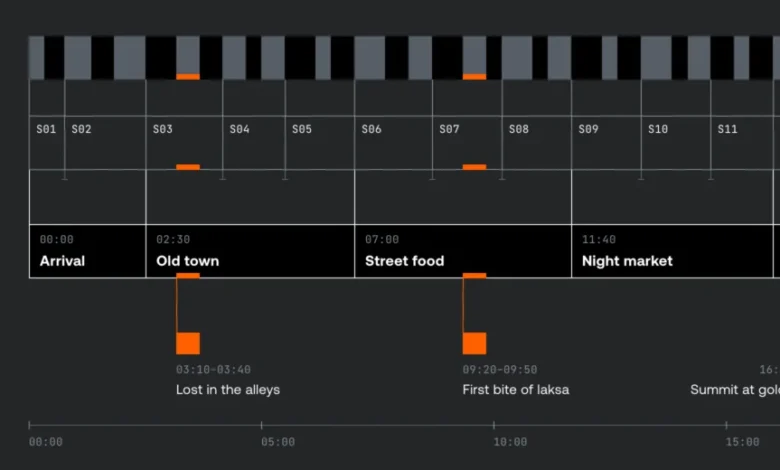
Among the primary additions accompanying the GA launch is the introduction of the analyze-structure workflow. In previous iterations, achieving a comprehensive understanding of a video’s internal organization required chaining multiple independent jobs. Developers had to invoke separate processes such as summarize for titles and descriptions, generate-chapters for player navigation, find-scenes for visual segmentation, and find-key-moments for highlight extraction.
While each legacy workflow functioned effectively in isolation, they operated redundantly, repeatedly re-reading the same underlying video file without sharing contextual awareness across jobs. This fragmented approach increased processing overhead and latency.
The new analyze-structure workflow resolves this inefficiency by performing a holistic evaluation in a single pass. A single job now yields a unified output containing a title, summary, tags, chapters, scenes, and key moments for an entire asset or a specifically bounded section. By drawing from a shared pool of contextual data rather than executing four independent analysis passes, the system ensures higher internal consistency across all generated metadata. Furthermore, timestamps are precisely resolved to verified shot boundaries. Developers can also configure the job to write titles and chapters directly back to the asset automatically, eliminating the need for subsequent API round trips before rendering player navigation elements.
As part of this architectural consolidation, the standalone find-scenes workflow is being deprecated in favor of API v1, with scenes now naturally included as a primary output of analyze-structure. Legacy implementations utilizing find-scenes on v0 will remain supported for a transition window of six months, providing development teams ample time to update their integration endpoints.
Scaling Content Operations via Generate Contextual Text
Addressing direct feedback from enterprise customers who required sophisticated, long-form written materials derived from video assets, Mux has introduced the generate-contextual-text workflow. While the legacy summarize tool remains effective for generating concise titles, basic descriptions, and tags, it often produces repetitive output when tasked with creating extensive, multi-format promotional material.
The new workflow allows organizations to transform a single video asset into a comprehensive suite of written deliverables tailored for specific distribution channels. By specifying an array of artifacts—such as character-limited social media posts, markdown-formatted blog entries, and structured newsletter summaries—developers can systematically scale their content marketing operations. The system accepts explicit output steering parameters, enabling teams to define target audiences, preferred editorial voices, brand terminology, and call-to-action requirements.
Under the hood, the workflow extracts a singular, authoritative editorial brief directly from the video source, capturing the central theme, supporting arguments, concrete details, and narrative voice. Every requested variant and artifact is subsequently generated from this unified brief, ensuring absolute narrative consistency across disparate channels like X (formerly Twitter), corporate blogs, and email newsletters.
Crucially, generate-contextual-text emphasizes grounding over unconstrained generation. By utilizing the video transcript as an authoritative source of truth for proper nouns, factual claims, and core meaning, the system prevents the generation of hallucinations or fabricated statements. Additionally, developers can leverage the use_shots: true parameter to feed visual frame data from detected shots into the writing process, enhancing the contextual accuracy of outputs when on-screen actions are integral to the narrative.
API v1 Architecture and Migration Path
The General Availability release also marks the formal debut of the Robots API v1, accessible via the /robots/v1 endpoint. While the structural design philosophy remains familiar to developers accustomed to the v0 preview, v1 introduces critical standardizations designed to harmonize Robots with the broader Mux Video ecosystem.
Key improvements in the v1 release include:
- Standardized Timestamps: Media timestamps are now uniformly expressed in seconds across all endpoints, resolving minor discrepancies present in earlier preview iterations.
- Nomenclature Alignment: Field naming conventions and structural hierarchies have been synchronized between core Mux Video resources and Robots workflows.
- Track Management Consistency: Every track-producing workflow now handles pre-existing tracks uniformly through the implementation of the
replace_existing_traitsparameter. - Deprecation Cleanup: Legacy parameters utilized during the exploratory preview phase have been permanently removed to streamline payload structures.
Mux has structured the migration path to be deliberately unhurried, allowing engineering teams to transition at their own operational pace while maintaining backward compatibility for legacy implementations during the designated support window.
Low-Barrier Evaluation via the Robots Playground
To facilitate rapid prototyping and evaluation, Mux continues to promote the Robots Playground within the primary Mux dashboard. The interface enables developers to select any existing video asset, execute arbitrary workflows from the service catalog, and inspect fully rendered results—ranging from interactive chapter lists and playable key moments to detailed moderation confidence scores.
A notable feature of the Playground is its ability to generate copy-paste prompts tailored for AI coding agents. When a developer tests a workflow and reviews the resulting UI components, the interface compiles precise integration instructions covering both the necessary API calls and frontend rendering logic. This capability effectively bridges the gap between raw backend video intelligence and user interface implementation, allowing development teams to delegate boilerplate integration tasks directly to their automated coding tools.
Broader Industry Implications and Future Roadmap
The stabilization and commercial launch of Mux Robots arrive at a time when media companies, educational platforms, and enterprise communication tools are aggressively seeking ways to extract actionable intelligence from vast video archives without scaling manual editorial labor. By shifting the computational burden of structure analysis, text generation, and metadata extraction to standardized API workflows, Mux is positioning video not merely as a passive streaming format, but as an active, queryable data source.
Looking ahead, Mux has signaled that the GA milestone represents a benchmark of stability rather than the culmination of its product roadmap. Development is already underway on advanced multimodal embedding capabilities aimed at powering semantic search across large video libraries. This upcoming capability will enable complex natural language queries—such as identifying every scene within an archive where a specific action occurs—representing the next frontier in automated video processing.
As Mux Robots enters general availability, the complete documentation, quickstart guides, and interactive tools are accessible immediately to developers worldwide, marking a significant step forward in how programmable video infrastructure interacts with modern artificial intelligence.