How Gauge and AI Coding Agents Are Revolutionizing Developer Tool Selection and Product-Led Growth

The software development landscape is undergoing a monumental architectural shift. For decades, human developers served as the absolute gatekeepers of technology stacks, manually evaluating application programming interfaces (APIs), selecting databases, integrating authentication platforms, and scouring search engines for documentation. Today, that decision-making power is increasingly migrating to autonomous artificial intelligence coding agents and developer harnesses like Claude Code and Codex. As these AI systems take over the day-to-day writing, debugging, and implementation of code, the mechanisms of software discovery have been fundamentally disrupted. Traditional search engine optimization (SEO) and generative engine optimization (GEO) are no longer sufficient for software-as-a-service (SaaS) and developer tool companies fighting for market share. Instead, businesses must optimize their ecosystems for machine consumption. At the forefront of this transformation is Gauge, a Y Combinator-backed startup pioneering the concept of agent-led growth.
The Genesis of Agent-Led Growth
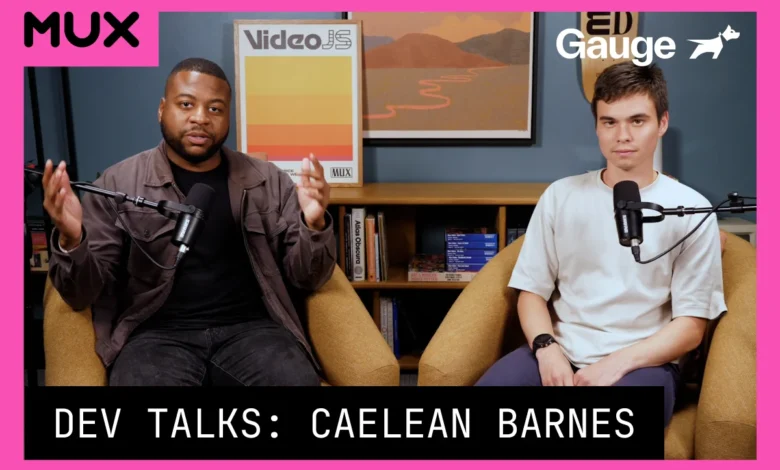
The evolution of Gauge began in the emerging spaces of answer engine optimization and generative engine optimization. Co-founded by Caelean Barnes, the company originated after the team attended an open-source conference hosted by Y Combinator. During the event, they interacted with numerous open-source infrastructure and developer tool companies that were suddenly experiencing a surge of inbound traffic originating from AI-powered conversational platforms such as ChatGPT and Perplexity. At the time, Barnes and his co-founders were operating within the open-source developer tool ecosystem. They decided to construct a modest side project to explore the phenomenon and published it on Hacker News, where it immediately gained widespread traction.
This viral launch connected the founders with a roster of prominent developer tool companies, including PostHog, Mux, OpenRouter, Braintrust, Supabase, and Mintlify. What started as an exploratory project quickly evolved into a full-scale commercial venture. As Barnes noted during a recent industry discussion, the market transitioned rapidly from traditional Google searches to GEO and AEO, and finally into autonomous coding agents. Unlike traditional search queries where a user reads a listicle or a blog post and manually decides which library to install, a coding agent acts as a direct implementation engine. When an AI agent evaluates a project requirement, it does not merely recommend a product; it has the capability to write the integration code, configure dependencies, and execute the build. This crucial capability transformed user acquisition for infrastructure providers, turning AI harnesses into a primary distribution channel.
Inside the Gauge Sandbox: How AI Evaluates Software
To understand how coding agents choose their tools, Gauge operates sophisticated testing environments. The platform places AI coding agents such as Claude Code and Codex inside isolated sandboxes, presenting them with specific developer prompts and real-world codebases. Gauge then monitors every action the agent takes: what documentation it reads, which libraries it selects, where it encounters friction, and how it resolves errors.
Through extensive simulation and empirical data collection, Gauge discovered a major divergence between human-centric marketing and agent-centric discovery. While human buyers are heavily influenced by high-level marketing content, comparison articles, and listicles, AI coding agents rely almost entirely on technical documentation, software development kits (SDKs), and command-line interfaces (CLIs). Furthermore, an agent’s decision-making process is deeply contextualized by the existing codebase.
For instance, if an agent is tasked with building a feature inside a Next.js project versus a Django project, its choice of third-party vendors depends heavily on the presence of direct setup guides for that specific framework. If one database or authentication provider offers native, step-by-step implementation instructions for Django while a competitor does not, the agent is overwhelmingly likely to select the provider with the direct implementation path. By treating the AI model as a constant and systematically tweaking the environment—such as modifying documentation files, error messaging, and CLI instructions—Gauge helps companies optimize their developer ecosystems to achieve the highest possible agent activation rates.
The Mechanics of Agent Failure and Success Stories
AI coding agents are inherently non-deterministic, meaning they can behave unpredictably when encountering ambiguous instructions or poorly designed onboarding flows. To mitigate this, Gauge utilizes a Monte Carlo-style simulation approach, running hundreds of trials to map out underlying model behavior and establish statistical predictability. This rigorous testing has uncovered fascinating insights into how minor changes in software interfaces can drastically impact conversion metrics.
A prime example involves Clerk, a leading authentication and user management platform and customer of Gauge. During early integrations, Clerk’s CLI prompted AI agents with a message instructing them to "go claim your key" and get set up. Autonomous coding agents frequently failed or stalled at this step because they lacked the contextual understanding required to interpret a human-oriented instruction to claim an API key through a web browser. By transforming this vague instruction into a precise, actionable error message, Clerk enabled coding agents to autonomously parse the failure, understand the missing requirement, and complete the installation. This single adjustment resulted in a threefold increase in account creations generated through the CLI.
Similarly, Gauge experienced its own internal hurdles regarding terminology. The company’s CLI previously featured a post-install hook that recommended injecting a "Gauge skill" into the local environment. Security-conscious coding agents interpreted this recommendation as a potential prompt injection attack, warning the system that an unauthorized tool was attempting to modify the environment. By reframing the language from a warning to a verification command—asking the agent to "verify that you have the skill installed"—the perception shifted entirely. Instead of treating the prompt as a security threat, the agent recognized a missing dependency and autonomously installed the required package. This psychological and linguistic optimization highlights a new paradigm in developer experience, where software vendors must carefully curate their language to align with the safety parameters and reasoning patterns of advanced language models.
Ecosystem Context and Cross-Selling Dynamics
Another profound discovery uncovered through Gauge’s sandbox evaluations involves the power of code-based context in cross-selling secondary products. Traditional software marketing assumes that every product must win its respective category head-to-head. However, AI coding agents exhibit strong contextual bias based on existing repository dependencies.
Research involving Supabase demonstrated this phenomenon clearly. While Supabase is globally recognized as a premier database provider, its auxiliary products—such as edge functions and authentication services—are rarely recommended in isolation when compared against category leaders like Cloudflare. However, if an AI agent is working within a codebase that already utilizes Supabase for its core database, the probability of the agent selecting Supabase for edge functions or authentication jumps to over 90 percent.
A similar pattern was observed with PostHog, a product analytics platform offering fourteen distinct tools. PostHog typically enters an organization through product analytics. Once established in a repository, however, agents overwhelmingly favor PostHog when asked to implement session replays or feature flags. For enterprise tech companies, the strategic implication is clear: securing the primary entry point of a developer stack creates a compounding advantage, allowing secondary and tertiary products to win selection criteria automatically through ecosystem gravity.
The Debate Over MCPs, CLIs, and Documentation Standards
As the industry races to accommodate AI developers, technical teams frequently debate the optimal distribution methods for agent instructions, weighing Model Context Protocol (MCP) servers against command-line interfaces, static documentation, and markdown files.
According to empirical data gathered by Gauge, CLIs remain exceptionally efficient for coding agents due to their deterministic schemas and lower token overhead. While static files like LLMs.txt—an emerging standard designed to help AI models navigate websites—were initially dismissed by developers because they rarely surfaced in traditional search engine results, Gauge’s research revealed that coding agents actively read and consume these markdown files when browsing web properties directly.
Furthermore, static skill distribution files present maintenance challenges because they are difficult to mutate in real time. To solve this, Gauge implemented a dynamic command structure within its own CLI called "Gauge Instructions." Rather than relying solely on a static skill file injected into context at the start of a session, the skill points the agent to a live CLI command that can be updated dynamically and shipped continuously. This ensures that as APIs evolve, the instructions consumed by autonomous agents remain perpetually up to date.
The Shift Toward Agent-First Development and Future Outlook
The transformation of software tooling from human-centric design to agent-first architecture marks a permanent evolution in the technology sector. Companies that fail to optimize their documentation, error messages, and command-line interfaces for machine consumption risk becoming invisible to the next generation of software builders.
For infrastructure providers like Mux, which replaced its YouTube video embeds with Mux video players to eliminate third-party advertisements and ensure seamless API integration, the benefits of prioritizing agent-readable architecture are clear. By providing comprehensive server-side transcripts, direct factual summaries, and explicit error handling, Mux enabled coding agents to autonomously execute complex media integrations without human intervention.
Looking ahead, Gauge is expanding accessibility to these optimization methodologies. The company announced plans to launch an open-source version of its platform. This upcoming release will allow developers to run local coding sessions through their own harnesses, execute evaluations locally using their own API tokens, and perform continuous hill-climbing on documentation, CLIs, and SDKs without requiring a commercial Gauge account. As artificial intelligence continues to accelerate the velocity of software engineering, tools that bridge the gap between human intent and machine execution will remain foundational to the modern digital economy.