The Twitter Whistleblower Scandal: Inside Mudge Zatko’s Severe Security Allegations and the Fallout Threatening Big Tech

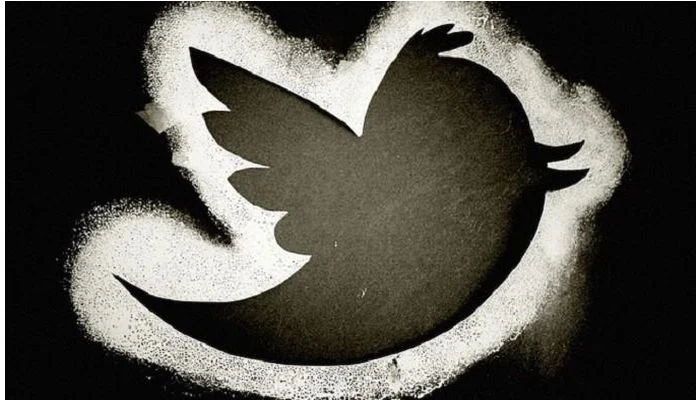
The landscape of global social media governance and cybersecurity was profoundly shaken following the public disclosure of an explosive 84-page whistleblower complaint filed with United States federal authorities. Peiter "Mudge" Zatko, Twitter’s former head of security and a globally renowned white-hat hacker, formally accused the social media titan of egregious security lapses, privacy violations, and deceptive business practices that he argues pose a direct and alarming national security risk. The filing, submitted to the Securities and Exchange Commission (SEC), the Federal Trade Commission (FTC), and the Department of Justice (DOJ), alleges that Twitter executives deliberately misled regulators and investors regarding the platform’s defense mechanisms against foreign intelligence infiltration, bot accounts, and basic data privacy protocols.
As regulatory bodies in Washington mobilize to investigate the claims and Twitter vehemently denies the allegations while attempting to discredit its former executive, the fallout threatens to permanently alter how regulatory agencies oversee major technology conglomerates. This comprehensive report explores the genesis of the whistleblower complaint, the core allegations leveled against the platform, the corporate and political responses, and the profound legal and geopolitical implications for the digital ecosystem.
The Genesis of the Whistleblower Complaint: Who Is Peiter Zatko?
To understand the weight of the allegations, one must examine the pedigree of the man behind them. Peiter "Mudge" Zatko is not a disgruntled mid-level employee; he is a foundational figure in the modern cybersecurity community. Gaining prominence in the 1990s as a core member of the legendary hacker collective L0pht Heavy Industries, Zatko famously testified before the U.S. Senate in 1998, warning lawmakers that the internet could be brought down in minutes due to systemic architectural vulnerabilities. Over a career spanning decades, Zatko held high-profile technical roles at the Defense Advanced Research Projects Agency (DARPA) and Stripe, cementing his reputation as a premier authority on software security and infrastructure resilience.
In late 2020, Zatko was recruited to Twitter by then-CEO Jack Dorsey, who tasked him with overhauling the company’s fragmented and dangerously outdated security apparatus. For roughly 15 months, Zatko operated inside the epicenter of Twitter’s engineering and compliance divisions. However, his tenure was marked by increasing friction between his mandate to secure the platform and executive leadership’s prioritization of user growth, feature deployment, and revenue generation.
According to the whistleblower disclosure, Zatko attempted repeatedly to sound internal alarms through reports to the board of directors and executive leadership. Instead of addressing the systemic vulnerabilities, Zatko alleges that management marginalized his concerns, obfuscated critical metrics, and ultimately terminated his employment in early 2022 under the guise of poor performance—a move Zatko’s legal representation characterizes as unlawful retaliation for protected whistleblowing.
Core Allegations: A Litany of Structural Vulnerabilities
The 84-page document outlines a deeply concerning portrait of an organization that prioritized rapid expansion over fundamental security safeguards. The allegations can be categorized into several primary areas of concern, each carrying profound regulatory and operational implications.
Widespread Access and Inadequate Internal Controls
One of the most alarming revelations in the whistleblower report centers on the extraordinary level of internal access granted to ordinary employees. Zatko alleged that roughly half of Twitter’s 7,000-plus employees had access to production systems containing sensitive user data, internal tools, and administrative controls capable of altering how the platform functioned. Unlike industry standards that enforce strict principle-of-least-privilege access controls, Twitter allegedly lacked comprehensive logging, monitoring, and auditing of employee actions within its core infrastructure.
This lack of segmentation meant that internal engineers could theoretically view private direct messages, change account settings, or tweet on behalf of high-profile users without authorization. The vulnerability was not merely theoretical; Zatko’s report points to numerous historical incidents where rogue insiders or poorly secured employee accounts were exploited to compromise high-profile profiles, including those of politicians, journalists, and corporate entities.
Non-Compliance with FTC Consent Decrees
The disclosure places heavy emphasis on Twitter’s alleged failure to comply with a 2011 consent decree issued by the Federal Trade Commission. The original FTC order mandated that Twitter implement a comprehensive information security program and submit to periodic independent audits to protect non-public consumer data. Zatko alleged that senior executives knowingly deceived the FTC by falsely claiming they maintained a robust security program, while internally acknowledging that they lacked the capacity, tools, and personnel to secure user information.
The whistleblower asserted that the company continually misled the FTC regarding basic practices, such as deleting user data upon account deactivation and maintaining proper cryptographic safeguards. If verified, these actions could expose Twitter to massive civil penalties, regulatory fines, and court-ordered oversight that could severely restrict its operational autonomy.
Foreign Intelligence Infiltration and National Security Risks
Perhaps the most geopolitically sensitive allegation in the disclosure is the claim that foreign intelligence agencies successfully planted operatives within Twitter’s workforce. Because the platform historically collected minimal identifying information from users, it proved difficult to verify accounts or trace malicious actors. However, Zatko alleged that foreign governments—specifically pointing to agencies associated with India and China—insisted on placing agents inside the company to gain access to sensitive internal data concerning dissidents, activists, and geopolitical rivals.
Zatko claimed that the FBI explicitly warned Twitter leadership that at least one known foreign intelligence agent was currently on the company’s payroll. Despite these warnings, executives allegedly failed to take decisive action, purportedly fearing that investigating or dismissing the individuals would draw unwanted geopolitical scrutiny or disrupt business operations in key international markets.
Deliberate Misrepresentation of Bot and Spam Metrics
While much of the public discourse surrounding Twitter during the summer of 2022 focused on Elon Musk’s high-profile, contested acquisition attempt, Zatko’s disclosures provided unexpected ammunition regarding the platform’s handling of spam and automated accounts (bots). Zatko alleged that Twitter’s executive team had no genuine incentive to accurately measure or eliminate the true volume of bots on the platform.
According to the report, senior management actively avoided calculating the exact prevalence of automated accounts because a transparent accounting could negatively impact the company’s valuation, advertising revenue, and public perception. Zatko claimed that executives actively misled investors and board members by utilizing outdated, flawed methodologies for bot detection while assuring the public that bots constituted less than five percent of monetizable daily active users (mDAU).
Twitter’s Defense: Disgruntled Employee or Validated Warnings?
Faced with an unprecedented public relations and regulatory crisis, Twitter’s leadership moved swiftly to discredit the whistleblower and invalidate the contents of the report. The company characterized Zatko as a disgruntled former executive whose termination was solely the result of documented leadership failures and deficient job performance.
In an internal memo distributed to employees shortly after the document leaked to the public, Twitter CEO Parag Agrawal pushed back aggressively against the narrative presented in the filing. Agrawal asserted that Zatko’s claims were a "false narrative that is riddled with inconsistencies and inaccuracies, and presented without important context." The memo emphasized that Zatko had been removed from his position due to ineffective leadership and structural friction within the engineering organization, and that his allegations were timed strategically to maximize leverage during an ongoing corporate dispute.
Furthermore, Twitter representatives stated that the company’s security and privacy controls had undergone continuous improvement under the guidance of specialized compliance teams and external auditors. The platform maintained that it remained fully compliant with its legal obligations and that the issues raised by Zatko were either outdated, already remediated, or misunderstood by the former security chief.
Political Fallout and Legislative Investigations
Despite Twitter’s corporate pushback, the whistleblower disclosure immediately galvanized lawmakers in Washington, cutting across partisan lines to demand accountability from Big Tech. Congressional committees charged with oversight of commerce, judiciary, and national security acted with uncharacteristic speed to open formal inquiries into the allegations.
Senator Richard Durbin (D-IL), chairman of the Senate Judiciary Committee, issued a statement confirming that his committee was actively investigating the whistleblower disclosure. Durbin noted that the allegations of widespread security failures, willful misrepresentations to federal agencies, and potential foreign intelligence penetration raised deeply troubling concerns that required immediate legislative scrutiny.
Similarly, members of the House Committee on Energy and Commerce requested briefings from Twitter executives and regulatory officials. Lawmakers emphasized that if a major American social media platform could be successfully infiltrated by foreign intelligence operatives while actively misleading the FTC, sweeping legislative reforms governing corporate liability, whistleblower protections, and digital data governance would be urgently required.
The Broader Implications for Big Tech, Cybersecurity, and Regulation
The emergence of the Twitter whistleblower report transcends the corporate drama of a single social media enterprise; it serves as a watershed moment for the technology sector at large. The implications of this scandal reverberate across multiple dimensions of digital governance:
-
Heightened Regulatory Scrutiny: The FTC and SEC are under mounting pressure from Congress to enforce stricter compliance mechanisms across the technology sector. The failure of self-regulatory models demonstrated in the Zatko disclosures suggests that future oversight will likely involve mandatory independent technical audits and harsher criminal penalties for executives who misrepresent security postures to regulators.
-
Whistleblower Protection and Corporate Accountability: The case highlights the critical role played by internal whistleblowers in exposing systemic corporate misconduct. As legal battles unfold regarding Zatko’s termination, the outcome will likely influence how tech workers report security vulnerabilities and whether they feel legally protected when bypassing internal chains of command to inform federal authorities of national security threats.
-
The Intersection of Social Media and Geopolitics: As platforms increasingly become central arenas for political discourse, democratic mobilization, and international diplomacy, the physical and digital security of their internal infrastructure is no longer merely a corporate IT concern. The alleged presence of foreign intelligence operatives within a major U.S. social media company underscores the urgent need to classify critical social media infrastructure under broader national security frameworks.
Conclusion
As legal proceedings advance, congressional hearings unfold, and regulatory bodies parse the thousands of pages of internal documentation provided by Peiter Zatko, the long-term impact on Twitter—and the wider technology industry—remains profound. What began as an internal corporate dispute between a security chief and executive leadership has evolved into a national examination of how digital platforms safeguard user data, maintain regulatory compliance, and protect democratic institutions from internal and external threats. The revelations serve as an enduring reminder that in an increasingly interconnected global society, the security of software infrastructure is inextricably linked to the security of nations.
Related posts: