While the artificial intelligence fundraising machine continues to break its own records—most notably evidenced by Alphabet’s staggering $85 billion capital injection into its AI business—a quiet but meaningful counter-movement is beginning to take shape among founders and consumers alike. This shift, often described as a "together tech" wave, prioritizes physical social connectivity and tangible human experiences over the disembodied, algorithmic automation that has dominated venture capital headlines for the past eighteen months.
The Divergence in Venture Capital Strategy
The current investment landscape presents a stark binary. On one side, massive capital is flowing into the infrastructure of the future: large language models, massive GPU clusters, and foundational AI research. On the other, a small but vocal cohort of entrepreneurs is betting that the saturation of digital synthetic intelligence will create a premium on "human-grade" interaction.
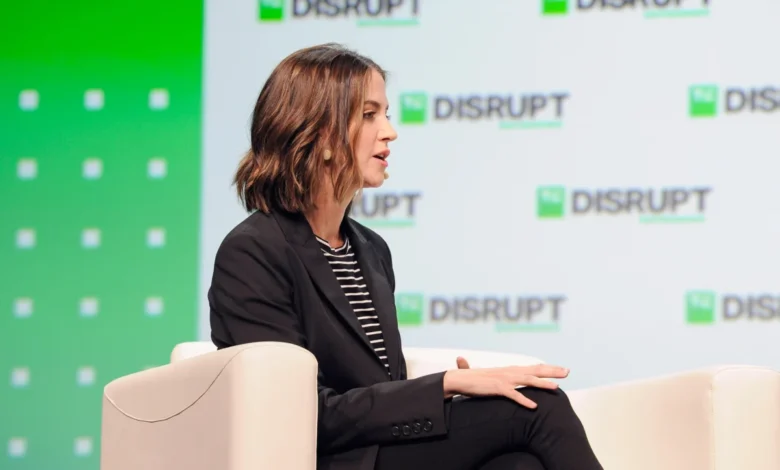
Mirror founder Brynn Putnam is among those navigating this pivot. Her latest venture, Board, recently secured $20 million in funding with a clear mission: to facilitate in-person games and social experiences. Unlike digital-first platforms that attempt to simulate social connection through screens, Board is designed to pull users back into the physical realm. This move is mirrored by the viral success of the "cyberdeck" community, where enthusiasts build whimsical, tactile, and intentionally analog-style computers. These trends suggest that the pendulum of user sentiment is swinging back toward the physical world, emphasizing the value of "touching grass" in an era of hyper-digitization.
The Anthropic IPO and the Big Tech Monopoly
The recent news regarding Anthropic’s confidential IPO filing adds a layer of complexity to this narrative. As one of the most prominent players in the generative AI space, Anthropic’s move toward the public markets is being watched closely by investors and regulators. The central question remains: is the venture capital flowing into the AI sector actually fueling a new generation of independent unicorns, or is it merely recirculating wealth back into the hands of the "Big Three"—Alphabet, Microsoft, and Amazon?
The $85 billion Alphabet investment serves as a benchmark for the scale of capital required to remain competitive in the AI arms race. For smaller, human-centric startups like Board, the strategy is not to compete with these titans on raw compute power, but to differentiate by providing a product experience that AI cannot replicate: genuine, human-to-human physical interaction.
Chronology of the Current Market Sentiment
- Early 2023: The launch of ChatGPT and subsequent generative AI tools triggers a massive influx of venture capital into the sector.
- Late 2023: Initial signs of AI fatigue begin to appear in consumer usage data, as users express concerns over data privacy, hallucinations, and the erosion of original creative content.
- Q1 2024: The "no-AI" movement gains traction. Companies like DuckDuckGo report significant traffic growth by emphasizing privacy-focused, non-generative search experiences.
- Q2 2024: The "together tech" trend solidifies. High-profile founders begin pivoting away from pure-play SaaS toward "phygital" (physical-digital) startups.
- June 2024: Alphabet announces an $85 billion capital allocation to its AI division, simultaneously as Board secures $20 million to focus on in-person social gaming.
Supporting Data and Market Analysis
The economic logic behind these competing models is rooted in the "attention economy." Data suggests that while AI-driven tools offer significant efficiency gains, they also contribute to a sense of digital alienation. A recent industry survey indicated that 62% of Gen Z users are actively seeking "analog" or "low-tech" hobbies to mitigate the psychological impact of constant digital connectivity.
From a market perspective, the investment in "together tech" is a defensive play. Investors recognize that if AI becomes a commodity—a utility available through every major cloud provider—the value will shift to companies that own the user interface, the community, and the physical interaction points. By fostering real-world community, startups like Board are creating a "moat" that is immune to algorithmic disruption.
Implications for the Future of Innovation
The emergence of these two distinct tracks suggests that the tech industry is not merely moving toward a singularity of intelligence, but is instead bifurcating. One track will continue to push the boundaries of productivity, automation, and synthetic reasoning, fueled by massive, centralized capital. The other will focus on the "human experience," leveraging technology only to facilitate, rather than replace, human action.
For the venture capital community, this presents a challenging decision. Funding AI remains a relatively safe bet for long-term infrastructure, but the high-growth, high-margin opportunities of the next decade may well lie in the sectors that provide an antidote to the very technology currently being built.
Expert Perspectives on the "Together Tech" Wave
Industry analysts point out that this is not merely a "backlash" against progress, but a maturing of the market. During the initial boom phase of any technology, utility is the primary driver. However, as the novelty wears off and the integration becomes ubiquitous, the market begins to demand experiences that feel authentic.
"When we look at the current landscape, we are seeing the exhaustion of the purely digital experience," notes an industry researcher. "The success of companies that facilitate in-person interaction is a signal that consumers are placing a higher value on time spent offline. Whether this will lead to a broader shift in how capital is allocated remains to be seen, but it is clear that founders are listening to the market’s need for connection."
Conclusion
The contrast between Alphabet’s multi-billion dollar AI commitment and the grassroots growth of "together tech" startups highlights a fundamental truth about technological evolution: every action in the digital sphere eventually demands a reaction in the physical one. As Anthropic moves toward its IPO and the industry continues to debate the efficacy of large-scale AI investments, the rise of human-centric startups provides a necessary balance.
Whether the market can sustain both a massive, AI-driven infrastructure and a growing ecosystem of human-focused social ventures will be the defining narrative of the coming years. For now, the "together tech" movement represents more than just a trend; it is a recalibration of what we value in our increasingly connected, yet paradoxically isolating, world.
For more in-depth analysis on these trends, including the implications of the Anthropic IPO and the competitive dynamics of the "together tech" sector, listen to the latest episode of the Equity podcast, featuring Kirsten Korosec, Anthony Ha, and Sean O’Kane. The episode is available now on all major podcast platforms, including Apple Podcasts, Spotify, and YouTube.
Related posts: