
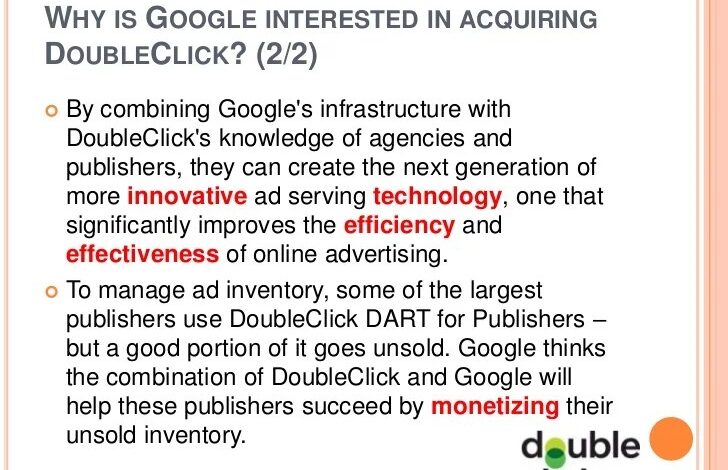
Has DoubleClick gone far enough? This question delves into the current state of DoubleClick’s advertising platform, assessing its features, user satisfaction, competitive landscape, and future potential. We’ll explore its evolution, user needs, and compare it to its competitors, ultimately determining if it’s met the needs of the market.
DoubleClick’s journey has been marked by significant milestones, introducing innovative targeting and reporting capabilities. However, user feedback and industry trends raise questions about whether the platform has kept pace with evolving user needs and the competitive landscape. This analysis will investigate the platform’s strengths, weaknesses, and potential areas for improvement, offering a comprehensive view of its current position.
Defining “Doubleclick’s Reach”
Doubleclick, a prominent player in the digital advertising landscape, has evolved significantly since its inception. Its platform provides a comprehensive suite of tools for advertisers to reach their target audiences effectively. This analysis delves into the current state of Doubleclick, its key features, evolution, target audience, and objectives.Doubleclick’s current state is one of a mature, sophisticated advertising platform. It offers a wide range of features, empowering businesses to target specific demographics and interests within online ecosystems.
The platform facilitates precise ad placement, allowing for greater control and efficiency in advertising campaigns.
Current State of Doubleclick
Doubleclick’s advertising platform is currently a leading solution for managing and optimizing online advertising campaigns. It facilitates sophisticated targeting strategies, providing extensive data and insights for campaign refinement. This empowers advertisers to tailor their messages to specific audience segments and optimize ROI. The platform also supports a vast array of advertising formats, including display, video, and search.
Key Features and Functionalities
Doubleclick’s functionalities include sophisticated targeting capabilities, allowing advertisers to reach highly specific user segments based on demographics, interests, and behaviors. Advanced reporting tools offer granular data analysis, enabling advertisers to monitor campaign performance in real-time and adjust strategies accordingly. Integration with various data sources provides a holistic view of audience engagement. Additionally, Doubleclick’s platform facilitates the management of multiple campaigns across various channels, providing a unified dashboard for campaign oversight.
Evolution of Doubleclick, Has doubleclick gone far enough
Doubleclick has undergone substantial evolution since its initial release. Early versions focused primarily on display advertising, gradually expanding to incorporate video and other formats. Key milestones include the introduction of programmatic advertising, enhancing targeting and automation capabilities. The platform has also integrated with other Google services, providing seamless workflows and data sharing.
Target Audience and User Base
Doubleclick’s target audience encompasses a broad spectrum of businesses, from small and medium-sized enterprises (SMEs) to large corporations. Its user base includes marketing agencies, advertising professionals, and individuals managing their own online campaigns. The platform’s comprehensive features cater to a diverse range of needs and budgets, making it accessible to various user segments.
Primary Objectives and Goals
Doubleclick’s primary objectives center around maximizing advertising effectiveness and return on investment (ROI) for its clients. The platform aims to facilitate seamless campaign management, optimize ad delivery, and provide comprehensive data insights. Doubleclick strives to connect advertisers with their ideal customers through precise targeting and data-driven strategies.
Comparison of Doubleclick Versions
| Feature | Previous Version | Current Version |
|---|---|---|
| Targeting | Limited targeting options based on basic demographics and s. | Sophisticated targeting capabilities encompassing demographics, interests, behaviors, and contextual factors. |
| Reporting | Basic reporting tools with limited data visualizations. | Advanced reporting tools with real-time data visualizations, granular insights, and customizable dashboards. |
Supported Advertising Types
The following table Artikels the various advertising types supported by Doubleclick:
| Ad Type | Description |
|---|---|
| Display Ads | Static or animated images, banners, and other visual advertisements displayed on websites. |
| Video Ads | Pre-roll, mid-roll, and post-roll video ads that play before, during, or after a video content. |
| Search Ads | Text-based ads displayed in search engine results pages (SERPs). |
| Mobile Ads | Advertisements specifically designed for mobile devices, including smartphones and tablets. |
Assessing User Needs and Satisfaction
Doubleclick, a cornerstone of online advertising, relies heavily on user feedback and satisfaction to maintain its relevance and effectiveness. Understanding user needs and pain points is crucial for its continued evolution and market dominance. This analysis delves into user experiences, identifying key areas for improvement and exploring market trends impacting Doubleclick’s user base.User feedback consistently highlights both the powerful functionalities of Doubleclick and the complexities users encounter.
By examining satisfaction levels, potential pain points, and industry-specific experiences, we can gain valuable insights into the platform’s strengths and weaknesses, paving the way for potential improvements.
User Feedback on Doubleclick Features and Functionalities
User feedback on Doubleclick’s features reveals a mixed bag. Users frequently praise the platform’s comprehensive targeting options, allowing for precise ad placement. However, concerns exist regarding the platform’s learning curve, with some users finding the initial setup and configuration process daunting. Specific functionalities, such as reporting and campaign optimization tools, are sometimes perceived as lacking in intuitive design.
This highlights the need for user-centered design improvements.
Potential Pain Points and Areas for Improvement
Several potential pain points emerge from user feedback. The complexity of campaign management, particularly for smaller businesses, can be a significant hurdle. Additionally, issues with real-time data analysis and reporting accuracy are frequently reported. The platform’s scalability also presents challenges for rapidly growing businesses, with some users encountering limitations in handling increased traffic volume. These challenges can lead to frustration and decreased efficiency.
I’ve been pondering whether DoubleClick has pushed its innovation far enough. Recent developments, like Mortgage.com expanding its B2B base through acquisitions, mortgage com expands b2b base with acquisitions , suggest a market hungry for new solutions. This raises the question again: has DoubleClick truly tapped into this need, or are there still untapped opportunities for advancement in this space?
User Satisfaction Levels with Doubleclick Services
User satisfaction levels with Doubleclick’s services are diverse. While many users express satisfaction with the platform’s advanced targeting and reporting capabilities, significant room for improvement exists in user experience. Specific challenges, such as data visualization complexity and inconsistent support responsiveness, negatively impact user satisfaction.
Has DoubleClick gone far enough in its current iteration? That’s a question many are pondering. Recent Forrester projections, however, suggest a continued rise in digital downloads, potentially indicating that the digital advertising space is still expanding forrester projects increase in digital downloads. This might suggest that DoubleClick’s current offerings are still relevant, at least in terms of their continued relevance to the evolving digital landscape.
Perhaps there’s more room for refinement rather than a complete overhaul.
Comparison of User Experiences Across Different Industries
User experiences with Doubleclick vary across industries. In the e-commerce sector, users frequently highlight the platform’s effectiveness in driving conversions, while in the financial services sector, concerns regarding data security and compliance are paramount. Understanding these industry-specific needs allows for tailored improvements. For instance, the financial services sector may require more robust security features and compliance tools.
Market Trends Influencing Doubleclick’s User Base
Market trends, such as the increasing demand for privacy-focused advertising and the rise of programmatic advertising, significantly influence Doubleclick’s user base. Advertisers are increasingly seeking platforms that balance performance with user privacy concerns. The platform must adapt to these trends to maintain its market share.
Challenges Users Face When Working with Doubleclick
Users often encounter challenges in navigating Doubleclick’s interface, particularly with its complex reporting and campaign management features. Technical support issues, such as slow response times or difficulty in troubleshooting problems, can also be a significant impediment. Furthermore, the sheer volume of data and options available can be overwhelming, hindering efficient campaign management.
Potential Improvements to Doubleclick
- Simplified Interface: A more intuitive and user-friendly interface is crucial. This includes streamlining the navigation process, simplifying complex reporting dashboards, and incorporating clear visual aids to enhance user comprehension. A user-centered design approach should be adopted to make the platform more accessible and user-friendly.
- Enhanced Support: Improved support mechanisms, such as faster response times, more accessible FAQs, and dedicated onboarding programs, can significantly enhance the user experience. 24/7 support, readily available FAQs, and dedicated onboarding programs are examples of effective support improvements.
- Improved Data Visualization: Streamlining data visualization and reporting tools is vital. The ability to customize reports, generate personalized dashboards, and gain insightful data analysis through simple visual representations would be significant improvements.
Evaluating Competitive Landscape
Doubleclick, a cornerstone of online advertising, faces a complex and ever-evolving competitive landscape. Understanding the strategies and strengths of its rivals is crucial for evaluating Doubleclick’s current position and anticipating future challenges. This section delves into the key competitors, their offerings, and the broader market dynamics.The advertising ecosystem is highly competitive, with numerous players vying for market share.
This necessitates a deep understanding of the strategies employed by both established and emerging competitors to effectively position Doubleclick for continued success.
Key Competitors of Doubleclick
Doubleclick faces competition from a diverse range of players, including Google Ads, Facebook Ads, and lesser-known but rapidly growing specialized ad platforms. Each of these platforms offers unique strengths and weaknesses, and their competitive strategies often depend on their specific market niches.
Comparison of Doubleclick’s Offerings with Competitors
Doubleclick’s offerings must be critically evaluated against those of its major competitors to identify areas of strength and weakness. This includes examining targeting capabilities, reporting functionalities, and pricing models.
Considering if DoubleClick has reached its full potential feels a bit like pondering the limits of a rapidly evolving technology. While the industry watches, QXL is expanding its excite connection in Europe, demonstrating innovative approaches to digital advertising. Ultimately, the question of whether DoubleClick has gone far enough hinges on its ability to adapt and innovate in response to these emerging trends.
Strategies Employed by Doubleclick’s Rivals
Each competitor employs distinct strategies to attract and retain advertisers and publishers. For example, Google Ads utilizes its vast data pool for sophisticated targeting, while Facebook leverages its extensive user base for highly personalized ad campaigns. Other competitors might focus on niche markets or specific ad formats.
Strengths and Weaknesses of Doubleclick’s Competitors
Competitors like Google Ads possess significant strengths in data analysis and scale, allowing for highly targeted campaigns. However, this dominance might also present challenges in terms of competition and maintaining user trust. Conversely, smaller competitors may have greater agility and flexibility, allowing for rapid adaptation to evolving market trends. Facebook’s strength lies in its user base, enabling highly personalized ad targeting, but this also comes with privacy concerns.
Emerging Competitors and Their Potential Impact
The digital advertising landscape is dynamic, with new competitors constantly emerging. These challengers often focus on specialized ad formats, niche markets, or innovative technologies. Their potential impact on Doubleclick and the overall market share will depend on their ability to acquire significant market share and develop sustainable business models.
Table Comparing Doubleclick’s Features with Competitors
| Feature | Doubleclick | Google Ads | Facebook Ads |
|---|---|---|---|
| Targeting | Advanced, data-driven targeting options | Extensive targeting options, leveraging vast data pool | Highly personalized targeting based on user profiles |
| Reporting | Detailed performance metrics and analytics | Comprehensive reporting dashboards | User-friendly reporting tools |
| Cost | Competitive pricing models, potentially varying by campaign | Competitive pricing, often based on auction systems | Pricing model dependent on campaign goals and user reach |
Analyzing Industry Trends and Innovations: Has Doubleclick Gone Far Enough
The digital advertising landscape is in constant flux, driven by evolving consumer behavior, technological advancements, and regulatory pressures. Understanding these trends is crucial for DoubleClick to maintain its competitive edge and adapt to the ever-changing needs of advertisers and users alike. This analysis delves into the key forces shaping the future of digital advertising and their implications for DoubleClick.
Evolving Trends in Digital Advertising
Digital advertising is moving beyond simple display ads. Programmatic advertising, personalization, and contextual targeting are becoming increasingly prevalent, enabling advertisers to reach specific audiences with greater precision. This shift necessitates a deeper understanding of user preferences and behaviors, requiring more sophisticated data collection and analysis techniques. The rise of video advertising and interactive formats is also significantly altering the way consumers engage with brands.
Emerging Technologies and Their Potential Impact on DoubleClick
Artificial intelligence (AI) is rapidly transforming the advertising industry. AI-powered tools can analyze vast datasets to predict user behavior, optimize ad campaigns, and personalize user experiences. Machine learning algorithms can identify patterns in user data to tailor ad messaging and targeting strategies. The increasing use of augmented reality (AR) and virtual reality (VR) technologies presents new opportunities for immersive advertising experiences, demanding innovation in ad formats and delivery mechanisms for DoubleClick to leverage.
Innovative Approaches Adopted by Other Companies in the Advertising Space
Several companies are pioneering new approaches to advertising. For instance, some are leveraging blockchain technology to enhance transparency and trust in the ad ecosystem. Others are exploring new forms of user engagement through interactive content and personalized experiences. The emergence of social commerce is also altering the way brands interact with consumers, creating new channels for advertising and sales.
These innovative approaches present opportunities for DoubleClick to explore new business models and strategic partnerships.
Changing Consumer Behavior and its Effect on Advertising Platforms
Consumer behavior is becoming increasingly fragmented and privacy-conscious. Consumers are demanding greater control over their data and are more likely to engage with brands that respect their privacy. This shift necessitates a reassessment of data collection practices and a greater focus on user experience. The increasing use of mobile devices and short-form video content is also impacting advertising strategies, demanding optimized ad formats for mobile environments.
Influence of Data Privacy Regulations on DoubleClick’s Operations
Data privacy regulations, such as GDPR and CCPA, are fundamentally changing how companies collect and utilize user data. These regulations require greater transparency and user consent for data collection, impacting DoubleClick’s ability to target ads effectively. Compliance with these regulations is crucial for maintaining user trust and avoiding potential legal repercussions. DoubleClick needs to adapt its data handling practices to align with these evolving regulations.
Advancements in Advertising Technology Over the Past 5 Years
| Year | Technology | Impact |
|---|---|---|
| 2018 | Programmatic advertising platforms became more sophisticated, allowing for greater automation and precision in ad targeting. | Increased efficiency and ROI for advertisers. |
| 2023 | AI-powered ad optimization tools emerged, enabling real-time adjustments to ad campaigns based on user behavior. | Enhanced campaign performance and personalization. |
Exploring Future Possibilities
Doubleclick’s continued success hinges on its ability to adapt to the ever-evolving digital landscape. This necessitates a forward-thinking approach, considering not only current market trends but also potential future developments and innovative features. Anticipating user needs and technological advancements will be crucial for maintaining a competitive edge.The future of Doubleclick involves a careful balancing act between leveraging existing strengths and embracing emerging technologies.
This requires a deep understanding of the potential impacts of these changes, the challenges involved, and the opportunities they present. The following sections detail potential avenues for Doubleclick’s growth.
Potential Future Developments
Doubleclick’s platform could benefit from several advancements. These include enhanced personalization capabilities, predictive modeling for more accurate targeting, and a greater emphasis on user privacy. Advanced machine learning algorithms could improve the effectiveness of ad campaigns by analyzing vast amounts of data to identify trends and patterns.
Innovative Features for Integration
Integrating new features into Doubleclick’s platform could significantly enhance its value proposition. These features could include real-time bidding optimization, AI-powered creative optimization, and seamless integration with emerging technologies like the metaverse. Real-time bidding optimization tools can dynamically adjust bids based on real-time data, ensuring the most effective allocation of ad spend.
Potential Partnerships and Collaborations
Strategic partnerships could provide Doubleclick with access to new markets, technologies, and expertise. Collaborations with social media platforms, content creators, and data analytics companies could offer synergistic benefits, creating opportunities for cross-promotional campaigns and expanded reach. For instance, a partnership with a social media platform could allow Doubleclick to target users based on their social media activity, leading to more relevant ad experiences.
New Market Segments to Target
Doubleclick could explore new market segments, such as the growing market for interactive advertising, the metaverse, and emerging mobile-first cultures. This would require an understanding of the specific needs and preferences of these user groups. This could involve tailoring advertising campaigns to the unique characteristics of each market, leveraging emerging technologies, and exploring innovative formats.
Potential Challenges in Adapting to Future Technologies
Adapting to future technologies presents challenges, including maintaining data security, adapting to changing privacy regulations, and ensuring ethical considerations. Implementing robust security measures, staying abreast of evolving privacy regulations, and ensuring transparent data practices are critical for building trust with users.
Scenarios for Doubleclick’s Future
| Scenario | Key Feature | Impact |
|---|---|---|
| Increased Focus on Privacy | Implementing stringent data privacy protocols, transparent data handling practices, and user-centric design choices. This could include advanced data anonymization techniques and robust user control mechanisms. | Enhanced user trust and reputation, potentially attracting a wider range of advertisers who value user privacy. This may lead to increased user engagement and brand loyalty. |
| Integration of AI | Integrating advanced machine learning algorithms to optimize ad targeting, creative development, and campaign performance. This could include AI-powered predictive modeling and real-time bidding optimization. | Improved ad campaign efficiency, increased ROI, and more personalized user experiences. This could result in higher conversion rates and reduced ad spend. |
Summary
In conclusion, the analysis of DoubleClick’s current state reveals a platform with substantial capabilities, but one that faces challenges in keeping pace with rapidly evolving digital advertising trends. User feedback, competitive pressures, and emerging technologies all point to the need for ongoing adaptation and innovation. The platform’s future success hinges on its ability to address these challenges and capitalize on opportunities presented by the evolving digital landscape.