
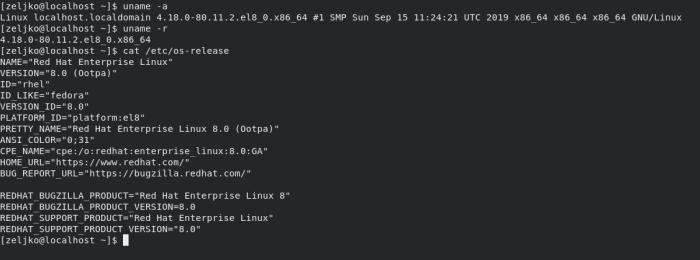
Computer Associates UPS Red Hat Linux security level is a critical area demanding careful consideration. Understanding the intricacies of integrating Computer Associates security products with Red Hat Linux systems is essential for robust protection. This exploration delves into the various security levels, vulnerabilities, and best practices to secure your Linux environment, emphasizing the practical applications of Computer Associates solutions.
This in-depth look at Computer Associates’ solutions for Red Hat Linux systems explores the security landscape, from foundational concepts to advanced implementation strategies. We’ll cover everything from defining security levels and standards to monitoring and responding to security incidents, equipping you with the knowledge to effectively safeguard your Linux infrastructure.
Introduction to Computer Associates and Red Hat Linux Security
Computer Associates (CA), a prominent player in the enterprise software market, has a long history of providing security solutions. From its origins in system management tools, CA has evolved to encompass a comprehensive suite of security products, addressing various aspects of enterprise security. This evolution has seen CA adapt to the changing security landscape and the increasing sophistication of cyber threats.Red Hat Linux, a leading open-source operating system, has consistently emphasized security as a core tenet of its development.
This focus on security is reflected in the operating system’s architecture, the continuous updates, and the vast community support network dedicated to identifying and mitigating vulnerabilities. Understanding the potential integration points between CA’s security products and Red Hat Linux systems is crucial for building robust and adaptable security postures in modern enterprises.
Computer Associates’ ups red hat Linux security level is a critical concern. Recent updates have raised eyebrows, but the bigger question is, will stockholders tolerate Amazonian losses, especially given the market’s current volatility? Will stockholders tolerate Amazonian losses ? Ultimately, the security of these systems needs a robust solution, regardless of wider market fluctuations.
Computer Associates Security Evolution
CA’s journey in the security realm has been marked by a series of acquisitions and product developments. Early on, CA focused on system management tools, but over time, it has expanded its offerings to include intrusion detection and prevention systems, vulnerability management, and security information and event management (SIEM) solutions. This strategic shift reflects the growing importance of proactive security measures in safeguarding enterprise environments.
Red Hat Linux Security Features
Red Hat Linux boasts a robust set of built-in security features. These include a strong emphasis on secure default configurations, a modular architecture for easily isolating and patching components, and a dedicated security team constantly monitoring for and responding to emerging threats. Red Hat’s commitment to open-source principles facilitates community participation in identifying and fixing vulnerabilities, further bolstering the system’s overall security posture.
Integration Points between CA and Red Hat
A variety of integration points exist between CA’s security products and Red Hat Linux systems. These integrations can leverage CA’s comprehensive security tools to manage and monitor Red Hat Linux environments. For example, CA’s vulnerability management tools can be integrated with Red Hat’s system updates and patching mechanisms to identify and remediate security weaknesses proactively. This integration can significantly improve the efficiency and effectiveness of security operations, enabling enterprises to proactively address potential threats and vulnerabilities.
- Vulnerability Management: CA’s vulnerability scanners can integrate with Red Hat’s package management system to identify potential weaknesses in the installed software packages. This proactive approach helps to quickly address security issues before they can be exploited. This automated process ensures security checks are performed regularly, preventing potential data breaches or system compromises.
- Security Information and Event Management (SIEM): CA’s SIEM solutions can collect and analyze security logs from Red Hat Linux systems, providing a centralized view of security events. This centralized view aids in identifying patterns and anomalies that might indicate malicious activity. The SIEM system can generate alerts for suspicious events, helping security teams respond rapidly to threats.
- Intrusion Detection and Prevention Systems (IDS/IPS): CA’s IDS/IPS solutions can be deployed alongside Red Hat Linux to monitor network traffic for malicious activity. These systems can detect and prevent attacks in real-time, protecting the system from potential breaches. The combination of CA’s IDS/IPS and Red Hat’s robust security features enhances the overall security posture.
Security Level Definitions and Standards
Defining security levels for Red Hat Linux systems is crucial for maintaining confidentiality, integrity, and availability. Properly configured security levels mitigate risks and ensure compliance with industry standards. This section delves into various security levels, their characteristics, and relevant industry standards.Understanding security levels is vital for organizations to establish a robust security posture. Choosing the right level balances security requirements with performance considerations, as higher security levels often impact system responsiveness.
Security Levels in Red Hat Linux
Red Hat Linux systems can be configured with varying security levels, impacting user access, system auditing, and network interactions. These levels affect how the system handles user authentication, authorization, and potentially restricts certain operations. Different levels provide varying degrees of protection against potential threats.
Industry-Standard Security Frameworks
Industry-standard frameworks like NIST (National Institute of Standards and Technology) and CIS (Center for Internet Security) provide guidelines for securing Linux systems. These frameworks offer best practices and recommendations for configuration, user management, and security auditing.
- NIST frameworks provide a comprehensive set of guidelines, focusing on various security aspects. These guidelines are applicable to many IT systems, and they are considered a benchmark for security best practices.
- CIS benchmarks provide specific recommendations for securing Linux distributions. They offer a detailed, actionable approach for hardening systems based on the latest threat intelligence.
Security Level Comparison and Trade-offs
Different security levels entail trade-offs between security and performance. Higher security levels often necessitate increased system overhead, potentially affecting responsiveness. Conversely, lower security levels might expose the system to greater vulnerabilities.
- A high security level, characterized by strict access controls and extensive auditing, enhances protection but can lead to slower system performance, potentially impacting user experience.
- A low security level, while faster, compromises security and increases the risk of unauthorized access or malicious activity. The trade-off needs careful consideration.
Security Level Table
The following table illustrates different security levels, highlighting access control, auditing, and encryption methods.
| Security Level | Access Control | Auditing | Encryption Methods |
|---|---|---|---|
| Basic | Simple user authentication, limited access restrictions. | Minimal logging of user activity. | No encryption by default. |
| Medium | Stronger user authentication, more granular access control. | Comprehensive logging of system events, including user actions. | Encryption of sensitive data at rest (e.g., encrypted file systems). |
| High | Multi-factor authentication, strict access controls, role-based access. | Real-time auditing and monitoring of system activity, including network traffic. | Full encryption of data at rest and in transit (e.g., SSH, SSL). |
Security Vulnerabilities in Red Hat Linux Systems
Red Hat Linux, a popular open-source operating system, offers robust security features. However, like any software, it’s susceptible to vulnerabilities if not properly configured and maintained. Understanding these vulnerabilities and how they can be exploited is crucial for securing systems, especially when combined with Computer Associates security solutions. This section delves into common security weaknesses in Red Hat Linux installations and how they can be mitigated.
Common Security Vulnerabilities
Red Hat Linux systems, like any other operating system, are vulnerable to various attacks. These vulnerabilities often stem from outdated software packages, misconfigurations, or exploitable coding flaws. Knowing these common vulnerabilities is vital for effective security measures.
- Outdated Software Packages: Software updates often address critical security flaws. Failure to apply these updates leaves the system susceptible to known exploits. For example, a web server running an older version of Apache might have known vulnerabilities that could allow attackers to gain unauthorized access. Patches are readily available and are essential for maintaining a secure environment.
- Misconfigurations: Incorrectly configured services can expose systems to risks. Weak passwords, unnecessary services running, and improper firewall settings are all potential avenues for exploitation. A poorly configured SSH server, for instance, could allow unauthorized remote logins. Thorough configuration checks and regular reviews are critical.
- Exploitable Code Flaws: Bugs in the underlying software code can lead to vulnerabilities. These flaws, if exploited, can grant attackers elevated privileges, potentially compromising the entire system. A common example is a buffer overflow vulnerability, where malicious input can overwrite memory locations and gain control of the program.
- Insufficient Access Control: Poorly defined access controls can allow unauthorized users or processes to access sensitive data or resources. Improperly configured user permissions can grant unintended access, leading to data breaches or system compromise.
Exploits and Attacks Targeting Red Hat Linux
Numerous types of exploits and attacks target Red Hat Linux systems. Understanding these attack vectors is critical for proactively strengthening security defenses.
- Malware Infections: Malicious software can infiltrate systems through various means, compromising data integrity and system functionality. Worms, viruses, and Trojans can be disguised as legitimate files, exploiting vulnerabilities to spread and cause damage.
- Denial-of-Service (DoS) Attacks: These attacks aim to overwhelm the system’s resources, preventing legitimate users from accessing services. DoS attacks can be launched by exploiting vulnerabilities or flooding the system with traffic.
- Man-in-the-Middle (MitM) Attacks: Attackers intercept communications between a client and a server, potentially stealing sensitive data or manipulating transactions. This is often achieved by exploiting vulnerabilities in network protocols or communication channels.
- SQL Injection Attacks: These attacks target applications that interact with databases. By injecting malicious SQL code, attackers can manipulate data or gain unauthorized access.
Impact on Systems with Computer Associates Security Solutions
Computer Associates security solutions are designed to mitigate the impact of vulnerabilities. However, their effectiveness depends on the proactive implementation and maintenance of security measures. A well-configured Computer Associates security suite can detect and block known attacks, but a system with outdated components or misconfigurations will be more susceptible to exploitation. This highlights the importance of regularly updating and reviewing the system’s security posture.
Mitigation Strategies
To counteract these vulnerabilities, proactive measures are essential. A layered approach, incorporating multiple strategies, is often the most effective.
| Potential Vulnerability | Impact | Mitigation Strategy |
|---|---|---|
| Outdated Software | Increased risk of exploitation by known attacks | Regularly update software packages and libraries to patch security vulnerabilities. |
| Misconfigurations | Exposure to unauthorized access, data breaches, and service disruptions | Thoroughly review and configure services, including firewalls, access controls, and passwords. |
| Exploitable Code Flaws | Unintended access, data breaches, and system compromise | Implement secure coding practices, conduct regular security audits, and use vulnerability scanners. |
| Insufficient Access Control | Unauthorized access to sensitive data or resources | Implement strict access control policies, regularly review user permissions, and monitor user activity. |
Computer Associates Security Solutions for Red Hat Linux
Computer Associates (CA) has a long history of providing security solutions for various operating systems. Understanding how these solutions interact with Red Hat Linux is crucial for building a robust security posture. This section details CA’s offerings for Red Hat Linux, their integration process, and the comparative strengths and weaknesses of these products.CA offers a suite of security products designed to complement and enhance the security of Red Hat Linux environments.
These products often focus on areas like intrusion detection, vulnerability management, and security auditing. By integrating CA solutions into the existing Red Hat Linux infrastructure, organizations can significantly improve their overall security posture.
CA Security Products Compatible with Red Hat Linux
CA’s security portfolio includes several products potentially applicable to Red Hat Linux environments. These solutions often incorporate a layered approach to security, providing a comprehensive defense against various threats. Specific products might include intrusion detection systems, vulnerability management tools, and security information and event management (SIEM) platforms. These solutions often have interfaces to allow for integration with existing Red Hat Linux tools and systems.
Integration of CA Products with Red Hat Linux
The integration process between CA security products and Red Hat Linux systems can vary based on the specific product. Generally, the integration involves configuring the CA product to monitor or interact with the Red Hat Linux system. This may involve installing agents on the Linux servers, defining security policies, and establishing communication channels between the CA product and the Linux system.
Careful configuration is vital to ensure the integrity of the Red Hat Linux environment while leveraging the capabilities of the CA solution.
Comparative Analysis of CA Products for Linux Security
| CA Product | Features Relevant to Linux Security | Strengths | Weaknesses |
|---|---|---|---|
| ePO (Endpoint Protection) | Vulnerability scanning, patching, and threat response capabilities for Red Hat Linux systems | Strong remediation capabilities; comprehensive patching and vulnerability management | Potentially high resource consumption; might require significant configuration for large deployments |
| ePO | Intrusion Prevention System (IPS) for network security | Advanced threat detection and prevention, real-time protection | Potential for false positives; configuration complexity for network-based security |
| ARCserve | Data protection and disaster recovery capabilities for Red Hat Linux servers | Critical for ensuring business continuity; effective backup and recovery | Integration with Red Hat Linux might require specific configurations; performance impacts during backups |
| ThreatCenter | Threat intelligence feeds and vulnerability information | Provides up-to-date threat information; enhances proactive security measures | Requires constant monitoring and updates; effectiveness depends on the quality of threat intelligence |
This table highlights some of the features relevant to Linux security for several CA products. The strengths and weaknesses should be carefully considered within the context of the specific Red Hat Linux environment. Organizations need to assess their needs and existing infrastructure before selecting appropriate CA solutions.
Security Configuration Best Practices
Securing Red Hat Linux systems involves a multi-layered approach, combining robust configuration settings with dedicated security solutions. This section details best practices for implementing and configuring Computer Associates (CA) security solutions within a Red Hat Linux environment, focusing on critical areas like user accounts, access control, and auditing. A proactive approach to assessing and improving security posture is also emphasized.Implementing and maintaining a strong security posture is an ongoing process.
Regular assessments and updates are crucial to adapt to emerging threats and vulnerabilities. This proactive approach ensures that systems remain resilient against evolving cyber threats.
Figuring out the security level for Computer Associates’ UPS on Red Hat Linux can be tricky. Fortunately, understanding how to manage e-tickets in Spanish language portals, like those discussed in this article on spanish language portals the e ticket , might offer some unexpected insights into the underlying system architecture. This knowledge can help determine the appropriate security settings for a more robust system overall.
User Account Management
Effective user account management is fundamental to controlling access and minimizing potential vulnerabilities. Strong passwords, enforced password complexity, and account lockout policies are vital for mitigating unauthorized access. Regular account reviews and removal of inactive accounts are crucial for maintaining a secure environment. Account privileges should be limited to the minimum necessary for each user role.
- Strong Password Policies: Implement a policy that enforces strong password complexity, including length, character types (uppercase, lowercase, numbers, symbols), and regular password changes. This helps thwart brute-force attacks and other password-based exploits.
- Account Lockout Policies: Configure account lockout policies to prevent brute-force attacks. These policies should specify a maximum number of failed login attempts before an account is locked out. This can significantly enhance security.
- Regular Account Reviews: Schedule regular reviews of user accounts to identify and remove inactive accounts. This practice helps reduce the attack surface by removing accounts that may not be actively used.
- Principle of Least Privilege: Grant users only the necessary permissions for their job functions. This principle limits potential damage in the event of a compromised account.
Access Control
Robust access control mechanisms are essential to limit access to sensitive data and resources. These mechanisms should be based on the principle of least privilege, where users only have access to the resources needed to perform their tasks. Implementing role-based access control (RBAC) can simplify and streamline the management of user permissions.
Computer Associates’ UPS Red Hat Linux security levels are a critical consideration for any IT infrastructure. While ensuring a robust security posture is paramount, it’s interesting to see Apple, after a period of seeming quiet innovation, back in the game with some impressive new releases. This renewed focus on innovation perhaps inspires a similar level of attention to detail in securing the critical infrastructure that underlies these advancements.
Ultimately, maintaining strong security protocols for computer associates ups red hat linux is key to a stable and productive digital ecosystem.
- Role-Based Access Control (RBAC): Implementing RBAC allows administrators to define roles with specific permissions. This approach simplifies the process of managing access rights, providing a clear and controlled framework.
- Firewall Configuration: Configure firewalls to control network traffic and only allow authorized connections. This helps prevent unauthorized access from external sources and limits internal threats.
- Network Segmentation: Segment the network into smaller, isolated zones to limit the impact of a security breach. This approach confines any compromise to a specific segment, reducing the potential damage.
Auditing Procedures
Regular auditing of system activity is crucial for detecting and responding to security incidents. This involves logging and monitoring user activity, system events, and security alerts. Comprehensive audit trails allow for detailed analysis of security incidents and enable rapid response.
- Logging and Monitoring: Implement comprehensive logging of system events, user actions, and security alerts. Centralized logging and monitoring tools are essential for analyzing events and identifying potential security breaches.
- Security Information and Event Management (SIEM): Employ a SIEM system to collect, analyze, and correlate security logs from various sources. This provides a holistic view of security events and assists in proactive threat detection.
- Security Event Correlation: Utilize tools and techniques to correlate security events to identify patterns and anomalies. This proactive approach can help in identifying advanced persistent threats (APTs).
Security Posture Assessment
Regularly assessing and improving security posture is vital to ensure systems remain resilient. This involves conducting vulnerability assessments, penetration testing, and security audits. This ongoing evaluation helps identify vulnerabilities and weaknesses in the system and enables timely mitigation strategies.
- Vulnerability Assessments: Conduct regular vulnerability assessments to identify potential security weaknesses in the system. Automated tools can aid in this process and ensure comprehensive coverage.
- Penetration Testing: Engage in periodic penetration testing to simulate real-world attacks and assess the effectiveness of security controls. This helps identify weaknesses and vulnerabilities before attackers exploit them.
- Security Audits: Perform regular security audits to evaluate the effectiveness of security policies and procedures. This process ensures that security practices remain current and compliant with industry standards.
Security Monitoring and Response: Computer Associates Ups Red Hat Linux Security Level
Proactive security monitoring and swift response are crucial for maintaining the integrity and availability of Red Hat Linux systems, especially when integrated with Computer Associates (CA) security solutions. A robust monitoring system allows for the timely detection of suspicious activities and facilitates a well-defined incident response process. This is vital in minimizing potential damage and ensuring business continuity.
Security Monitoring Tools and Features
Effective security monitoring relies on a combination of tools tailored to specific needs. CA products often provide integrated monitoring capabilities, offering valuable insights into system behavior. A wide range of tools can be used to detect and analyze potential threats.
| Monitoring Tool | Features |
|---|---|
| CA ArcSight | Provides comprehensive log management, correlation, and threat detection capabilities. This allows for real-time analysis of security events and identification of patterns indicative of malicious activity. It can integrate with various security information and event management (SIEM) systems. |
| Red Hat Security Tools | Includes tools like `auditd` and `systemd-analyze` that aid in generating and analyzing audit logs. These tools are essential for tracking system activities and identifying potential security breaches. |
| Snort | A powerful open-source intrusion detection system (IDS) that can be integrated into CA security platforms. Snort can identify malicious network traffic and trigger alerts based on predefined rules. |
| Wireshark | A network protocol analyzer that allows for deep inspection of network traffic. This is valuable for investigating security incidents and understanding the nature of attacks. It can be used in conjunction with CA tools to gain more detailed insights. |
Incident Response Procedures
A well-defined incident response plan is essential for mitigating the impact of security breaches. This plan should Artikel procedures for detecting, containing, eradicating, recovering, and learning from security incidents.
- Detection: Identifying suspicious activities and security events is a key first step. This involves utilizing the monitoring tools and systems to detect anomalies and unusual patterns.
- Containment: Restricting the impact of a security incident by isolating affected systems or networks is crucial. This prevents further damage and allows for focused investigation.
- Eradication: Removing the root cause of the security incident and implementing preventative measures is critical. This includes patching vulnerabilities, removing malware, and securing compromised accounts.
- Recovery: Restoring systems and data to a known good state is an important aspect of the response process. This ensures business continuity and minimizes downtime.
- Learning: Analyzing the incident to identify areas for improvement in security posture. This involves reviewing the response process, identifying vulnerabilities, and implementing preventative measures.
Intrusion Detection and Prevention Systems (IDS/IPS)
Intrusion Detection and Prevention Systems are vital for detecting and preventing malicious activities. IDS/IPS systems monitor network traffic and system events for suspicious patterns and activities. They can alert administrators to potential threats and help block malicious traffic.
- Implementation: IDS/IPS systems are implemented by configuring sensors to monitor network traffic and system events. These sensors are often deployed strategically across the network to capture a wide range of activity.
- Configuration: Proper configuration of IDS/IPS systems is critical for optimal performance and effectiveness. This involves defining appropriate rules and signatures to detect specific threats and malicious patterns.
- Integration: IDS/IPS systems can be integrated with CA security platforms to provide a more comprehensive security monitoring and response solution. This integration allows for centralized management and analysis of security events.
Illustrative Case Studies
Red Hat Linux environments, while robust, are susceptible to security breaches. Understanding how to respond to these incidents and how Computer Associates (CA) solutions can mitigate risks is crucial. This section details hypothetical scenarios, successful implementations, and the advantages and disadvantages of various security approaches.
Hypothetical Security Breach Scenario
A small-to-medium-sized business (SMB) utilizes a Red Hat Linux server for its critical applications. A sophisticated phishing attack targets an employee, leading to the compromise of a user account. The attacker gains initial access through a compromised workstation, exploiting a known vulnerability in an outdated package. The attacker then proceeds to escalate privileges, moving laterally within the network, and ultimately exfiltrating sensitive customer data.
CA Response Strategy
In this scenario, a CA security solution like ePO (Endpoint Protection) would be instrumental. ePO, with its real-time threat detection and response capabilities, could have identified the initial compromise of the workstation. Its proactive scanning and patching functionality could have prevented the exploitation of the vulnerability. Further, CA’s antivirus and intrusion prevention solutions would have detected the malicious activity and contained the threat.
Incident response procedures, coupled with CA’s SIEM (Security Information and Event Management) solution, would have aided in the rapid identification and containment of the breach. Data loss prevention (DLP) would have played a role in preventing the exfiltration of sensitive data.
Successful CA Implementations in Red Hat Linux Environments
Numerous organizations have successfully deployed CA solutions within their Red Hat Linux environments. One example involves a large financial institution leveraging CA’s security suite for comprehensive endpoint protection, intrusion prevention, and security monitoring across its entire Red Hat-based infrastructure. This implementation resulted in a significant reduction in security incidents and improved overall security posture. Another instance involves a healthcare provider utilizing CA’s solutions to secure its Red Hat Linux servers containing patient data, complying with stringent HIPAA regulations.
The solution’s effectiveness was measured through a substantial decrease in security incidents and improved regulatory compliance.
Advantages and Disadvantages of Security Approaches, Computer associates ups red hat linux security level
| Security Approach | Advantages | Disadvantages |
|---|---|---|
| Proactive Vulnerability Scanning and Patching | Reduces the attack surface by identifying and mitigating known vulnerabilities. | Requires continuous monitoring and updating of the system and security solutions. |
| Intrusion Detection and Prevention | Detects and blocks malicious activities in real-time. | False positives can occur, requiring careful configuration and monitoring. |
| Security Information and Event Management (SIEM) | Provides a centralized view of security events, enabling faster incident response. | Requires significant setup and configuration effort to effectively correlate events. |
Last Recap
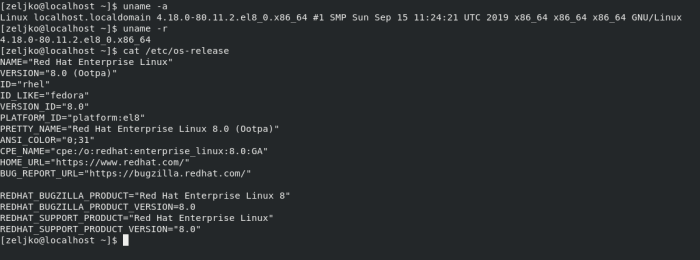
In conclusion, securing Red Hat Linux systems with Computer Associates solutions requires a multi-faceted approach. This comprehensive guide has highlighted the importance of understanding security levels, vulnerabilities, and best practices. By implementing the strategies Artikeld, organizations can significantly enhance their security posture and mitigate potential risks effectively. Ultimately, a proactive security strategy is crucial for maintaining the integrity and reliability of your Red Hat Linux environment.