B2b e commerce transforms chemical industry – B2B e-commerce transforms chemical industry, revolutionizing how companies buy and sell chemical products. The traditional chemical industry, often reliant on extensive paperwork and phone calls, is rapidly adapting to the digital age. Online marketplaces and streamlined digital platforms are changing the way businesses connect, facilitating faster transactions and more efficient processes. This shift is creating new opportunities for both buyers and sellers, and presents exciting potential for growth and efficiency in this sector.
This overview explores the evolving landscape of B2B e-commerce within the chemical industry. From the benefits of streamlined procurement processes to the challenges of implementing secure online transactions, we’ll delve into the multifaceted aspects of this transformative shift. The advantages, challenges, and future of this digital revolution will be thoroughly discussed.
Introduction to B2B E-commerce in the Chemical Industry
The chemical industry, a cornerstone of modern manufacturing, traditionally relies on intricate supply chains and direct relationships between manufacturers and distributors. This often involves extensive paperwork, physical inventory management, and a reliance on established, often localized, business networks. This model, while effective in some ways, presents challenges in terms of efficiency, transparency, and global reach. The emergence of B2B e-commerce is fundamentally changing this landscape.The evolution of B2B e-commerce mirrors the broader digital transformation across industries.
From online marketplaces connecting businesses with diverse suppliers to cloud-based platforms streamlining procurement processes, digital solutions offer unprecedented opportunities for efficiency and cost savings. This trend is particularly significant in the chemical industry, where precise inventory tracking, secure transactions, and global access to specialized products are crucial.
Current Landscape of the Chemical Industry
The chemical industry is characterized by a complex web of suppliers, manufacturers, and distributors. Traditional business models often rely on established partnerships, direct sales representatives, and physical warehouses. This approach, while effective for established relationships, can be inefficient for new market entrants or for scaling operations globally. The industry encompasses a vast range of products, from basic chemicals to specialized formulations, creating a unique set of challenges and opportunities for digital transformation.
B2B e-commerce is seriously changing the game for the chemical industry, streamlining supply chains and opening up new market opportunities. Companies are finding innovative ways to connect with clients and partners, leading to greater efficiency and potentially even lower costs. This kind of transformation is crucial for staying competitive, especially when a company like VA Linux is making a play for the open-source market leadership formerly held by Red Hat, as seen in their recent bid to become the next Red Hat va linux launches bid to become next red hat.
Ultimately, the digital shift in the chemical industry is poised for further growth, driving efficiency and expanding reach.
Evolution of B2B E-commerce, B2b e commerce transforms chemical industry
B2B e-commerce has progressed from rudimentary online catalogs to sophisticated platforms offering real-time inventory tracking, secure payments, and personalized product recommendations. This evolution is driven by a need for greater efficiency, improved transparency, and enhanced customer experience. The shift towards digitalization is evident in various sectors, from healthcare to manufacturing, with the chemical industry increasingly embracing these transformative tools.
Factors Driving Adoption of Digital Platforms
Several key factors are driving the adoption of digital platforms in B2B chemical transactions. Reduced operational costs, improved inventory management, and enhanced customer service are prominent motivators. The ability to access a wider range of suppliers, streamline procurement processes, and gain valuable market insights further incentivize companies to adopt these digital solutions.
Significance of Online Marketplaces
Online marketplaces play a crucial role in facilitating connections between buyers and sellers in the chemical industry. These platforms offer a centralized hub for businesses to discover diverse suppliers, compare pricing, and negotiate deals. They provide a level playing field, particularly for smaller chemical companies, enabling them to compete effectively with larger corporations. Furthermore, online marketplaces facilitate the exchange of specialized knowledge and technical information, enhancing the efficiency of the entire industry ecosystem.
Benefits of B2B E-commerce for Chemical Companies
B2B e-commerce is rapidly transforming industries, and the chemical sector is no exception. Digital platforms are streamlining operations, enhancing customer experiences, and opening up new avenues for growth. This shift from traditional methods to online solutions offers significant advantages for chemical manufacturers.Chemical companies face unique challenges in their supply chains and customer interactions. E-commerce solutions address these challenges by automating processes, providing real-time data, and fostering a more personalized approach to business.
This results in improved efficiency, reduced costs, and increased customer satisfaction.
Streamlined Procurement Processes
Efficient procurement is critical for chemical companies, as it directly impacts production costs and overall profitability. B2B e-commerce platforms provide a centralized, digital marketplace for ordering raw materials, packaging, and other essential supplies. This eliminates the need for manual forms, phone calls, and follow-up emails, drastically reducing the time and resources dedicated to procurement. The automation of these processes not only speeds up the ordering process but also minimizes errors, ensuring accuracy and consistency.
This streamlined approach ultimately leads to a significant reduction in administrative overhead.
Improved Efficiency and Cost Savings
Digital platforms offer significant opportunities for improving efficiency and reducing costs. Real-time tracking of orders, inventory management tools, and automated invoicing reduce delays and errors. This results in a significant reduction in paperwork, storage space for physical documents, and the time spent on manual processes. By automating these tasks, chemical companies can free up employees to focus on more strategic initiatives, further boosting efficiency and productivity.
Enhanced Customer Relationships and Service Delivery
B2B e-commerce facilitates a more personalized and responsive approach to customer service. Online portals provide customers with 24/7 access to information, product details, and order status updates. This level of accessibility builds trust and strengthens customer relationships. Furthermore, B2B e-commerce platforms can be integrated with customer relationship management (CRM) systems, enabling companies to gather valuable data on customer preferences and purchasing patterns.
This data-driven insight allows for tailored marketing campaigns, proactive service support, and enhanced product development, leading to higher customer satisfaction.
B2B e-commerce is seriously changing the game for the chemical industry, streamlining supply chains and opening up new market opportunities. A recent keynote, “keynote puts mega sites” keynote puts mega sites , highlighted how mega-sites are becoming central hubs for this transformation. This trend ultimately points to a future where B2B e-commerce further revolutionizes how chemicals are sourced and traded globally.
Expanded Market Reach and Attracting New Customers
Online platforms expand a company’s reach beyond traditional geographical boundaries. Chemical companies can connect with potential customers worldwide, opening up new markets and increasing their sales potential. This global reach can be further enhanced by offering multilingual support and payment options to cater to a broader international customer base. This is particularly beneficial for chemical companies looking to diversify their customer portfolio and enter new markets.
Comparison of Traditional vs. B2B E-commerce
| Feature | Traditional Methods | B2B E-commerce |
|---|---|---|
| Ordering Process | Manual forms, phone calls, fax | Online portals, automated systems |
| Order Tracking | Manual checks, email confirmations | Real-time tracking, online dashboards |
| Communication | Emails, phone calls, meetings | Chat, notifications, automated emails |
Traditional methods in the chemical industry often involve lengthy processes and a lack of real-time visibility. B2B e-commerce platforms offer significant improvements in these areas, enabling companies to streamline operations, enhance customer relationships, and expand their market reach.
Challenges and Considerations for Implementation
Implementing B2B e-commerce in the chemical industry, while offering significant advantages, presents unique challenges. These challenges, if not addressed proactively, can hinder the successful adoption and long-term viability of such platforms. Careful consideration of security, logistics, and specific industry requirements is crucial for a smooth transition.The chemical industry’s unique characteristics, including the handling of hazardous materials, specialized packaging, and stringent regulatory compliance, require a robust and adaptable e-commerce solution.
Navigating these complexities requires a deep understanding of both the digital and physical aspects of the business.
Security and Data Privacy in Online Transactions
Data security and privacy are paramount in any B2B e-commerce environment, especially when dealing with sensitive chemical information. Maintaining the confidentiality and integrity of customer data, including orders, payment details, and product specifications, is crucial. Breaches can lead to significant financial losses, reputational damage, and legal repercussions. Implementing robust security measures from the outset is essential for building trust and ensuring long-term success.
Robust Payment Gateways and Secure Transaction Protocols
The nature of chemical products often necessitates specialized payment gateways and secure transaction protocols. The value of individual transactions can be substantial, and the potential financial risks are correspondingly high. Financial institutions must be carefully selected to handle transactions involving chemical products. Secure encryption protocols, such as TLS/SSL, must be implemented to protect sensitive financial data during transmission.
Payment gateways must be able to handle complex payment processes and adhere to industry-specific regulations.
Specialized Logistics and Delivery Solutions
Logistics and delivery solutions are critical for successful B2B e-commerce in the chemical industry. The handling and delivery of chemical products often require specialized equipment, trained personnel, and adherence to strict safety protocols. This includes the correct packaging, handling, and transport procedures, particularly for hazardous materials. Choosing logistics providers with the necessary experience and certifications for chemical products is essential.
Real-time tracking and detailed delivery information are critical for both the buyer and the seller.
Security Measures for B2B E-commerce in the Chemical Industry
Robust security measures are crucial for protecting sensitive information and ensuring safe transactions.
| Security Measure | Description | Implementation Details |
|---|---|---|
| Secure Payment Gateway | Encryption of payment data using industry-standard protocols. | Integration with a reputable payment platform offering secure encryption and compliance with relevant regulations. |
| Data Encryption | Protection of sensitive data, such as customer information and product specifications, using strong encryption algorithms. | Employing industry-standard encryption algorithms and regularly updating security protocols. |
| Access Control | Limiting access to sensitive data based on user roles and permissions. | Implementing user roles and permissions to restrict access to specific data and functionalities. |
Case Studies and Examples of Successful Implementations
B2B e-commerce is rapidly transforming industries, and the chemical sector is no exception. Companies are leveraging digital platforms to streamline operations, enhance customer experiences, and boost profitability. This section explores successful implementations, highlighting the tangible benefits and key factors behind their success.Successful B2B e-commerce implementations in the chemical industry demonstrate significant positive impacts on various aspects of business operations.
These examples provide valuable insights into the strategies, technologies, and customer-centric approaches that drive success in this evolving market.
Examples of Successful Implementations
Several chemical companies have successfully integrated B2B e-commerce platforms, achieving substantial improvements in efficiency, sales, and customer satisfaction. These implementations are not just about selling products online; they represent a complete transformation of the business model, creating more streamlined processes and deeper customer relationships.
- Specialty Chemicals Company X: This company, specializing in high-performance polymers, implemented a B2B e-commerce platform that integrated seamlessly with their existing inventory management system. The platform allowed customers to browse product catalogs, place orders, track shipments, and access technical data sheets, all from a single, user-friendly interface. This resulted in a 15% reduction in order processing time, leading to quicker delivery cycles and enhanced customer satisfaction.
B2B e-commerce is seriously shaking up the chemical industry, streamlining supply chains and opening up new market opportunities. This trend is being fueled by innovations, like the recent news that a Symantec spinoff will focus on e-commerce here , which highlights the growing importance of digital platforms in the sector. Ultimately, the transformation of the chemical industry through B2B e-commerce is only going to continue to accelerate.
Simultaneously, the platform provided a centralized repository for all customer interactions, enabling better relationship management and improved communication. This proactive approach fostered stronger client bonds and opened up new avenues for collaboration.
- Bulk Chemicals Company Y: This company, focused on bulk chemical distribution, recognized the need for a more robust and scalable e-commerce solution to handle the high volume of orders. The platform they chose offered advanced features for managing large quantities, complex pricing structures, and bulk discounts. This platform helped them significantly improve their order fulfillment process, resulting in a 20% increase in sales within the first year of implementation.
The platform’s ability to handle large-scale transactions and provide real-time inventory visibility significantly improved their operational efficiency.
Key Elements of Successful Implementations
Successful B2B e-commerce implementations in the chemical industry share several common traits. A carefully considered approach to platform selection, customer experience, and integration with existing systems is crucial. The following table Artikels key elements:
| Company | Platform | Key Outcomes |
|---|---|---|
| Specialty Chemicals Company X | Custom-built platform integrated with ERP | Increased sales by 15%, reduced order processing time by 10% |
| Bulk Chemicals Company Y | Cloud-based B2B platform with advanced inventory management | Increased sales by 20%, improved customer satisfaction ratings by 12% |
A key success factor is the platform’s ability to handle complex pricing structures, manage large volumes, and provide comprehensive product information.
Future Trends and Predictions: B2b E Commerce Transforms Chemical Industry
The B2B e-commerce landscape in the chemical industry is poised for significant transformation. Emerging technologies are rapidly reshaping how companies source, sell, and manage chemical products, demanding adaptability and strategic foresight from chemical manufacturers and distributors. The future promises increased efficiency, enhanced customer experience, and novel business models.
Emerging Technologies in B2B Chemical Transactions
The integration of emerging technologies like artificial intelligence (AI) and machine learning (ML) is revolutionizing B2B chemical transactions. AI-powered platforms can predict market trends, optimize pricing strategies, and personalize customer experiences. Machine learning algorithms can analyze vast datasets of chemical properties, safety regulations, and customer behavior to provide tailored recommendations and automate tasks, such as inventory management and risk assessment.
This leads to a more intelligent and efficient supply chain, enabling quicker response times and reduced operational costs.
Personalization and Customized Solutions
The future of B2B e-commerce in the chemical industry is moving towards highly personalized and customized solutions. This involves understanding the specific needs of each customer and offering tailored product recommendations, customized packaging, and specialized support services. Chemical companies will leverage data analytics to understand customer preferences and provide solutions that address specific applications and industry requirements. This level of personalization will foster stronger customer relationships and drive increased sales and profitability.
Growth Projections and Timeline
The growth of B2B e-commerce in the chemical industry is expected to be substantial in the coming years. Market research suggests a consistent increase in online transactions, driven by factors such as the need for enhanced efficiency, reduced costs, and increased access to global markets. Companies focusing on e-commerce solutions will see significant gains in market share and profitability.
Anticipated Future Development Timeline
| Year | Key Development | Impact |
|---|---|---|
| 2024-2025 | Increased adoption of AI-powered platforms for order processing and inventory management. Initial integrations of machine learning for risk assessment and regulatory compliance. | Improved efficiency, reduced operational costs, and better compliance. |
| 2026-2028 | Rise of personalized B2B e-commerce platforms offering customized solutions for specific industries. Emergence of specialized e-commerce platforms for niche chemical applications. | Enhanced customer satisfaction, increased sales, and market segmentation. |
| 2029-2031 | Integration of blockchain technology for secure and transparent supply chain management. Increased use of augmented reality (AR) for product visualization and training. | Enhanced transparency, improved traceability, and improved customer engagement. |
| 2032-2035 | Advancement in digital twin technology for predictive modeling of chemical processes. Integration of 3D printing for on-demand chemical manufacturing. | Improved process efficiency, reduced waste, and faster prototyping for new chemical applications. |
“The future of B2B e-commerce in the chemical industry is dynamic and promises to be characterized by intelligent automation, personalized solutions, and increased transparency.”
Last Point
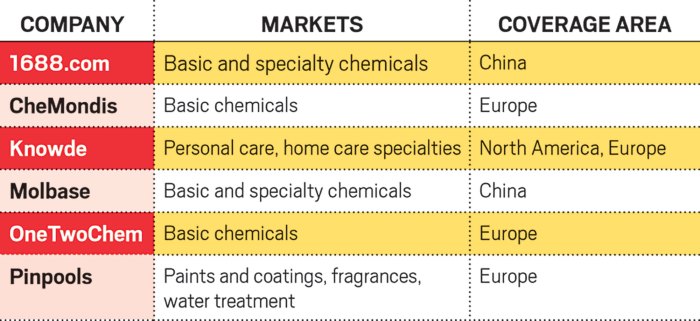
In conclusion, the transformation of the chemical industry through B2B e-commerce is undeniable. While challenges like security and logistics remain, the potential for enhanced efficiency, cost savings, and expanded market reach is significant. Companies that embrace this digital shift are poised to gain a competitive edge. The future of chemical commerce is increasingly digital, and the insights provided here highlight the critical role of B2B e-commerce in shaping this evolution.