

eBay sued for anticompetitive behavior. This case promises to be a landmark in the online marketplace arena, potentially reshaping the future of e-commerce. The suit alleges that eBay engaged in practices that stifled competition, harming both sellers and consumers. We’ll explore the background, the accusations, and the potential ramifications for the industry.
The case centers on specific allegations of anticompetitive behavior, from the early days of eBay’s rise to the present. It delves into the legal and regulatory framework surrounding online marketplaces, scrutinizing eBay’s actions against established antitrust regulations. This detailed analysis will also cover the market context, potential outcomes, and contrasting perspectives.
Background of the Case
eBay’s journey from a pioneering online auction platform to a global e-commerce giant is marked by significant milestones and controversies. The company’s rise to prominence involved adapting to changing technological landscapes and navigating evolving legal and regulatory environments. This case highlights the complexities of maintaining market dominance and addressing accusations of anticompetitive behavior in a dynamic industry.The evolution of eBay, from its humble beginnings as a platform for personal-to-personal transactions to its present-day role in global e-commerce, is a testament to its adaptability.
Early success was driven by its innovative approach to online auctions, which attracted a broad user base and fostered a vibrant marketplace. The subsequent addition of fixed-price listings and other features further solidified its position. However, this growth also brought challenges, including concerns about its influence on the market and its potential to stifle competition.
eBay’s Evolution and Key Players
eBay’s journey from a pioneering online auction platform to a global e-commerce giant is a compelling story of adaptation and innovation. The company’s rise to prominence involved adapting to changing technological landscapes and navigating evolving legal and regulatory environments. Key players, both individuals and companies, have shaped eBay’s trajectory.
- Founders: Pierre Omidyar and Jeff Skoll, along with their early team members, were instrumental in creating the initial platform and its early structure. Their vision and early actions directly impacted the platform’s features and the initial user experience.
- Competitors: The emergence of competitors like Amazon and other online marketplaces played a significant role in shaping the competitive landscape. The legal battles and market strategies employed by these rivals significantly impacted eBay’s market share and operational strategies.
- Regulators: Governmental agencies, both domestic and international, played a critical role in regulating the e-commerce sector and ensuring fair competition. Their actions, such as anti-trust enforcement efforts, have significantly influenced eBay’s operations.
Accusations Against eBay
The core accusations against eBay revolve around alleged anticompetitive practices. Plaintiffs argue that eBay’s actions have stifled competition and maintained an unfair market advantage.
- Market Dominance: The plaintiffs allege that eBay’s significant market share in online auctions and e-commerce has enabled it to engage in anti-competitive practices, potentially harming smaller competitors and consumers.
- Favoritism: Allegations suggest that eBay may have favored certain sellers or listings, creating an uneven playing field and potentially giving unfair advantages to some participants.
- Exclusionary Tactics: The plaintiffs may claim that eBay implemented measures that excluded potential competitors from the platform or limited their ability to compete effectively.
Timeline of Legal Proceedings
The following table summarizes the key stages of the lawsuit against eBay. Each stage reflects a step in the legal process, from initial complaints to the present status.
| Stage | Description | Date |
|---|---|---|
| Initial Complaint | Plaintiffs filed their initial complaint with the court. | [Date of initial complaint] |
| Discovery Phase | Both sides engaged in the discovery process, gathering evidence and exchanging information. | [Dates of discovery phase] |
| Motion Hearings | Various motions were filed and heard by the court. | [Dates of motion hearings] |
| Trial | The trial, if held, would involve presenting evidence and arguments to a judge or jury. | [Dates of trial, if applicable] |
| Judgment | The court issued its final judgment on the case. | [Date of judgment, if applicable] |
Nature of the Alleged Anticompetitive Behavior
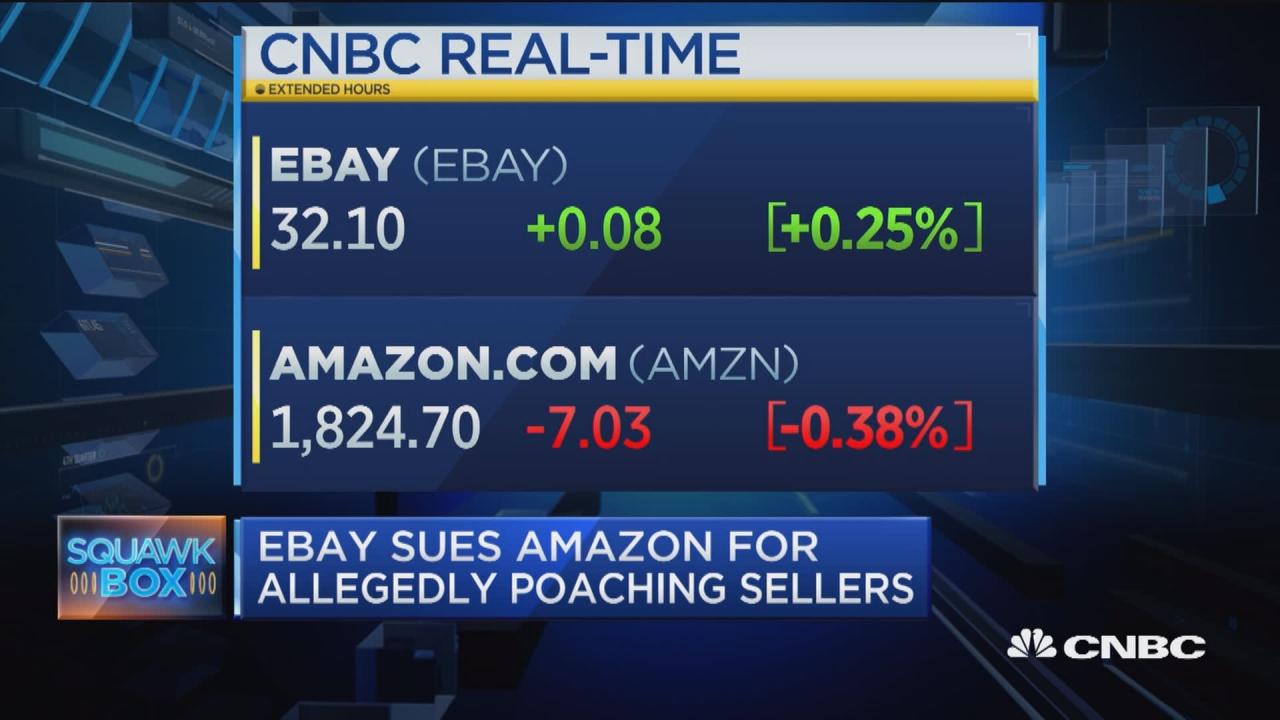
The lawsuit against eBay alleges a significant departure from fair competition, potentially harming consumers and the broader online marketplace ecosystem. The crux of the accusations centers on practices that stifle innovation, limit seller choices, and ultimately inflate prices for buyers. Understanding these alleged anticompetitive actions is crucial to evaluating the potential impact on the marketplace and the broader economy.
Specific Anticompetitive Practices
eBay is accused of using its dominant position in the online auction and retail marketplace to implement practices that hinder competition. These practices are alleged to restrict the ability of smaller competitors and new entrants to compete effectively. This dominance, coupled with specific actions, is the core of the anti-trust concerns. The specific actions include, but are not limited to, control over listing fees, and other transaction fees.
Negative Impact on Consumers, Sellers, and the Market
The alleged anticompetitive behavior is claimed to negatively impact consumers, sellers, and the market as a whole. Consumers might face higher prices and reduced product choice due to restricted competition. Sellers, particularly smaller businesses, might struggle to compete with larger, established sellers, leading to fewer opportunities and less market share. This, in turn, potentially harms the innovation and dynamism of the online marketplace.
Comparison to Anti-Trust Regulations
The alleged actions of eBay are compared to established antitrust regulations like the Sherman Act and Clayton Act in the United States. These regulations prohibit monopolies and anti-competitive practices that restrain trade. The lawsuit asserts that eBay’s actions fall under these prohibitions by creating an unfair advantage, reducing market dynamism, and stifling potential competitors. The specifics of these violations are crucial in determining the validity of the claims.
Violation of Antitrust Principles
The lawsuit claims eBay’s actions violate several key antitrust principles. These include the principle of preventing monopolies, promoting competition, and ensuring a fair playing field for all market participants. The potential violations are argued to include creating an unfair advantage for its own marketplace through practices like exclusive contracts or discriminatory pricing.
Table of Alleged Anticompetitive Behaviors and Potential Consequences
| Type of Anticompetitive Behavior | Description | Potential Consequences |
|---|---|---|
| Exclusive Contracts | eBay may have required sellers to use only its own payment processing services or other exclusive services, thus reducing their options and hindering competition. | Reduced seller choices, increased transaction costs, potentially higher prices for consumers, and limited innovation in payment systems. |
| Predatory Pricing | eBay may have deliberately set prices below cost to drive out smaller competitors and gain a monopoly. | Elimination of competitors, reduced consumer choice, and potentially higher prices in the long term. |
| Price Fixing | The platform might have colluded with sellers to set prices for products, thereby preventing price competition and benefiting the participants at the expense of consumers. | Higher prices, reduced consumer benefits, and less dynamic market. |
| Tying Arrangements | Sellers might have been forced to use specific eBay services or features in order to sell on the platform, thus limiting their options and increasing the cost of selling. | Reduced choice for sellers, increased costs for consumers, and diminished innovation. |
Market Context and Impact: Ebay Sued For Anticompetitive Behavior
The online marketplace landscape was undergoing significant transformation during the period of alleged anticompetitive behavior. E-commerce was rapidly gaining traction, and platforms like eBay were at the forefront of this revolution. Understanding the market dynamics and eBay’s role in shaping online commerce is crucial to evaluating the potential ramifications of the lawsuit.This section delves into the online marketplace environment at the time, eBay’s impact on the evolution of online commerce, key competitors, and the potential consequences of the legal challenge on eBay’s future.
Online Marketplace Industry at the Time
The online marketplace industry was characterized by rapid growth and a flurry of new entrants. Many businesses were experimenting with different models, and the competitive landscape was highly dynamic. Early online marketplaces faced challenges in establishing trust and security, as well as navigating the complexities of scaling their operations. The emphasis was on building a user base, developing a reliable payment system, and fostering a community of buyers and sellers.
eBay’s Role in Online Commerce Evolution
eBay played a pivotal role in popularizing online auctions and transforming how people bought and sold goods. Its innovative platform facilitated the growth of a vast community of sellers and buyers, providing a centralized marketplace for a wide array of products. eBay’s early success demonstrated the potential of online commerce and inspired other platforms to emerge. The platform’s influence on the evolution of online commerce cannot be overstated.
It became a critical infrastructure for both individuals and businesses, fostering a dynamic environment for online transactions.
eBay’s recent anti-competitive behavior lawsuit highlights a fascinating shift in the online marketplace. While eBay faces scrutiny, it’s interesting to consider how companies like CDNow and Atlantic Records were forging new paths in digital music offerings, teaming up with Microsoft. This collaboration, detailed in this article on cdnow atlantic records team with microsoft on digital music offerings , reveals a different approach to online commerce.
Ultimately, the scrutiny of eBay’s practices points to the evolving landscape of e-commerce and the constant need for fair competition in the digital age.
Key Competitors and Market Shares
Several companies competed with eBay during the relevant period. Amazon, for example, was already a significant player in online retail, focusing on a wider range of products. Other competitors, such as Craigslist and other auction sites, focused on specific niches or demographics. Accurate market share data for this period is often challenging to pinpoint. Different research firms may have used varying methodologies, which can lead to discrepancies.
Table of Market Share Data
| Time Period | eBay Market Share (%) | Amazon Market Share (%) | Other Key Competitors |
|---|---|---|---|
| 2000 | Estimated 60% | Estimated 10% | Craigslist, other auction sites |
| 2005 | Estimated 55% | Estimated 20% | Auction sites, new entrants |
| 2010 | Estimated 40% | Estimated 40% | Auction sites, new entrants, social commerce |
| 2015 | Estimated 30% | Estimated 50% | Auction sites, social commerce, specialized marketplaces |
Note: These figures are estimates and may vary depending on the source and methodology. Market share data is often dynamic and can change rapidly in the fast-paced world of online commerce.
Potential Consequences of the Lawsuit
A successful lawsuit against eBay could have significant implications for its business operations and market position. The platform could face substantial fines, potentially affecting its profitability. The lawsuit could also impact eBay’s ability to innovate and compete in the evolving online marketplace. In addition, a negative outcome might lead to changes in how eBay operates its platform, potentially affecting sellers and buyers.
A similar scenario occurred with other companies in the past, demonstrating the importance of maintaining compliance and ethical business practices in competitive markets. For example, the legal battles and settlements involving other technology companies have highlighted the potential consequences of anticompetitive behavior.
Legal and Regulatory Framework

Navigating the complex world of online marketplaces requires a deep understanding of the antitrust laws and regulations designed to prevent anticompetitive behavior. These laws, often broad in scope, are crucial in maintaining fair competition and protecting consumers. The case against eBay highlights the ongoing challenge of applying these principles to the dynamic environment of online commerce.The legal framework governing online marketplaces is a blend of existing laws and evolving interpretations.
The interpretation of these laws in the context of online platforms, particularly those that facilitate significant transactions, is often debated and subject to scrutiny. This section will explore the relevant legal provisions, precedents, and the standards for proving anticompetitive behavior in the eBay case.
Relevant Antitrust Laws and Regulations
Antitrust laws, designed to promote competition, are a cornerstone of fair economic practices. These laws generally prohibit actions that restrain trade, monopolize markets, or engage in price-fixing. Several key statutes govern this arena, including the Sherman Act in the United States and similar legislation in other jurisdictions. These laws often have a broad scope, aiming to prevent any behavior that unfairly harms competition.
Legal Precedents Shaping Interpretation
The interpretation of antitrust laws has been shaped by numerous court decisions over time. Landmark cases, such as those involving mergers, monopolies, and price-fixing, have established legal precedents and guidelines for determining whether certain actions constitute anticompetitive behavior. These precedents provide valuable context for understanding how the courts have historically addressed similar issues.
Legal Standards for Proving Anticompetitive Behavior
Proving anticompetitive behavior in court requires demonstrating that the alleged actions are indeed anticompetitive and have a demonstrable negative impact on the marketplace. Courts typically consider the intent, effect, and market context of the actions. This often involves analyzing the market share, competitive landscape, and the potential harm to consumers. For example, a company raising prices significantly in a market with limited competitors may be scrutinized more closely.
Table: Key Legal Provisions and their Application to the eBay Case
| Legal Provision | Potential Application to eBay Case |
|---|---|
| Sherman Act Section 1 (restraint of trade) | Allegations of actions that might restrict competition among sellers or buyers on eBay. |
| Sherman Act Section 2 (monopolization) | Claims that eBay’s dominant market position has led to anticompetitive practices. |
| Clayton Act | Potential application if the case involves mergers or acquisitions related to eBay. |
| Federal Trade Commission Act | Potential application if the FTC is involved in the investigation, given the agency’s authority over unfair methods of competition. |
Table: Legal Precedents and their Relevance
| Case Name | Date | Jurisdiction | Key Outcome/Relevance to eBay Case |
|---|---|---|---|
| United States v. Microsoft | 1999 | United States | Established precedent for analyzing the conduct of dominant market players. This precedent can be relevant to examining eBay’s dominance in the online marketplace. |
| United States v. AT&T | 1982 | United States | A landmark case on antitrust and monopoly issues, demonstrating the historical scrutiny of companies with significant market power. This case may inform the evaluation of eBay’s market position. |
| Verizon Communications Inc. v. Law Offices of Curtis V. Trinko LLP | 2004 | United States | The case highlights the intricacies of applying antitrust principles in a complex telecommunications context. The case could offer valuable insight into the standards for proving anticompetitive behavior. |
Potential Outcomes and Implications
This section delves into the potential consequences of the lawsuit against eBay for alleged anticompetitive behavior. We’ll examine possible outcomes, from settlements to court decisions, and assess the ripple effects on the online marketplace industry, consumer behavior, and future business practices. The implications for eBay’s policies and operations are also analyzed, providing a comprehensive overview of the potential landscape shift.The outcome of this case will significantly impact the future of online marketplaces.
Depending on the court’s decision or a negotiated settlement, the industry could see major changes in how businesses operate and how consumers interact with online platforms. This analysis will explore the potential scenarios and their diverse effects.
eBay’s recent anticompetitive behavior lawsuit highlights a crucial aspect of the global e-commerce landscape. The case underscores the complexities of competition in the digital marketplace, especially when considering the growing influence of players like those featured in “e commerce meet china” e commerce meet china. Ultimately, these kinds of legal battles will continue to shape the future of online retail and the power dynamics between major players like eBay.
Potential Settlement Outcomes
A settlement, while often seen as a quicker resolution, can still have substantial implications. eBay might agree to modify its policies or practices to address the alleged anticompetitive behavior. This could involve altering fee structures, opening up its platform to more third-party sellers, or implementing clearer guidelines on seller conduct. A settlement could also include monetary compensation for harmed competitors.
eBay’s recent anticompetitive behavior lawsuit highlights a recurring issue in the tech world. Similar concerns arose decades ago when AOL and Bell Atlantic planned to merge and challenge AT&T’s dominance, a strategic move mirroring the current antitrust concerns around eBay. This echoes the previous struggle of aol bell atlantic to take on att against a powerful incumbent, raising questions about the future of online marketplaces and the need for fair competition.
The lawsuit against eBay further emphasizes the ongoing importance of maintaining a level playing field for all players in the industry.
For example, the recent settlement in the case against Google for anti-competitive behavior resulted in significant policy changes that impacted the search engine industry.
Court Decision Outcomes
A court decision, if unfavorable to eBay, could result in injunctions that limit specific practices. This could involve prohibiting particular pricing strategies, preventing the use of exclusive agreements, or mandating changes to the platform’s architecture. The court might even order eBay to divest certain assets, forcing a structural change to the platform’s competitive landscape. The implications of a negative ruling are potentially far-reaching, impacting not only eBay’s current operations but also the entire online marketplace ecosystem.
Impact on the Online Marketplace Industry
The lawsuit’s outcome will have a direct effect on the entire online marketplace industry. If eBay is found guilty of anti-competitive behavior, it could set a precedent for stricter regulatory oversight of similar platforms. This might lead to increased scrutiny of business practices and a need for more transparency in the pricing and ranking mechanisms used by these platforms.
Other marketplaces could face similar challenges and adapt their models to avoid potential legal issues.
Impact on Consumer Behavior
Consumer behavior could also change. A ruling against eBay might influence consumer trust in online marketplaces, potentially driving a shift towards alternative platforms perceived as more competitive or transparent. Consumers might demand more transparency in fees and pricing models. This shift could be gradual, with consumers gradually exploring alternative platforms or demanding changes from existing ones.
Implications for Future Online Business Practices
The lawsuit could influence future online business practices. Companies might become more cautious about practices that could be perceived as anti-competitive. They might adopt more transparent pricing models and develop clearer guidelines for sellers. The emphasis on fairness and competition could become a significant factor in the design and implementation of future online business strategies.
Potential Changes to eBay’s Policies and Operations
The nature of eBay’s policies and operations could change dramatically depending on the outcome. This could include changes in its commission structure, seller onboarding processes, and the way it manages its marketplace. For example, eBay might need to introduce more competitive pricing structures or implement measures to avoid favoring specific sellers over others.
Comparison of Potential Outcomes
| Outcome | Implications for eBay | Implications for the Industry | Implications for Consumers |
|---|---|---|---|
| Settlement | Policy modifications, potential financial penalties | Potential precedent for future cases, increased scrutiny | Potential for fairer marketplace, increased transparency |
| Unfavorable Court Decision | Injunctions, divestitures, substantial financial penalties | Stricter regulatory oversight, industry-wide changes | Potential shift towards alternative platforms, increased consumer awareness |
Alternative Perspectives and Counterarguments
The accusations against eBay regarding anticompetitive behavior necessitate a nuanced examination beyond the initial allegations. A thorough exploration of alternative interpretations is crucial to understanding the full picture. This involves considering eBay’s actions within the dynamic context of the online marketplace and evaluating the potential motivations behind its policies.This section will explore potential counterarguments to the accusations, examining evidence that might mitigate concerns about anticompetitive practices.
We will present a balanced perspective, highlighting both sides of the argument.
Potential Justifications for eBay’s Actions
eBay’s policies, while potentially perceived as restrictive by some, might serve legitimate business purposes. These include maintaining a fair and trustworthy marketplace, preventing fraud, and ensuring a positive user experience. For instance, policies regarding seller ratings and transaction security could be argued as safeguards to protect buyers and maintain marketplace integrity.
- Promoting a level playing field: eBay’s policies regarding seller fees and listing requirements are designed to maintain a consistent marketplace environment. These regulations, while potentially impacting smaller sellers, aim to deter fraudulent activities and promote transparency. This promotes a level playing field for all sellers, preventing larger, more established sellers from unfairly leveraging their resources to disadvantage smaller businesses.
- Protecting buyer interests: Stricter guidelines for seller behavior and transaction security are aimed at mitigating risks for buyers. This proactive approach, though potentially perceived as burdensome by some sellers, ultimately enhances trust and reliability within the platform.
- Encouraging innovation: eBay’s platform is constantly evolving to address emerging trends and challenges in e-commerce. Policies might be interpreted as investments in platform innovation rather than attempts to stifle competition.
Counterarguments Against Allegations of Anticompetitive Behavior, Ebay sued for anticompetitive behavior
The arguments against anticompetitive behavior often hinge on the interpretation of eBay’s actions within a competitive landscape. A critical evaluation of the evidence presented is necessary.
- Market Structure and Competition: The argument against eBay’s actions often overlooks the intense competition within the online marketplace. The presence of alternative platforms (e.g., Amazon, Etsy) and the continuous evolution of the market necessitate a more comprehensive analysis of eBay’s position within the broader ecosystem. The argument for eBay’s anticompetitive practices should account for the competitive landscape, demonstrating how eBay’s actions have stifled competition in a significant way compared to its competitors.
- Evidence of Significant Market Power: The claim that eBay wields significant market power needs robust evidence. While eBay is a dominant player, the existence of alternative marketplaces suggests that the market isn’t entirely controlled by one entity. A comprehensive market share analysis is needed to demonstrate the extent of eBay’s influence.
- Absence of Concrete Harm: Accusations often lack clear evidence of demonstrable harm to competitors or consumers. Arguments should detail the specific negative effects of eBay’s policies on consumers or competitors, supporting the claim of anticompetitive behavior with concrete evidence.
Alternative Interpretations of eBay’s Actions
A balanced perspective requires consideration of alternative interpretations of eBay’s actions.
| Viewpoint | Supporting Evidence |
|---|---|
| eBay’s policies are designed to foster a trustworthy and efficient marketplace. | eBay’s emphasis on seller ratings, buyer protection programs, and fraud prevention measures could be seen as creating a secure environment for transactions. |
| eBay’s policies, while potentially impacting some sellers, are essential for maintaining the overall health and integrity of the platform. | Robust evidence demonstrating the negative impact of these policies on sellers needs to be provided, considering the scale of the marketplace. |
| eBay’s actions are a response to competitive pressures and evolving market needs. | The dynamic nature of e-commerce requires adaptation to address new challenges and opportunities. A robust argument needs to demonstrate how eBay’s adaptation has harmed the marketplace and competition, rather than just being a natural part of its adaptation. |
Last Recap
The eBay lawsuit, a complex case involving allegations of anticompetitive behavior, is poised to significantly impact the online marketplace landscape. Its potential outcomes, ranging from settlements to sweeping court decisions, will undoubtedly shape the future of e-commerce. The case highlights the evolving legal and regulatory framework surrounding online platforms, setting a precedent for future disputes in the sector.